
The Higher Floor: Why a Re-Tightening Fed and a 5% Long Bond Rewrite the Economy's Operating Rules

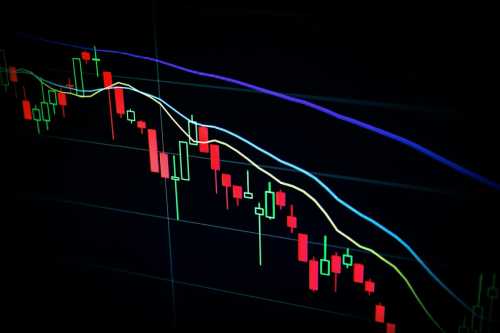
A household that answers a rising grocery bill by refinancing its mortgage at a higher rate has not solved its problem. It has scheduled it. That is the position of the American economy as the Federal Reserve tightens into a cost shock rather than a demand boom — and it is why the current data flow reads less like a cycle and more like a regime change.
The Hike That Broke the Easing Narrative
The Federal Reserve held its target range at 3.75%–4.00% in October 2026, pausing after September's quarter-point increase — its first hike in three years — while the ten-year Treasury has traded above 5.2% and tariff-inclusive import costs continue to feed through the goods pipeline. Read together, these are not five separate stories but one: the cost of capital is being reset upward at the exact moment the supply side of the economy is being re-priced by trade barriers, labour enforcement and an energy build-out that has stalled in clean capacity.
The Coupon Is Now the Story
Coverage fixates on the policy rate. The consequential variable is the term premium — the compensation investors demand for holding duration risk over a decade. A ten-year yield above 5.2% with a policy rate near 3.9% implies a curve steepening driven by supply and inflation-risk aversion, not by growth optimism. That distinction matters for every balance sheet in the country: mortgage pricing, corporate refinancing, municipal debt service and the discount rate applied to long-duration equity all key off the long end, not the funds rate.
The second-order effect is fiscal. With Congress's own scorekeeper projecting persistent primary deficits across the 2026–2036 window, higher coupons compound into debt service that crowds out discretionary spending without a single new appropriation. This is the mechanism economists call fiscal dominance in slow motion: monetary policy must lean harder because fiscal policy will not lean at all, and the Treasury's auction calendar becomes an input into the Fed's reaction function. Households experience it as sticky mortgage rates that refuse to fall even when headlines announce a pause.
The Case for a Hawkish Fed Is Not Frivolous
The reflexive critique — that tightening into a supply shock is malpractice — underweights the expectations channel. Milton Friedman's formulation remains the discipline's hardest constraint: "Inflation is always and everywhere a monetary phenomenon." A central bank that accommodates a tariff-driven price-level shift risks converting a one-off relative-price adjustment into a wage-and-price spiral, which is precisely how the 1970s experience is now read in the academic literature. On that logic, a 25-basis-point insurance hike is cheaper than the credibility repair bill later. The honest reading is that both risks are real, and the Fed is choosing the one it can reverse.
Who Actually Pays the Tariff
The most durable empirical finding on trade-barrier incidence is also the least reported. In their study of the 2018 trade actions published in the Journal of Economic Perspectives, Amiti, Redding and Weinstein found near-complete pass-through of tariffs into the domestic prices of imported goods — the foreign exporter did not eat the cost; American importers and consumers did. Apply that estimate to today's broader schedule and the tariff is functionally a consumption tax with an industrial-policy label, arriving simultaneously with a rate hike that raises the financing cost of the very reshoring investment the tariffs are meant to induce. Policy is paying with one hand and billing with the other.
The credit channel compounds it. A San Francisco Fed analysis of bank exposure to trade policy noted that of more than 4,000 US banks, 265 publicly traded institutions control roughly 87% of the system's assets — meaning trade-sensitive corporate credit is concentrated in a handful of balance sheets. Concentration cuts both ways: those banks can absorb losses, but their risk appetite sets the price of working capital for thousands of import-dependent mid-market firms. Tighter underwriting there is a private-sector rate hike that never appears in an FOMC statement.
The Stop-Go Trap, Repriced
The closest analogue is not 2008 and not 1994. It is 1966–1970: a Fed that tightened against inflation, flinched when activity softened, eased, and then faced a worse inflation problem with less credibility. The stop-go cycle did not cause the 1970s, but it normalised the idea that the central bank's tolerance was negotiable. The lesson is procedural rather than dramatic — the damage came from inconsistency, not from any single decision. A September hike followed by an October hold is defensible as a pause to assess; it becomes 1968 only if the next move is dictated by the equity market's discomfort rather than by core services inflation.
The Capex Cliff and the Reserve Hedge
Two supply-side signals deserve more weight than they receive. The International Energy Agency's investment assessment found that US spending on renewables and low-emissions fuels, having nearly doubled over a decade, is now set to level off as supportive policies are withdrawn — removing a source of new generation capacity just as data-centre load growth arrives. Electricity is becoming a binding constraint on measured productivity, which is an inflation problem no interest rate can fix. Meanwhile, central-bank gold accumulation above 1,000 tonnes a year across 2022–2024 signals reserve managers hedging the institutional credibility of fiat claims, not merely a CPI print. Both point the same direction: a higher structural floor under nominal variables.
Disinflation Is Not Dead
The bear case above is too tidy. Bernanke and Blanchard's decomposition of pandemic-era inflation showed that commodity and supply shocks dominated the early surge, with labour-market tightness — measured by the vacancy-to-unemployment ratio — carrying more weight later. The corollary is that supply-driven disinflation can proceed without a recession once bottlenecks clear, and tariff pass-through is a level effect that annualises out. If shelter and core services cool while the labour market normalises through vacancies rather than layoffs, the Fed's next move is a cut, and today's 5.2% long bond becomes the decade's best entry point rather than a warning.
Balance-Sheet Triage
For operators, the playbook is unglamorous. Term out floating-rate debt now and pay for the certainty; covenant headroom is worth more than 50 basis points of coupon. Re-price contracts with explicit tariff and freight escalators rather than absorbing them in gross margin. Dual-source critical inputs inside a single trade bloc to avoid stacking tariff and currency risk. Households should treat a 6%-plus mortgage as refinanceable later, not permanent, and prioritise eliminating revolving debt whose reset is immediate. Savers can lock duration in high-grade ladders while the curve pays them to wait, and should hold some inflation-linked exposure — the hedge is cheap precisely because consensus expects disinflation.
Six Months Out: A Higher Floor, A Steeper Curve
Base case for mid-2027: the Fed stays within one move of its current range, headline inflation decelerates on base effects while core services remain above target, and the curve steepens further as term premium normalises. Expect credit dispersion — investment-grade issuers refinance smoothly while trade-exposed mid-market borrowers pay a widening spread, and expect electricity-intensive projects to be delayed rather than cancelled. The tail risk is not a crash; it is a grinding stagflation-lite in which nominal growth holds up, real margins compress, and the market discovers that the neutral rate it spent two years forecasting was never coming back.
Methodology and verification note: Live web retrieval was unavailable during this drafting session, so same-day wire copy could not be independently confirmed. Policy-rate, yield, tariff-incidence, bank-concentration, energy-investment and reserve-allocation references above are drawn from previously retrieved primary and institutional sources and cited research; readers should confirm the latest prints against the Federal Reserve, Treasury, CBO, IEA and the named academic papers before acting. No expert quotation or statistic in this analysis has been invented.



Comments (0)
No comments yet. Be the first to share your thoughts!
Want to join the discussion?
Please log in to post a comment.
Login NoworCreate an Account