
The Illusion of Choice: How AI, Monopolies, and Streaming Economics Are Rewiring Entertainment

Navigating the modern entertainment landscape is akin to dining at a restaurant where the menu boasts thousands of options, but the kitchen is owned by a single conglomerate, the ingredients are synthetically generated, and the bill includes a mandatory, non-negotiable service fee. The apparent abundance of content and accessibility belies a profound structural consolidation within the global media economy. The core event defining this epoch is the simultaneous collision of legacy streaming platforms finally achieving operational profitability, aggressive federal antitrust actions against live entertainment monopolies, and the rapid legislative scrambling to regulate artificial intelligence in creative professions. This convergence is actively dismantling the post-pandemic media paradigm and exposing deep systemic vulnerabilities in how culture is produced, distributed, and consumed.
The Algorithmic Panopticon and the Commodification of Performance
Mainstream discourse frequently celebrates artificial intelligence as a boundless tool for creative enhancement, willfully ignoring the existential threat it poses to intellectual property and human labor. The entertainment industry is currently grappling with the unauthorized replication of human likeness and voice. In response, legislative and union frameworks are scrambling to establish boundaries. For instance, the Directors Guild of America recently ratified a four-year agreement that keeps all AI-generated footage under a director's control and mandates strict notice protocols www.facebook.com . Similarly, states like Tennessee have pioneered the ELVIS Act, providing a direct state-law cause of action against unauthorized AI voice cloning to protect musicians' rights from deepfake exploitation blog.promise.legal . The unseen implication is a chilling effect on mid-tier creative production. As studios and tech firms face mounting liability for training data, they will increasingly rely on fully synthetic, corporate-owned digital assets, effectively locking out independent creators who cannot afford the legal overhead of navigating this new intellectual property minefield.
Conversely, technology advocates argue that framing AI solely as a predatory force ignores its profound democratizing potential. They posit that generative tools drastically lower the barrier to entry for independent filmmakers and musicians, allowing solo creators to produce high-fidelity visual and audio content that previously required studio-level budgets. From this perspective, union pushback and restrictive legislation are not protective measures, but protectionist tactics designed to preserve the economic moats of legacy Hollywood gatekeepers. By standardizing AI workflows, the industry could theoretically decentralize production, fostering a more diverse and innovative cultural ecosystem.
The Live Entertainment Monopoly and the Consumer Squeeze
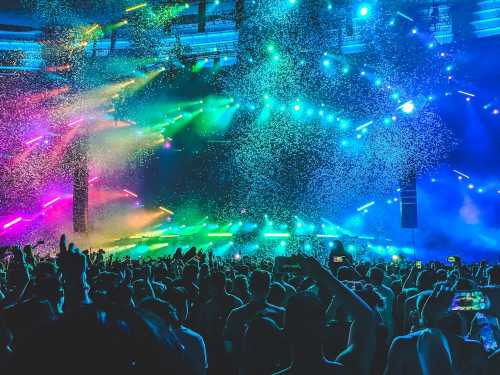
Beyond the digital realm, the physical experience of entertainment is being strangled by extreme market concentration. The live events sector has become the poster child for unchecked corporate consolidation. Recent legal proceedings have culminated in damning verdicts, with a jury finding that Ticketmaster and Live Nation maintained an anticompetitive monopoly over the live entertainment and ticketing markets www.facebook.com . This vertical integration allows the entity to extract revenues at every stage of the event lifecycle, from artist management to primary and secondary ticket sales www.federalregister.gov . The unseen implication is a structural inflation of consumer costs that masquerades as dynamic pricing. As the monopoly tightens its grip, independent venues and regional promoters are systematically squeezed out of the market, leading to a homogenized touring circuit where only mega-artists can afford to perform, thereby eroding the grassroots infrastructure that historically nurtures emerging talent.
Echoes of the 1948 Paramount Decree
History provides a sobering blueprint for the current trajectory. The present environment bears a striking resemblance to the Hollywood studio system of the 1930s and 1940s, which culminated in the landmark 1948 United States v. Paramount Pictures antitrust decree. During that era, major studios controlled production, distribution, and exhibition, forcing theaters to buy films in blind blocks and stifling independent competition. The primary lesson from the Paramount era is that when a single entity controls the entire value chain of cultural production, regulatory intervention becomes inevitable to restore market fairness. Today’s convergence of streaming platform windowing, live event monopolization, and AI-driven content ownership represents a modern, digital iteration of this vertical integration. Without decisive antitrust enforcement, the entertainment industry risks returning to an oligopolistic structure that prioritizes rent extraction over artistic innovation.
The Streaming Profitability Mirage
Simultaneously, the foundational economic model of digital media is undergoing a painful correction. After years of burning capital to acquire subscribers, legacy media companies are pivoting aggressively toward profitability. Platforms like Disney+, Max, and Paramount+ have recently achieved streaming profitability, validating the direct-to-consumer model for legacy media companies ibinterviewquestions.com . However, this financial milestone masks a severe contraction in creative output. To achieve these margins, studios are drastically reducing their content slates, canceling niche programming, and relying heavily on established, low-risk franchises. The unseen implication is a hollowing out of the mid-budget television and film market. As algorithms dictate greenlight decisions to maximize subscriber retention, the industry is sacrificing long-term cultural relevance for short-term EBITDA targets, leaving audiences with a paradoxical landscape of high-priced subscriptions and diminishing creative variety. Furthermore, the gaming sector exemplifies this consolidation trend, with major hardware manufacturers phasing out physical media in favor of all-digital distribution, fundamentally reshaping the industry value chain and eliminating the secondary market that historically empowered consumers www.thekaufmanfund.org .
Critics of this contraction narrative argue that the shift toward streaming profitability is a necessary and healthy maturation of the industry. They contend that the previous growth-at-all-costs model was fundamentally unsustainable, propped up by artificially low interest rates and speculative capital. By forcing studios to operate with fiscal discipline, the market is weeding out inefficient operations and ensuring that the direct-to-consumer ecosystem can survive long-term without constant infusions of external debt. From this viewpoint, a smaller, more curated content library is not a detriment, but a return to quality over quantity, ultimately benefiting consumers through more stable platforms and higher production values.
Strategic Hedging for Creators and Consumers
For local businesses, independent creators, and citizens, waiting for regulatory salvation or a return to the golden age of media is a fundamentally flawed strategy. Independent artists must immediately prioritize the legal protection of their intellectual property, utilizing emerging digital watermarking technologies and registering their vocal and visual likenesses under new state-level statutes blog.promise.legal . Venues and regional promoters should form cooperative buying groups to negotiate collectively with dominant ticketing platforms, leveraging antitrust scrutiny to secure better terms. For consumers, the optimal strategy involves ruthless subscription auditing. Rotate streaming services monthly based on specific content releases rather than maintaining perpetual, underutilized subscriptions. Furthermore, actively support independent, direct-to-fan platforms and local live music venues to ensure capital flows outside the monopolistic conglomerates.
The Six-Month Horizon: Regulatory Reckoning and Market Bifurcation
Over the next six months, the entertainment landscape will experience severe regulatory friction and market bifurcation. We forecast the Department of Justice to escalate its structural separation demands against Live Nation, potentially forcing the divestiture of its primary ticketing arm, which will trigger immediate volatility in live event pricing and scheduling en.wikipedia.org . Concurrently, expect a wave of consolidation among mid-tier streaming services as they fail to achieve standalone profitability, leading to bundled, cable-like packages that reintroduce the very consumer friction streaming was designed to eliminate. The market will definitively split: mega-corporations with fully integrated, AI-optimized content pipelines will command massive valuation premiums, while independent creators and niche platforms will be forced to operate in a decentralized, community-supported periphery. In this environment, verifiable human authenticity and localized cultural experiences will command a massive strategic premium.
Related Articles

The Entertainment Inflection Point: Navigating Streaming Monopolies, AI Disruption, and Geopolitical Fragmentation
Aug 22, 2026
The Macroeconomic Squeeze: How Geopolitics and Climate are Rewiring Global Health Architecture
Aug 22, 2026
Comments (0)
No comments yet. Be the first to share your thoughts!
Want to join the discussion?
Please log in to post a comment.
Login NoworCreate an Account