
The Inertia of Divided Governance: Navigating the 2026 US Economic Landscape

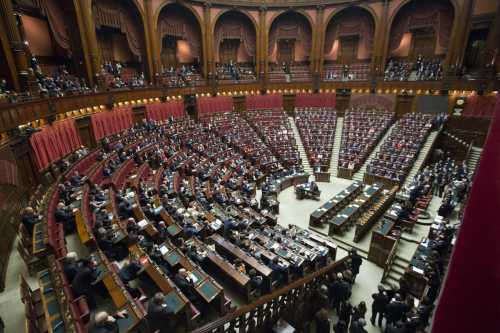
Managing the US macroeconomy under a divided government is akin to steering a supertanker with two captains fighting over the wheel; the vessel maintains forward momentum purely due to its own massive inertia, not because of coordinated navigation. The 2026 US midterm elections have cemented a divided government in Washington, triggering immediate political gridlock on fiscal and trade policies. This legislative paralysis coincides with a projected $1.9 trillion federal deficit and escalating state-level regulatory friction over technology infrastructure privatebank.jpmorgan.com , www.lombardodier.com .
The Hidden Tax of Regulatory Fragmentation
Mainstream discourse fixates on federal gridlock, but the unseen implication is the rapid decentralization of economic regulation, creating a hidden tax on corporate expansion. States are unilaterally advancing stringent accountability models for digital infrastructure. For instance, Washington state recently advanced legislation imposing temporary moratoriums and strict resource protections on data centers, demanding unprecedented levels of local accountability enkiai.com , www.facebook.com . This patchwork of state-level mandates forces multinational corporations to navigate a labyrinth of compliance, effectively raising the cost of capital. Instead of a unified national market, companies face fifty distinct regulatory regimes, stifling the very technological innovation that federal policy ostensibly aims to promote through broad infrastructure bills.
The Demographic Drag on Potential GDP
While political rhetoric dominates immigration debates, the economic reality is being quietly rewritten in labor market data, a nuance largely ignored by cable news cycles. According to data from the U.S. Census Bureau, immigration has been the major driving force behind U.S. labor force growth over the past 20 years www.migrationpolicy.org . However, restrictive policy shifts and declining immigration flows are actively reshaping the macroeconomic baseline. Goldman Sachs research explicitly forecasts that reduced immigration flows will lower potential U.S. GDP growth by 5 basis points below the pre-pandemic pace www.goldmansachs.com . The mainstream media ignores this demographic drag, focusing instead on short-term wage suppression narratives. In reality, the long-term structural deficit in prime-age workers threatens to accelerate inflationary pressures in service sectors, as demand for labor chronically outstrips domestic supply.
The Stability Premium of Legislative Paralysis
Critics of this analysis often argue that political gridlock is inherently destructive to market confidence and long-term economic growth. This perspective, however, overlooks the stability premium that divided government historically provides to financial markets. Institutional analysts note that a divided congress spells gridlock, which paradoxically supports equities and government bonds by preventing radical, market-disrupting legislative overhauls www.lombardodier.com . When neither party possesses the supermajority required to upend the status quo, the baseline regulatory environment remains predictable. This predictability offers a safe harbor for long-term institutional capital allocation, as the risk of sudden, sweeping nationalizations or draconian sector-wide taxes is effectively neutralized by the legislative stalemate.
The Tariff Illusion and Trade Realities
Another overlooked dimension is the persistence of protectionist trade mechanics despite bipartisan rhetoric favoring free markets. Active presidential tariff actions remain a dominant feature of the 2026 trade agenda, with the United States leveraging bilateral deals to maintain elevated import barriers www.everycrsreport.com . The United States-Mexico-Canada Agreement (USMCA) did not feature prominently in recent campaigns, signaling that voters and policymakers alike have tacitly accepted a new normal of managed trade www.jdsupra.com . This environment forces supply chains to prioritize geopolitical resilience over cost efficiency. Consequently, multinational firms are absorbing higher input costs, permanently altering the margin structures of import-dependent industries and passing those costs directly to the end consumer under the guise of supply chain security.
The Efficacy of Reshoring Incentives
Skeptics of the protectionist critique contend that tariffs and trade barriers are necessary catalysts for domestic industrial revival. They point to the ongoing deployment of federal infrastructure funding as evidence that strategic protectionism successfully repatriates manufacturing jobs. While the Infrastructure Investment and Jobs Act continues to channel billions into state-level projects, empirical data suggests that high state spending does not automatically translate to improved macroeconomic efficiency or infrastructure quality www.facebook.com . The reshoring narrative often conflates capital expenditure announcements with actual productive capacity, ignoring the severe domestic labor shortages that prevent these newly built facilities from operating at full utilization.
Echoes of 1995: The Precedent of Calculated Stalemate
To contextualize the current environment, one must examine the 1995-1996 federal government shutdowns under a divided Washington. That era demonstrated that while partisan brinkmanship generates intense short-term volatility, it frequently culminates in forced, incremental fiscal compromises rather than systemic collapse. The lesson for today’s market participants is that the current deficit trajectory will not be solved by a grand legislative bargain. Instead, expect a series of continuing resolutions and minor, targeted adjustments that kick the can of structural reform down the road, much like the budgetary band-aids of the mid-1990s.
Strategic Imperatives for Market Participants
For local businesses and citizens, navigating this landscape requires defensive agility and a departure from conventional growth assumptions. First, enterprises heavily reliant on federal contracts or cross-border supply chains must diversify their vendor base to mitigate the risk of sudden regulatory shifts or tariff implementations. Second, investors should overweight sectors that benefit from state-level infrastructure mandates, such as regional materials and specialized engineering firms, while underweighting highly leveraged tech ventures vulnerable to fragmented state-level data regulations. Finally, citizens should lock in fixed-rate debt instruments now. The Congressional Budget Office projects a deficit of $1.9 trillion in 2026, representing 5.8% of GDP, as the U.S. government keeps amassing debt while tax revenues fall short of spending privatebank.jpmorgan.com , www.pbs.org . This combination of demographic drag and persistent deficits will likely keep long-term yield curves elevated and volatile, making variable-rate borrowing a significant liability.
The Six-Month Horizon: Managed Volatility
Over the next six months, the US political and economic landscape will be defined by managed volatility and rhetorical escalation without substantive legislative movement. The baseline scenario indicates that political gridlock will prevent any major tax overhauls or sweeping immigration reforms before the next electoral cycle. Consequently, the Federal Reserve will remain the primary actor managing economic equilibrium, forced to navigate inflationary stickiness driven by supply chain friction and labor shortages. The market will price in this stagnation, resulting in a narrow trading range for equities and a continued, albeit uneasy, demand for US Treasuries as a global safe haven.



Comments (0)
No comments yet. Be the first to share your thoughts!
Want to join the discussion?
Please log in to post a comment.
Login NoworCreate an Account