
The Infrastructure Paradox: CPEC Phase II’s Industrial Pivot and the Gwadar Enclave

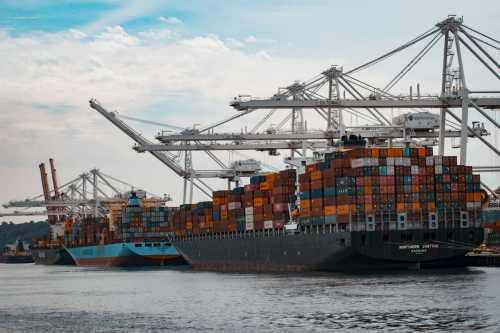
Developing a deep-water logistics node without integrating it into the domestic industrial grid is like building a Formula One track in a neighborhood restricted to golf carts . Beijing and Islamabad have formally inaugurated CPEC Phase II, pivoting from hard infrastructure to industrial cooperation, underscored by a newly approved Rs 280 billion master development plan for the Gwadar port enclave.
Special Economic Zones and the FDI Equity Shift
The transition to Phase II represents a fundamental shift in Chinese capital deployment. The era of state-backed, sovereign-guaranteed loans for highway construction is over. Beijing is now demanding equity-based joint ventures and commercial viability for Special Economic Zones (SEZs). This exposes a critical weakness in Pakistan’s industrial base: domestic manufacturers lack the technological maturity and balance sheet strength to form equitable partnerships with Chinese state-owned enterprises.
Consequently, the SEZs risk becoming isolated enclaves of Chinese manufacturing that import raw materials, assemble them using cheap local labor, and re-export the finished goods, generating minimal technology transfer or backward linkages for the domestic economy. The Rs 280 billion Gwadar development plan focuses heavily on real estate and port infrastructure, yet the hinterland connectivity required to move bulk cargo remains severely constrained by security premiums and bureaucratic inertia.
Data from the Planning Commission indicates that current SEZ occupancy rates lag behind targets by over 35%, primarily due to the prohibitive cost of industrial electricity and gas tariffs, which render local manufacturing uncompetitive against imported alternatives . Without a radical restructuring of domestic energy pricing, the physical infrastructure of CPEC Phase II will remain underutilized.
The Tech-Transfer Spillover Defense
Proponents of the current CPEC framework argue that the mere physical presence of Chinese industrial clusters will inevitably force domestic SMEs to upgrade their quality standards and logistical efficiencies to survive. This "spillover effect" is a recognized economic phenomenon, wherein local suppliers are forced to adopt international compliance standards to secure contracts within the SEZs, gradually elevating the entire domestic manufacturing ecosystem.
The Suez Canal Precedent: Bureaucracy vs. Capital
The most accurate historical parallel is the Suez Canal Economic Zone (SCZone) in Egypt. Initially, massive capital injections from Gulf and Asian partners struggled to gain traction due to domestic bureaucratic friction, overlapping regulatory jurisdictions, and security concerns. It was only after the Egyptian state enacted sweeping, unilateral regulatory exemptions and guaranteed utility subsidies that the SCZone achieved its targeted throughput volumes. Pakistan’s current bureaucratic architecture is not yet calibrated to support the velocity of capital required for Phase II.
Strategic Positioning for Domestic Manufacturers
Local businesses must act immediately to secure warehousing and logistics nodes in up-country dry ports before Gwadar fully operationalizes its commercial cargo handling. Furthermore, mid-tier manufacturers should aggressively pursue joint venture structures with mid-sized Chinese provincial firms, rather than attempting to compete directly with the massive central SOEs that dominate the headline SEZ projects. Navigating the provincial Board of Investment frameworks now will secure the tax holidays necessary to survive the initial operational years.
Geopolitical Subsidies and Perpetual Viability
A counter-argument to the commercial viability concerns is the geopolitical imperative. Gwadar’s strategic value to China’s Maritime Silk Road and its access to the Arabian Sea guarantees a perpetual stream of subsidized capital, regardless of immediate commercial return on investment. From Beijing's perspective, the port is a strategic asset first and a commercial venture second, meaning that financial shortfalls will likely be covered by opaque state-to-state rollovers rather than commercial defaults.
180-Day Outlook: Throughput Realities vs. Rhetoric
Over the next six months, expect high-profile inaugurations of the Rashakai and Dhabeji SEZs, accompanied by significant media fanfare. However, actual export volume originating from Gwadar will likely remain under 5% of Karachi Port’s total throughput. The real metric to watch is the volume of Afghan transit trade rerouting through the new corridor, which will serve as the primary stress test for the newly upgraded customs and border infrastructure.
"CPEC 2.0 marks a strategic shift from infrastructure development to industrialization, innovation, and agricultural modernization, laying a new political foundation for bilateral cooperation."
Read the CPEC Phase II Official Mandate
As highlighted in a recent World Bank logistics performance assessment, "infrastructure without institutional reform merely accelerates the velocity of bureaucratic bottlenecks" . The success of Phase II will not be measured in kilometers of highway paved, but in the reduction of dwell time at the port gates and the integration of local supply chains into the global value network.



Comments (0)
No comments yet. Be the first to share your thoughts!
Want to join the discussion?
Please log in to post a comment.
Login NoworCreate an Account