
The Institutional Fault Line: How Judicial Overreach and Trade Wars Are Reshaping U.S. Markets

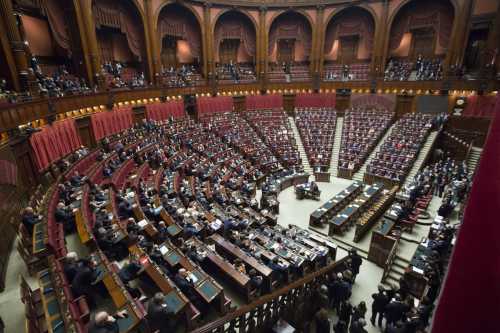
Managing the current U.S. macroeconomic and regulatory landscape is akin to rewiring a commercial airliner’s avionics while it is in a steep dive: every corrective maneuver to stabilize one system inevitably introduces catastrophic risk to another.
The Convergence of Institutional Fragmentation
The United States is currently navigating a high-stakes structural realignment defined by three converging realities. The U.S. Supreme Court has fundamentally restructured the administrative state by expanding presidential removal power over independent agencies, effectively dismantling decades of regulatory deference [[23]]. Simultaneously, this domestic institutional shift is colliding with an aggressive escalation in U.S.-China trade tariffs, including recent proposals exceeding 200% on specific strategic goods [[29]]. This geopolitical friction is compounded by intensifying political polarization ahead of the 2026 midterm elections, which is actively paralyzing congressional capacity to legislate coherent economic safeguards [[33]].
Echoes of the 1970s: The Cost of Compromised Autonomy
This current juncture bears a striking structural resemblance to the institutional breakdown of the 1970s, albeit driven by judicial rather than purely executive overreach. During that era, political pressure systematically compromised Federal Reserve autonomy, resulting in a disastrous "political business cycle" that entrenched stagflation. As former Federal Reserve Chairman Paul Volcker frequently warned, the erosion of central bank independence invariably invites short-term political expediency that exacerbates long-term macroeconomic instability [[5]]. Today, with federal prosecutors reportedly opening investigations into Fed leadership, the perceived independence of monetary policy is once again under direct assault [[8]]. The historical lesson is unambiguous: when technocratic guardrails are subordinated to partisan objectives, the resulting policy volatility invariably extracts a severe premium from the broader economy.
The Shadow Mechanics of Regulatory Decentralization
Mainstream analysis frequently overlooks how the dismantling of the administrative state actively reshapes corporate risk calculus. In Loper Bright Enterprises v. Raimondo (2024), the U.S. Supreme Court decisively overturned the longstanding Chevron doctrine, ending the era of judicial deference to federal agency interpretations of ambiguous statutes [[22]]. This seismic shift transfers the burden of legal certainty entirely onto corporate legal departments, forcing enterprises to navigate a fragmented landscape of conflicting district court rulings rather than relying on unified federal guidance. The compliance costs associated with this decentralization are staggering, particularly for mid-cap firms that lack the legal infrastructure of multinational conglomerates.
Furthermore, this domestic regulatory chaos is intersecting with profound supply chain vulnerabilities. The assumption that the U.S. can seamlessly decouple from Chinese manufacturing ignores the deeply embedded reality of intermediate goods. As the U.S.-China Economic and Security Review Commission notes, since 2025, most PRC retaliation to U.S. tariffs has involved sophisticated nontariff actions, particularly concerning critical mineral export controls [[27]]. This asymmetric leverage means that abrupt tariff escalations do not merely raise consumer prices; they actively halt production lines dependent on specialized inputs.
The third unseen implication lies in the financial markets' pricing of political risk. Historical data indicates that market volatility across asset classes during U.S. midterm elections generates directionally similar effects, spiking the VIX by an average of 15% in the six months preceding the vote [[37]]. As congressional gridlock prevents the passage of a coherent budget or debt ceiling resolution, institutional investors are beginning to price in a higher probability of a technical default or a government shutdown, further elevating borrowing costs for both the public and private sectors.
Beyond the Doom Narrative: The Efficiency Dividend
While the fragmentation of the administrative state is routinely framed as an unmitigated disaster, this perspective is analytically one-sided and ignores potential structural benefits. The collapse of Chevron deference may actually force necessary legislative clarity. For decades, Congress has outsourced complex policymaking to bureaucratic agencies, resulting in regulations that lack democratic accountability and are subject to violent pendulum swings every four years. By compelling Congress to draft precise, updated statutes, the current judicial revolution could ultimately yield more durable, transparent, and democratically legitimate regulatory frameworks. The short-term friction may be the necessary price for long-term institutional legitimacy.
Strategic Imperatives for Capital and Commerce
For local businesses and institutional investors, the current environment demands defensive posturing paired with selective opportunism. Enterprises must engage in rigorous scenario planning, modeling outcomes for both a continued judicial deregulation and a potential legislative backlash.
- Regulatory Scenario Hedging: Companies must diversify their compliance strategies, preparing for both stringent state-level regulations (e.g., California, New York) and a fragmented federal enforcement landscape. Relying on federal preemption is no longer a viable legal strategy.
- Supply Chain Localization: Given the volatility of U.S.-China nontariff barriers, businesses should aggressively map their tier-2 and tier-3 suppliers to identify hidden dependencies on critical minerals and intermediate goods. Nearshoring to allied nations is no longer optional; it is a core risk mitigation mandate.
- Duration Management: With political risk elevating the term premium on U.S. Treasuries, fixed-income portfolios should rotate toward shorter-duration assets to mitigate interest rate volatility driven by fiscal uncertainty and potential debt ceiling brinkmanship.
The Illusion of Autarky: A Necessary Counterweight
Conversely, the prevailing narrative that aggressive tariffs will rapidly rebuild American manufacturing is equally flawed. Complete supply chain independence is a statistical impossibility in the near term. The U.S. economy remains deeply integrated with global production networks, and abrupt decoupling disproportionately harms domestic downstream industries that rely on affordable imported inputs. Policymakers must recognize that trade policy is not a zero-sum game; punitive measures that ignore the complexity of global value chains will inevitably function as a regressive tax on American consumers and small businesses, stifling the very innovation they aim to protect.
The Six-Month Horizon: A Fragile Equilibrium
Over the next six months, the U.S. political and economic landscape will be characterized by a fragile equilibrium rather than a definitive breakthrough or collapse. The administration will increasingly rely on executive orders to bypass a gridlocked Congress, triggering immediate legal challenges that will further clog the federal judiciary. The Federal Reserve will likely hold rates steady to signal institutional independence, but market pricing will reflect a persistently higher risk premium. As the midterm elections approach, political polarization will intensify, making comprehensive legislative action on the budget or trade policy highly improbable. The window for coherent, bipartisan structural reform is narrowing, but it has not yet closed.
Related Articles

The Fractured Consensus: How Trade Volatility and Institutional Strain Are Rewiring U.S. Macroeconomics
Aug 22, 2026
The American Economic Tightrope: Navigating Fiscal Gridlock, Trade Protectionism, and Institutional Erosion
Aug 22, 2026
Comments (0)
No comments yet. Be the first to share your thoughts!
Want to join the discussion?
Please log in to post a comment.
Login NoworCreate an Account