
The Invisible War: Cybersecurity in 2026 Embraces AI Defense and Post-Quantum Crypto

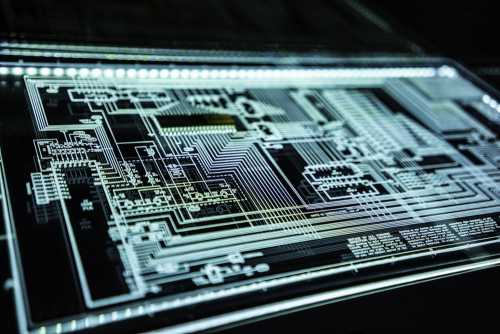
Imagine you are playing a giant game of cops and robbers in a massive, invisible city. The robbers (hackers) are constantly inventing new disguises and new tools to break into banks and houses. The cops (cybersecurity professionals) have to be one step ahead, building stronger locks and smarter alarms. In 2026, this game has reached a completely new level because both the cops and the robbers have hired super-smart robots to help them. These robots are Artificial Intelligence, and they are fundamentally changing the rules of cybersecurity thehackernews.com .
On the dark side, hackers are using AI to write malicious code that can mutate and change its appearance every time it is scanned, making it invisible to traditional antivirus software. They use AI to create incredibly convincing fake emails (phishing) that sound exactly like your boss or your bank, tricking you into handing over your passwords. They even use AI to automatically find weak spots in a company's network and attack them at lightning speed. It is an automated, industrial-scale criminal enterprise.
But the good guys are not sitting idle. Cybersecurity companies are deploying "Agentic AI" defenders www.icertglobal.com . These are AI systems that monitor the network 24/7, learning what "normal" behavior looks like for every single computer and user. If a computer that usually only sends emails suddenly starts trying to download massive files at 3 AM, the AI defender instantly recognizes the anomaly and locks the computer down before any data is stolen. It is like having a digital security guard that never sleeps and has perfect memory.
However, the biggest looming threat in 2026 is not just AI; it is Quantum Computing. Traditional computers use bits (0s and 1s) to process information. Most of our current internet security—like the padlock icon you see when you enter your credit card on a website—relies on math problems that are incredibly hard for normal computers to solve. But a quantum computer can solve these math problems in seconds. If a bad actor gets a powerful enough quantum computer, they could unlock the world's digital secrets, exposing bank records, state secrets, and private messages www.splashtop.com .
To prevent this "Q-Day" catastrophe, the cybersecurity industry is racing to implement Post-Quantum Cryptography (PQC). These are brand new types of mathematical locks that even a quantum computer cannot pick. In 2026, governments and major tech companies are aggressively updating their systems to use these new quantum-resistant algorithms. It is a massive, behind-the-scenes renovation of the internet's security infrastructure, ensuring that our digital vaults remain safe even when quantum machines become common.
Another major trend is the shift to "Zero Trust" architecture 领英企业服务 . In the past, once you logged into a company network, you were trusted to move around freely. Zero Trust assumes that the hackers are already inside. It requires every single user and device to constantly prove their identity, every time they try to access a new file or application. It is the digital equivalent of checking IDs at every single door in a building. As we navigate 2026, cybersecurity is no longer just an IT problem; it is the fundamental foundation of national security and global economic stability.
Official Source Information
SentinelOne's cybersecurity experts outline the key trends for 2026, focusing on the rise of AI adversaries and the critical need for proactive, quantum-ready defenses.
Read the SentinelOne Cybersecurity 2026 ReportRelated Articles
The Compute Reckoning: Navigating Sovereign AI, Quantum Tipping Points, and Antitrust Friction
Aug 23, 2026
The Structural Recalibration of Global Technology: Navigating Compute, Cryptography, and Geopolitical Faultlines
Aug 22, 2026
Comments (0)
No comments yet. Be the first to share your thoughts!
Want to join the discussion?
Please log in to post a comment.
Login NoworCreate an Account