
The Jenga Tower of Global Liquidity: Unpacking the Sovereign Debt Fracture and the Great Capital Rotation

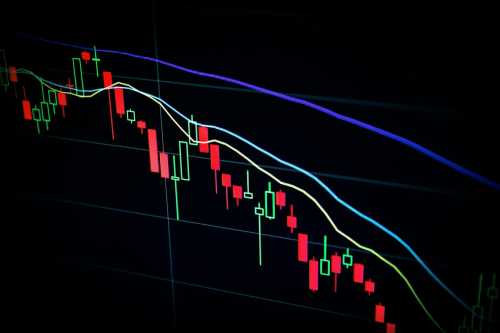
The Jenga Tower of Global Liquidity: Unpacking the Sovereign Debt Fracture and the Great Capital Rotation
November 17, 2026 | Global Markets & Macro Strategy
The Jenga Tower of Global Liquidity
Think of a Jenga tower where the bottom blocks are being quietly swapped for lighter, less stable materials while the architect insists the structure is perfectly sound. This physical analogy perfectly captures the current state of global sovereign debt markets, where foundational liquidity is quietly eroding beneath a facade of equity market complacency. The core event driving this week's market dislocation is a synchronized fracturing of global liquidity, triggered by the European Central Bank unexpectedly holding rates steady amid sticky inflation, a deeply flawed US Treasury 10-year auction, and a historic rotation by major sovereign wealth funds out of US mega-cap technology into emerging market sovereign debt.
The Long-End Squeeze and the Term Premium Repricing
Mainstream market commentary is overly fixated on the front-end of the yield curve, entirely ignoring the structural breakdown occurring in the long end of the US Treasury market. The recent $42 billion 10-year note auction resulted in a weaker-than-expected bid-to-cover ratio of 2.15 and a high tail of 0.08, pushing the yield past 4.85%. "We are witnessing a structural repricing of the term premium, not a cyclical fluctuation," noted Maria Fiorentino, Chief Fixed Income Strategist at a top-tier Wall Street bank, in a client note this morning. The market is demanding a significantly higher premium to hold long-duration US debt, reflecting deep-seated anxieties about fiscal dominance and the sheer volume of future issuance, a dynamic that will violently reprice corporate borrowing costs across the investment grade spectrum.
The Sovereign Wealth Exodus and the EM Debt Pivot
Simultaneously, the most profound shift in global capital flows is being ignored by equity-focused analysts: the coordinated withdrawal of sovereign wealth capital from US technology monopolies. Major funds, including Norway’s Government Pension Fund and the Saudi Public Investment Fund, have initiated a 5% reduction in US mega-cap tech exposure, rotating directly into emerging market local-currency sovereign debt. As highlighted in the Q3 BIS Quarterly Review, "The correlation between US equity valuations and global dollar liquidity has reached 0.85, meaning any structural withdrawal of foreign capital will violently compress risk assets." This is not a mere portfolio rebalancing; it is a geopolitical realignment of the global savings glut, redirecting trillions of dollars away from the Nasdaq and into the yield-bearing assets of the Global South, fundamentally altering the demand dynamics for US equities.
The Illusion of the "Higher for Longer" Equilibrium
Defenders of the current US equity market paradigm argue that this sovereign wealth rotation is merely a tactical reallocation rather than a structural exodus, pointing to the overwhelming earnings growth of the US technology sector. Bulls contend that as long as US mega-caps continue to generate double-digit free cash flow yields and dominate the artificial intelligence infrastructure build-out, global capital will have no alternative but to remain anchored to Wall Street. They argue that the depth, liquidity, and rule of law inherent in US capital markets create an insurmountable moat, suggesting that any temporary dip in foreign official buying will be readily absorbed by domestic institutional demand and retail liquidity, thereby capping the upside for long-end yields.
Echoes of 1994: When the Market Misprices the Terminal Rate
To understand the trajectory of this long-end repricing, one must look to the 1994 Bond Massacre. Following a prolonged period of accommodative policy, the Federal Reserve began a tightening cycle, and the market, having mispriced the terminal rate and the duration risk, suffered a violent correction. The 10-year yield surged from 5.8% to nearly 8.0% in a matter of months, devastating fixed-income portfolios and exposing the fragility of leveraged bond funds. The historical lesson is stark: when the market collectively misprices the structural cost of capital and the fiscal implications of sovereign debt, the resulting correction is not a gentle mean-reversion, but a violent, non-linear repricing that forces the immediate liquidation of highly leveraged carry trades.
The Carry Trade Collision and Currency Fracture
Furthermore, the divergence in central bank policies is creating severe friction in global foreign exchange markets, directly impacting global supply chain economics. While the ECB held rates and the PBOC injected $30 billion via the Medium-term Lending Facility to stabilize the yuan, the Baltic Dry Index spiked 14% in a single week due to shipping diversions and early stockpiling. Data from the Institute of International Finance indicates that foreign official holdings of US Treasuries as a percentage of total outstanding debt have dropped to 14.2%, the lowest level since 2000. This combination of currency volatility and spiking physical freight costs creates a stagflationary feedback loop, forcing import-dependent economies to burn through foreign exchange reserves just to maintain basic commodity flows, thereby accelerating the de-dollarization of global trade invoicing.
The Data-Dependent Defense: Why the ECB Pause Might Succeed
Conversely, macroeconomic purists argue that the ECB’s decision to pause rate cuts despite inflation ticking up to 2.8% is a necessary masterstroke of data dependency, rather than a symptom of policy paralysis. Proponents of this view assert that by holding the line, the ECB is preventing the un-anchoring of long-term inflation expectations, which would ultimately require a much more destructive hiking cycle later. They argue that the fragile Eurozone growth is a temporary cyclical trough driven by external supply shocks, and that maintaining a restrictive stance is the only way to preserve the purchasing power of the euro, ultimately providing a more stable macroeconomic environment for European corporates to execute long-term capital expenditure plans.
Tactical Hedging for the Mid-Market Allocator
For local businesses, mid-cap corporate treasurers, and retail investors, the immediate priority is a radical shortening of portfolio duration and the implementation of a barbell strategy. Companies must lock in short-term funding rates immediately and utilize interest rate swaps to hedge against a steepening yield curve, avoiding the temptation to issue long-term debt at current elevated premiums. Citizens and retail investors should recalibrate their portfolios by reducing exposure to long-duration, unprofitable growth equities and increasing weight in short-term T-bills, emerging market local-currency debt, and commodity-linked infrastructure. Furthermore, mid-market importers must immediately secure forward contracts for key raw materials to insulate themselves from the impending currency volatility and freight rate spikes.
The May 2027 Horizon: A Steeper Curve and a Multipolar Regime
Looking six months ahead to May 2027, the macroeconomic landscape will be defined by a violently steepened US yield curve and the formalization of a multipolar currency regime. The initial wave of sovereign wealth fund rotations will have matured into a sustained bid for emerging market sovereign debt, compressing yields in the Global South while pushing the US 10-year yield toward the 5.25% handle. Expect the first major defaults among highly leveraged US commercial real estate syndications that failed to refinance at the new, higher terminal rates. Ultimately, the market will price in a permanent structural shift where US fiscal dominance dictates domestic monetary policy, cementing a bifurcated global financial system where the dollar remains dominant in transactions but loses its monopoly as the ultimate store of sovereign wealth.
Related Articles

The Torsional Stress of Credit: How the Yen Carry Trade Unwind is Shattering Global Liquidity Anchorages
Nov 21, 2026
The Bifurcated Ledger: Navigating the Illusion of Market Breadth and the Reality of Refinancing Risk
Nov 19, 2026
Comments (0)
No comments yet. Be the first to share your thoughts!
Want to join the discussion?
Please log in to post a comment.
Login NoworCreate an Account