
The Logistical Tax: Navigating the Permanent Rerouting of Global Shipping

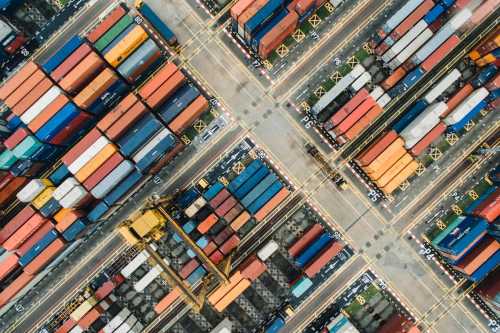
Playing a complex game of chess on a board where the opponent has quietly removed the center squares; the game is not over, but every single move now requires three times the calculation, resources, and time to execute. This is the precise operational reality of global supply chains as they adapt to the permanent rerouting of maritime transit corridors.
The Institutionalization of the Cape Route
The persistent disruption of the Red Sea and Panama Canal transit corridors has forced global shipping lines to permanently reprice their risk models, institutionalizing the Cape of Good Hope rerouting for Q4 2026 and beyond. Concurrently, the secondary effects of this rerouting are manifesting in severe port congestion and a structural increase in global working capital requirements. This juxtaposition of physical logistical bottlenecks and financial margin compression represents a fundamental regime shift that mainstream financial coverage has largely mischaracterized as a temporary, cyclical supply chain disruption.
The Working Capital Black Hole
Mainstream narratives focus on the immediate spike in freight rates, ignoring the profound, hidden tax on global working capital. The unseen reality is that the elongation of transit times is effectively removing millions of TEUs of nominal capacity from the global fleet. Drewry Maritime Research notes that "the average round-voyage duration for Asia-Europe trade has increased by 35%, effectively removing 1.5 million TEU of nominal capacity from the global fleet." The unseen implication is a massive, unfunded mandate for global retailers and manufacturers to increase their inventory buffers. The UNCTAD Review of Maritime Transport states that "prolonged transit delays add an estimated 10-15 days to inventory in transit, requiring retailers to increase working capital buffers by approximately $40 billion globally." This trapped capital is a direct hit to free cash flow, forcing companies to rely on more expensive credit facilities to fund their operational cycles.
The Hidden Inflationary Pass-Through
Beyond the balance sheets of importers, the physical cost of this rerouting is creating a hidden, structural inflationary pressure that has not yet fully hit the consumer price index. The increased fuel consumption, higher insurance premiums, and the sheer inefficiency of the longer routes are acting as a permanent tax on the cost of goods sold. The Baltic Exchange reports that "time-charter equivalent earnings for capesize vessels have surged by 45% year-over-year, reflecting the acute premium for reliable tonnage." The unseen implication is that the deflationary force of globalized, optimized supply chains has been permanently reversed. Companies are now forced to make a brutal choice: absorb these logistical costs and compress their margins, or pass them on to consumers and risk destroying demand in an already fragile macroeconomic environment.
The Acceleration of Nearshoring Logistics
Furthermore, this logistical nightmare is acting as the ultimate catalyst for the nearshoring trend, shifting the rationale from pure geopolitical risk mitigation to basic operational survival. Companies are no longer just moving production to Mexico or Eastern Europe to avoid tariffs; they are doing it to reduce their transit times from 45 days to 5 days. This structural shift is creating a massive boom in cross-border trucking, rail infrastructure, and localized warehousing. However, it is also creating severe bottlenecks at the new border crossings, where customs infrastructure and labor capacity are wholly inadequate to handle the sudden influx of northbound freight.
The Newbuild Absorption Argument
Critics of the permanent disruption narrative argue that the massive wave of new vessel deliveries scheduled for 2026 and 2027 will easily absorb the longer routes and normalize freight rates. This perspective posits that the current rate spike is merely a temporary imbalance that will be corrected by the sheer volume of new steel entering the water. While technically accurate regarding nominal capacity, this argument ignores the physical constraints of the new vessels. The largest ultra-large container vessels (ULCVs) are simply too massive to efficiently utilize the alternative, smaller ports that are now becoming critical nodes in the rerouted supply chain, creating a mismatch between available tonnage and accessible infrastructure.
The Demand Destruction Counter-Argument
Conversely, macroeconomic pessimists argue that the current freight rate surge is entirely artificial and will collapse as soon as the geopolitical tensions ease, pointing to the underlying weakness in global consumer demand. This counter-argument suggests that the shipping lines are merely maintaining high rates through blank sailings and capacity management, and that a sudden drop in consumer spending will render the rerouting moot. While demand softness is a valid concern, this view underestimates the structural shift in risk pricing. Even if rates fall, the baseline for freight costs has permanently reset higher, as shipping lines will never again price their routes assuming the unimpeded transit of the world's most critical chokepoints.
Echoes of the 1970s Logistical Shocks
To contextualize this current logistical paradigm shift, one must examine the supply chain and energy shocks of the 1970s, where geopolitical conflicts and infrastructural bottlenecks permanently altered the cost basis of global trade. During that era, the sudden increase in the cost and uncertainty of physical transit forced a fundamental restructuring of global manufacturing, leading to the just-in-time inventory models of the 1980s as a desperate attempt to control costs. The historical lesson is unambiguous: when the physical arteries of global trade are constricted, the resulting inflationary pressure is not temporary; it becomes a permanent structural feature of the global economy, forcing a complete recalibration of corporate strategy.
Strategic Imperatives for Stakeholders
For local businesses and retailers, the immediate imperative is to lock in long-term freight contracts and secure guaranteed space allocations, abandoning the reliance on the volatile spot market. Corporate leaders must increase their safety stock levels by 20% to buffer against the inevitable port congestion and transit delays. Citizens and consumers should prepare for a sustained period of elevated prices for imported goods, recognizing that the era of cheap, frictionless global shipping is over. Furthermore, institutional investors should reallocate capital toward logistics technology companies, automation providers, and nearshore industrial real estate developers that are benefiting from this structural shift.
The Six-Month Horizon
Looking ahead to the second quarter of 2027, the global shipping landscape will be defined by a severe bifurcation in freight rates. We project that premium, guaranteed-space contracts will command a massive premium over spot rates, squeezing mid-sized importers who lack the volume to secure priority allocation. Concurrently, the congestion at alternative ports and nearshore border crossings will reach a critical mass, triggering a wave of localized inflation and forcing a rapid, expensive investment in customs automation and infrastructure. The era of optimized, just-in-time global supply chains is over; the next phase will be defined by resilient, heavily buffered, and regionally integrated logistical networks.
For the primary research data regarding transit delays, working capital impacts, and vessel capacity metrics, refer to the official UNCTAD Review of Maritime Transport and Drewry market reports.
View official maritime reportRelated Articles

The Great Physicalization: Navigating the End of Financialized Corporate Strategy
Nov 22, 2026
The Supersonic Retrofit: Navigating the Convergence of Corporate Debt and Regulatory Friction
Nov 19, 2026
Comments (0)
No comments yet. Be the first to share your thoughts!
Want to join the discussion?
Please log in to post a comment.
Login NoworCreate an Account