
The Long Silence is Broken: India and Pakistan Quietly Prepare to Restart Dialogue and Revive SAARC Ties

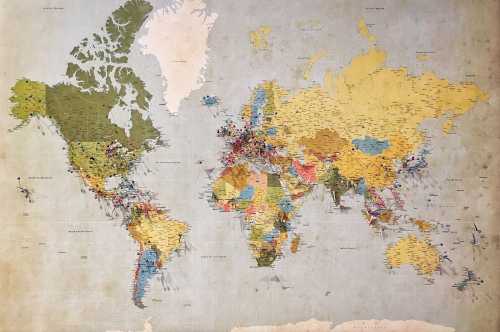
Imagine two neighbors who live right next to each other, separated only by a low fence. For years, they have been absolutely furious with each other. They stopped talking, stopped borrowing cups of sugar, and even built giant, ugly walls to block the view of each other's houses. Their children are not allowed to play together, and they spend all their money buying bigger and bigger locks for their doors instead of fixing their roofs. One day, at a mutual friend's birthday party, the two neighbors accidentally make eye contact and give a tiny, awkward nod. It is not a hug, and it is not an apology, but it is a start. This is exactly what is happening between India and Pakistan in 2026. After years of frozen relations, downgraded diplomatic ties, and bitter rhetoric, unofficial voices and quiet backchannel talks are pushing the two nuclear-armed neighbors to finally restart dialogue and revive the dormant SAARC regional club.
To understand the magnitude of this potential thaw, we have to look at the tragic history of their relationship. Since the partition of the subcontinent in 1947, India and Pakistan have fought multiple wars and engaged in endless diplomatic standoffs. The primary flashpoint has always been the disputed territory of Jammu and Kashmir. In 2019, relations hit a freezing point when India revoked the special autonomous status of Indian-administered Kashmir. Pakistan responded by downgrading diplomatic ties, expelling high commissioners, and suspending all bilateral trade. The cost of this hostility has been astronomical. According to economic studies, the lack of trade between the two neighbors costs the region billions of dollars every year. Pakistani exporters lose access to a massive market of 1.4 billion people, and Indian businesses miss out on cheap, high-quality textiles, cement, and agricultural products from Pakistan. Both countries spend billions on military buildup, money that could have been spent on schools, hospitals, and fighting climate change.
But in 2026, the geopolitical winds have shifted dramatically. Analysts point out that India's aggressive efforts to diplomatically isolate Pakistan have largely backfired. Instead of being isolated, Pakistan has found itself in a 'diplomatic sweet spot,' being actively wooed by major global powers like the United States, China, and the Gulf nations who see Pakistan as a vital partner for regional stability and economic connectivity. Recognizing that isolation is not working, and facing its own domestic economic challenges and border tensions with China, New Delhi is quietly signaling a willingness to engage. The 'Handshake in Dhaka'—a reference to a recent high-level informal meeting on the sidelines of a global forum—sent shockwaves through the diplomatic community. It was a clear message that the ice is finally breaking.
The most tangible sign of this thaw is the revival of SAARC, the South Asian Association for Regional Cooperation. Think of SAARC as a neighborhood watch and trade club for all the countries in South Asia, including India, Pakistan, Bangladesh, Sri Lanka, Nepal, Bhutan, and the Maldives. For years, SAARC has been completely dead because India and Pakistan refused to attend each other's hosted summits. But now, reports suggest that Delhi may finally allow the next SAARC summit to happen in Islamabad. This is a monumental shift. If SAARC is revived, it could lead to a massive regional free trade agreement, connecting highways, sharing electricity grids, and allowing students to easily travel across borders for education. It would transform South Asia from one of the least integrated regions in the world into a booming economic powerhouse, similar to the European Union or Southeast Asia's ASEAN.
What does this mean for the regular person living in Lahore or Mumbai? It means cheaper goods. If trade resumes, a farmer in Punjab can sell his potatoes and onions across the border, making a good profit, while a consumer in Delhi gets cheaper vegetables. A textile mill in Faisalabad can export its fabrics to Mumbai without paying massive tariffs, creating thousands of jobs. The cost of travel could drop, allowing families divided by the border to visit their relatives more easily. Most importantly, it means a reduction in the constant fear of war. When leaders are talking, they are not shooting. The psychological relief of living in a peaceful neighborhood cannot be measured in dollars, but it improves the quality of life for millions of people.
The global media is closely watching this delicate diplomatic dance, hoping that the quiet nods turn into a formal peace agreement. Here is how the international press is analyzing this historic potential shift:
Posted by Al Jazeera on Tuesday, January 1, 2026
The road to full normalization will be long and filled with obstacles. Deep mistrust, cross-border terrorism concerns, and domestic political pressures in both countries mean that progress will be slow and incremental. But the fact that the dialogue is happening at all is a miracle. The long silence is finally being broken, and the people of South Asia are daring to hope for a future where they are defined by their shared culture and trade, rather than their borders and battles. To read more about the backchannel diplomacy and the potential revival of SAARC, you can visit the official news portal at aljazeera.com.
Related Articles
The Multipolar Fracture: Navigating Defense Realignment, Institutional Arbitrage, and Tactical Instability
Aug 23, 2026
The Architecture of Fragmentation: Navigating the Multipolar Shift in Global Governance
Aug 22, 2026
Comments (0)
No comments yet. Be the first to share your thoughts!
Want to join the discussion?
Please log in to post a comment.
Login NoworCreate an Account