
The Macro-Financial Squeeze: Navigating the 2026 Liquidity Trap and Asset Repricing

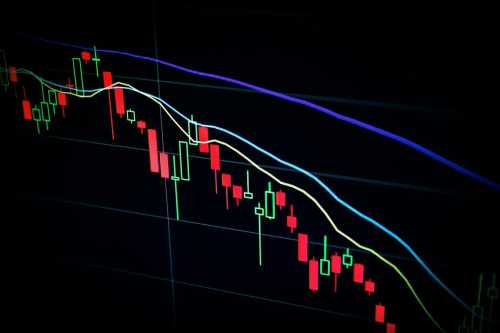
Think of a high-pressure hydraulic system where the primary release valve has been intentionally welded shut while the pump continues to force fluid into the lines. The pressure gauge is climbing deep into the red, yet the operator insists the machinery is stable simply because the reinforced pipes have not yet burst. This is the precise mechanical reality of the global financial architecture in late 2026. The simultaneous convergence of a late-stage artificial intelligence equity valuation correction, a one-trillion-dollar commercial real estate refinancing wall, and persistent Federal Reserve rate rigidity is triggering a synchronized liquidity squeeze across global markets.
The Phantom Leverage in Emerging Debt
Mainstream financial coverage has myopically fixated on the volatility of United States technology equities, entirely ignoring the systemic fragility building in developing economies. The unseen implication is that tighter financial conditions and increased financing costs are currently being experienced acutely by emerging markets, creating a perfect storm for capital flight. As public debt in emerging markets has surged since the pandemic, the exposure of domestic banking systems to sovereign defaults has created a dangerous feedback loop www.elibrary.imf.org . High leverage among nonbank financial institutions and rollover risks in sovereign bond markets are amplifying these capital outflows, threatening to destabilize currencies that are already battered by a strong dollar www.linkedin.com . In emerging markets, carry trade unwinds may further amplify these currency pressures, creating a self-reinforcing cycle of depreciation and debt distress that global indices have yet to fully price in www.imf.org .
The Semiconductor Chokehold
Furthermore, the market is fundamentally mispricing the severity of supply chain fragmentation. Current semiconductor supply chain disruptions are driven fundamentally by raw material supply constraints, not merely demand allocation, as factories attempt to run at maximum capacity carraglobe.com . Intensifying geopolitical tensions are fracturing the global semiconductor supply chain, forcing multinational corporations to build redundant, inefficient logistics networks onlinelibrary.wiley.com . The structural reality is that the semiconductor supply chain is too entangled for rapid decoupling, with approximately 90% of advanced manufacturing capacity remaining concentrated in a single geographic region www.linkedin.com . This structural decoupling effectively imports inflation directly into the consumer price index, neutralizing the very monetary tightening the central bank is attempting to enforce.
The Commercial Real Estate Reckoning
Domestically, the banking sector is staring down one of the most consequential refinancing cycles in modern history. Roughly $1 trillion in commercial real estate debt comes due this year, pushing industry experts to acknowledge that asset workouts have entered a more forced phase urbanland.uli.org . This is not a gradual correction; it is a rapid compression of capitalization rates and a simultaneous evaporation of traditional bank lending. The valuation gap in commercial real estate continues to evolve as the market adjusts to higher-for-longer interest rates, forcing distressed assets into the hands of opportunistic private credit funds at steep discounts and threatening the balance sheets of regional financial institutions.
Echoes of the 1994 Bond Market Massacre
The current kinetic standoff structurally mirrors the policy dissonance of the 1994 bond market massacre, where unexpected Federal Reserve tightening triggered a global rout. In the 1990s, the shockwave manifested as the Tequila Crisis in emerging markets, exposing the fragility of short-term debt financing. Today, the baseline is far more complex, compounded by algorithmic trading and passive index concentration. The historical lesson is clear: attempting to engineer a macroeconomic soft landing during a period of intense asset concentration and structural debt maturity walls has a historically low probability of success without triggering severe localized financial distress and yield curve inversion.
The Innovation Premium Defense
However, to view the technology sector purely through the lens of an impending speculative collapse ignores the fundamental financial health of modern tech monopolies. The counter-argument to the artificial intelligence bubble narrative is rooted in balance sheet reality: many of these AI-driven firms are highly profitable, possess massive cash reserves, and already dominate global markets, making a pure speculative vaporization unlikely vittarthi.com . Unlike the dot-com era of 1999, today's market leaders generate substantial free cash flow, providing a structural buffer against moderate valuation resets and ensuring that capital remains anchored to fundamentally productive enterprises.
The Private Capital Safety Net
Conversely, alarmist predictions of a systemic banking collapse driven by commercial real estate defaults fail to account for the evolution of shadow banking and alternative credit. Private lenders are actively reshaping commercial real estate financing, providing an estimated 875 billion dollar refinancing opportunity that effectively walls off traditional depository institutions from the worst of the contagion origininvestments.com . This private capital absorption acts as a vital shock absorber, preventing localized property distress from cascading into a broad credit freeze and allowing the broader financial system to maintain liquidity.
Navigating the Volatility Matrix
For local enterprises and investors operating within this kinetic environment, passive observation is a dereliction of fiduciary duty. Immediate tactical hedging is required. Manufacturing firms must execute forward contracts to lock in semiconductor supply costs, anticipating severe volatility as raw material bottlenecks persist. Supply chain managers must pivot from just-in-time inventory models to localized stockpiling of critical components to mitigate geopolitical friction. Citizens and institutional allocators with liquid capital should diversify out of prolonged duration bonds and into short-term Treasury instruments or hard assets, as the political and macroeconomic premium on long-term debt is currently mispriced by the market.
The Six-Month Horizon
Looking ahead to the first quarter of 2027, the landscape will be defined by a brutal, behind-closed-doors institutional compromise. The most probable forecast is a managed de-escalation where the Federal Reserve signals a definitive policy pause, allowing selective commercial real estate workouts and artificial intelligence market consolidation to occur without triggering a broader panic. This calculated stagnation will effectively neutralize the most extreme financial agitation, allowing the state to maintain the facade of functional governance and ensuring the macroeconomic framework survives intact into the next fiscal cycle.
Related Articles

The Torsional Stress of Credit: How the Yen Carry Trade Unwind is Shattering Global Liquidity Anchorages
Nov 21, 2026
The Bifurcated Ledger: Navigating the Illusion of Market Breadth and the Reality of Refinancing Risk
Nov 19, 2026
Comments (0)
No comments yet. Be the first to share your thoughts!
Want to join the discussion?
Please log in to post a comment.
Login NoworCreate an Account