
The Macro Friction Point: Navigating the 2026 AI Infrastructure and Regulatory Repricing

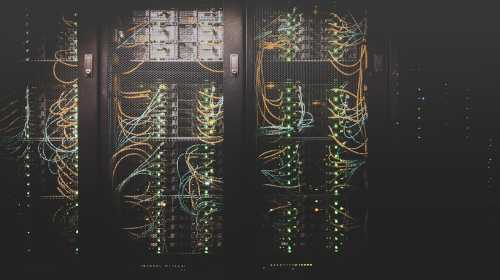
The current artificial intelligence boom is frequently mischaracterized as a digital gold rush. In reality, it mirrors the construction of a transcontinental railroad. The enduring economic value will not accrue to the speculative miners digging for algorithmic breakthroughs, but to the entities controlling the tracks (semiconductor compute), the steel (energy infrastructure), and the land rights (proprietary, copyright-cleared data).
The Convergence of Physical and Regulatory Friction
The global artificial intelligence landscape has reached a definitive inflection point. The convergence of stringent semiconductor export controls, unsustainable data center energy demands, and the impending enforcement of comprehensive regulatory frameworks has fundamentally altered the trajectory of technology deployment. Specifically, the European Union’s AI Act will enforce its full suite of high-risk system requirements in 2026, while landmark legal precedents are simultaneously redefining the liability of training data usage walled.ai . This is no longer a purely technological race; it is a complex macroeconomic and geopolitical stress test.
The Energy Grid Bottleneck
Mainstream financial analysis relentlessly celebrates the scaling of large language models while willfully ignoring the physical infrastructure limits that govern them. The unseen reality is that artificial intelligence data center grid strain has emerged as the primary barrier to sector growth by 2026 enkiai.com . Industry analysts project that artificial intelligence could drive data center electricity consumption to double by 2030, making power availability the absolute dictator of multi-billion dollar capital expenditures enkiai.com . This demand is forcing technology giants into unprecedented partnerships with legacy nuclear and fossil fuel providers, directly contradicting stated corporate decarbonization goals and introducing severe regulatory and reputational risks that equity markets have yet to price in.
The Sovereign Compute Divide
A second, deeply underreported implication is the fracturing of the global artificial intelligence ecosystem into incompatible, sovereign silos. Aggressive United States export controls on advanced semiconductors were designed to maintain a decisive technological lead. However, this strategy is producing a perverse incentive structure. The Huawei Ascend line, for instance, accounted for roughly half of China's domestic AI chip shipments in 2025, demonstrating that restrictive trade policies are accelerating indigenous self-sufficiency rather than halting technological progress medium.com . We are witnessing the balkanization of the digital economy, where regional models are trained on localized, censored datasets, creating permanent interoperability gaps in global software supply chains.
The Enterprise Liability Chill
Furthermore, the legal foundation of generative artificial intelligence is undergoing a violent correction. A federal judge recently approved a $1.5 billion copyright settlement in which an artificial intelligence company will pay thousands of authors, establishing a costly, definitive precedent for training data liability www.facebook.com . This ruling has triggered a profound liability chill across the enterprise sector. Chief Legal Officers are now actively halting the deployment of external generative tools, recognizing that the financial risk of intellectual property infringement and algorithmic hallucination vastly outweighs the marginal productivity gains. The era of unregulated data scraping has been legally terminated, forcing companies to build expensive, walled-garden data pipelines.
Reevaluating the Labor Displacement Narrative
Critics of the current artificial intelligence investment thesis frequently argue that generative models will cause mass structural unemployment, rendering vast swaths of the white-collar workforce obsolete. This apocalyptic view, while emotionally resonant, is empirically flawed and ignores nuanced labor market data. Back-of-the-envelope calculations from the St. Louis Fed suggest generative AI may have increased labor productivity by up to 1.1-1.3 percent, though this gain is heavily skewed toward mid-level workers aleximas.substack.com . The technology is currently functioning as an augmentation tool that elevates baseline output, rather than a wholesale replacement for human capital. Senior experts and highly specialized roles remain largely unaffected, indicating that the primary risk is not job elimination, but a widening experience gap between junior and senior personnel.
The Fallacy of Permanent Technological Containment
Conversely, some geopolitical hawks maintain that United States chip bans will permanently cripple the artificial intelligence capabilities of strategic rivals. This perspective relies on a static view of global innovation. While export controls undoubtedly impose severe short-term friction and limit access to cutting-edge processing nodes, they act as a powerful catalyst for domestic substitution. History demonstrates that targeted industries possess a high degree of resilience and will innovate around sanctions when faced with existential market exclusion. Assuming permanent technological supremacy ignores the massive state-directed capital now flowing into alternative semiconductor architectures and advanced packaging techniques in Asia.
Echoes of the 1990s Fiber-Optic Bubble
The current market configuration bears a striking resemblance to the late 1990s telecom and fiber-optic bubble. During that era, markets priced in infinite demand for bandwidth, leading to massive, indiscriminate overinvestment in physical infrastructure. When the anticipated near-term revenue failed to materialize, a brutal market bust ensued, wiping out trillions in equity value. However, the historical lesson is unequivocal: that "failed" overinvestment laid the indispensable, deflationary groundwork for the modern internet economy. Similarly, today's hyper-capital expenditure in data centers will inevitably face a severe valuation correction. Yet, the physical compute infrastructure and the foundational models being built will remain, eventually yielding profound, albeit delayed, macroeconomic returns.
Strategic Imperatives for Market Participants
Local businesses and institutional investors must immediately adapt their operational and capital allocation strategies to this higher-friction environment. First, corporate legal and compliance teams must urgently audit all artificial intelligence vendor contracts to ensure alignment with the European Union’s AI Act high-risk obligations taking effect in 2026 walled.ai . Second, enterprises reliant on compute-heavy operations should secure long-term, fixed-rate power purchase agreements to hedge against the impending volatility in data center energy pricing. Third, individual workers should pivot their upskilling efforts away from basic prompt engineering and toward AI-augmented workflow architecture, positioning themselves as the managers of automated systems rather than competitors to them.
The Six-Month Horizon: Consolidation and Bloc Formation
Over the next six months, the artificial intelligence landscape will experience a pronounced period of market consolidation and geopolitical realignment. As venture capital becomes increasingly scarce and the cost of model training remains prohibitive, a wave of mergers and acquisitions will sweep through mid-tier startups, with hyperscalers acquiring them primarily for their proprietary, copyright-cleared datasets. Concurrently, we will see the formalization of a compute trade bloc, where allied nations explicitly coordinate semiconductor supply chains and establish mutual recognition of safety standards, deliberately excluding specific geopolitical rivals from the advanced technology ecosystem. The market will reward discipline, compliance, and physical infrastructure over pure algorithmic hype.
Related Articles

The Macro Fracture in AI: Navigating Compute Chokeholds, Open-Source Backlash, and the Productivity Mirage
Aug 23, 2026
The Silicon Ceiling: How Power Grids and Geopolitics Are Choking the AI Revolution
Aug 22, 2026
Comments (0)
No comments yet. Be the first to share your thoughts!
Want to join the discussion?
Please log in to post a comment.
Login NoworCreate an Account