
The Macroeconomic Paradox: Navigating US Political and Regulatory Fragmentation in 2026

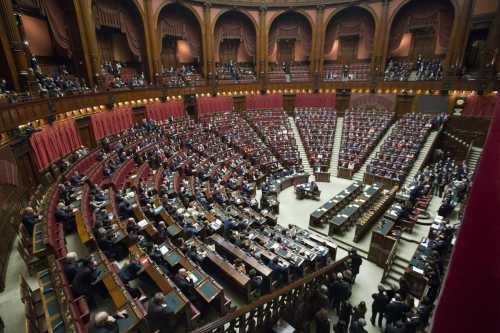
Navigating the Macroeconomic Paradox
Navigating the current U.S. political economy is akin to piloting a commercial airliner through severe atmospheric turbulence while the co-pilots actively dismantle the navigation instruments and argue over the flight manual. The core event anchoring current market sentiment is a stark macroeconomic paradox: the U.S. economy posted a robust 3.4% GDP growth in the third quarter of 2026, yet stubborn inflation has forced the Federal Reserve to maintain the federal funds rate at 3.75% to 4.00% www.whitehouse.gov , tradingeconomics.com . Concurrently, a fractured post-midterm Congress remains gridlocked on comprehensive artificial intelligence regulation and trade policy, even as the Supreme Court systematically dismantles the administrative state’s regulatory authority www.facebook.com , www.klgates.com .
The Regulatory Vacuum and Corporate Adaptation
Mainstream financial narratives frequently celebrate recent GDP resilience while ignoring the profound structural shifts occurring beneath the surface of federal governance. The judicial dismantling of longstanding administrative deference means federal agencies can no longer rely on courts to defer to their interpretations of ambiguous statutes www.klgates.com . This seismic shift transfers the primary burden of regulatory compliance from centralized federal agencies to decentralized corporate legal departments. The result is a fragmented, state-by-state compliance landscape that disproportionately burdens mid-cap enterprises, which lack the sprawling legal infrastructure of megacorporations to navigate fifty distinct regulatory regimes.
The Tariff Illusion and Supply Chain Decoupling
Furthermore, the prevailing political consensus around reciprocal tariffs is being fundamentally misread by market participants as a temporary negotiating tactic rather than a permanent structural realignment. While protectionist measures are touted as tools for domestic economic leverage, they are actively accelerating the decoupling of critical supply chains ppr.lse.ac.uk . The domestic business community, including the politically influential agriculture sector, is quietly absorbing these cascading input costs, leading to severe margin compression rather than the promised domestic reshoring boom www.wita.org . This dynamic effectively functions as a hidden tax on industrial productivity, rendering export-oriented manufacturing globally uncompetitive.
The AI Governance Lag
Finally, the legislative inability to modernize congressional committee structures for rapidly evolving technologies creates a dangerous governance vacuum. Congress struggles to regulate artificial intelligence due to outdated jurisdictional boundaries and profound technical illiteracy among key committee members www.facebook.com . This institutional paralysis allows dominant technology monopolies to effectively self-regulate, embedding proprietary, unaudited algorithms into critical national infrastructure without adequate federal oversight, antitrust scrutiny, or standardized risk-assessment frameworks.
The Efficiency Dividend of Judicial Restraint
Critics of the current judicial trajectory argue that stripping administrative agencies of deference invites regulatory chaos and corporate exploitation. However, this perspective overlooks the historical burden of overlapping, contradictory federal mandates that have systematically stifled innovation. As Justice Scalia previously articulated in foundational administrative law jurisprudence, "The Agency must consider cost," a principle that forces a necessary, albeit painful, recalibration of bureaucratic overreach ballotpedia.org . This judicial restraint may ultimately yield a more predictable, statute-bound regulatory environment that rewards long-term capital investment over short-term compliance gaming.
Echoes of the 1970s Stagflation and Deregulation Pivot
This current macroeconomic and political configuration bears a striking, analytical resemblance to the late 1970s. During that era, the United States faced stubborn inflation, a fractured political establishment, and a growing bipartisan consensus that the existing administrative framework had become sclerotic. The eventual pivot toward aggressive deregulation in the early 1980s unleashed significant short-term economic growth but simultaneously seeded long-term structural inequalities and financial fragility. The historical lesson is unequivocal: dismantling regulatory guardrails without concurrently modernizing market oversight mechanisms invites speculative excess and systemic vulnerability.
The Strategic Necessity of Economic Statecraft
Conversely, free-trade absolutists contend that the current tariff regime is purely self-defeating economic nationalism that harms domestic consumers. Yet, this view fails to account for the geopolitical reality of weaponized interdependence. In an era where critical minerals, pharmaceuticals, and semiconductor supply chains are actively leveraged as instruments of statecraft by rival powers, reciprocal tariffs serve as a necessary, albeit blunt, defensive mechanism. The short-term economic friction and localized price increases are the calculated, unavoidable cost of preserving long-term national security and technological sovereignty.
Strategic Imperatives for Enterprises and Investors
For local businesses operating within this volatile matrix, the immediate imperative is aggressive de-risking of supply chains and meticulous hedging against persistent currency and tariff volatility. Corporate legal teams must proactively engage in state-level regulatory advocacy, as the locus of substantive rulemaking has decisively shifted from Washington to state capitols. For individual and institutional investors, capital allocation should favor companies with robust, in-house compliance architectures and demonstrable pricing power, while systematically avoiding highly leveraged firms vulnerable to a sustained, higher-for-longer interest rate environment.
The Six-Month Horizon: Fragmented Stabilization
Looking ahead, the landscape over the next six months will be defined by fragmented stabilization. S&P Global’s November 2026 forecast update indicates that GDP growth will inevitably moderate as the cumulative weight of elevated borrowing costs and trade friction takes hold across the broader economy forecast.eller.arizona.edu . The Federal Reserve will remain strictly data-dependent, likely holding rates steady to combat sticky inflation, while Congress remains paralyzed by partisan brinkmanship tradingeconomics.com . The result will be a deeply bifurcated economy: large, capitalized entities will thrive in the deregulated, state-driven environment, while smaller enterprises will face mounting existential pressure from compounding compliance costs and severe capital constraints.



Comments (0)
No comments yet. Be the first to share your thoughts!
Want to join the discussion?
Please log in to post a comment.
Login NoworCreate an Account