
Economy
The Macroeconomic Squeeze: Navigating the Hidden Fractures in the 2026 Economy
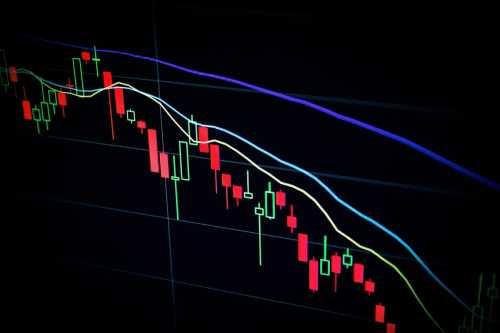
The Economic Incline: Momentum Versus Friction
Think of the current macroeconomic environment not as a smoothly running engine, but as a high-performance vehicle attempting to navigate a steep, icy incline with the parking brake partially engaged. The forward momentum is maintained by sheer inertia and residual fiscal stimulus, but the underlying friction is generating dangerous heat. The core event defining this moment is the Federal Reserve's decision to hold the federal funds rate steady at 3.50% to 3.75% amid persistent inflationary pressures, coinciding with a World Bank projection that global growth will decelerate to a sluggish 2.5% in 2026 www.federalreserve.gov , openknowledge.worldbank.org . This policy stagnation is colliding with a deeply fractured domestic economy, where record consumer debt and housing illiquidity are creating a hidden systemic vulnerability.The Silent Erosion of Household Balance Sheets
Mainstream financial coverage frequently touts the resilience of the American consumer, systematically ignoring the deteriorating quality of household balance sheets. U.S. consumer debt has surged to $18.19 trillion in the first quarter of 2026, with total credit card balances alone reaching $1.263 trillion by the second quarter www.lendingtree.com , investor.equifax.com . This is not merely a statistical anomaly; it represents a structural shift toward high-cost, unsecured borrowing to fund basic consumption. As Chicago Federal Reserve President Austan Goolsbee recently noted, while consumer debt levels are not yet "especially" high in aggregate, the concentration of delinquencies among younger borrowers and lower-income cohorts signals a creeping fragility in the credit system www.facebook.com . When debt service costs consume an ever-larger share of disposable income, the marginal propensity to consume collapses, turning households from economic engines into systemic liabilities.The Resilience Narrative: Why Debt Isn't Doom
Critics of this bearish outlook argue that elevated consumer debt is a rational response to a robust labor market and that delinquency rates remain well below the peaks observed during the 2008 financial crisis. They contend that strong wage growth and accumulated pandemic-era savings continue to provide a sufficient buffer against default risks. While this perspective holds merit in aggregate data, it dangerously masks the severe bifurcation of the economy. The "average" consumer metric is heavily skewed by high-income earners who are immune to credit card interest rates. For the bottom 50% of earners, real wage growth has consistently lagged behind core inflation, meaning the buffer is already depleted, and the reliance on high-interest credit is a symptom of distress, not discretionary confidence.The Immobilization of Real Estate Capital
Beneath the surface of stable headline home prices lies a profound immobilization of real estate capital that mainstream analysts routinely overlook. Mortgage rates hovering near 6.7% have created an unprecedented "lock-in" effect, where existing homeowners refuse to sell and forfeit their sub-4% legacy mortgages www.usbank.com . Consequently, the housing market is missing an estimated 320,000 homes priced at or below $256,000, which is the maximum price threshold for a median-income first-time buyer www.facebook.com . This artificial scarcity does not reflect genuine market demand; it reflects a broken pricing mechanism. The result is a frozen asset class where mobility is severely restricted, preventing labor force migration to high-productivity regions and stifling the natural turnover required for a healthy housing ecosystem.Echoes of the 1970s Stagflation Playbook
This dynamic bears a striking resemblance to the economic stagnation of the late 1970s, specifically the period preceding the Volcker shock. During that era, persistent inflation forced central banks to maintain restrictive monetary policies, which in turn suppressed capital investment and trapped households in a cycle of stagnant real wages and high borrowing costs. The historical lesson is unequivocal: attempting to engineer a "soft landing" while ignoring structural supply-side rigidities inevitably leads to prolonged stagflation. Just as the 1970s required a painful, aggressive recalibration of interest rates to break the inflationary psychology, the current environment suggests that half-measures will only extend the period of economic malaise, punishing savers and borrowers alike.The 'Low-Hire, Low-Fire' Productivity Trap
The third blind spot in the current economic narrative is the deceptive stability of the labor market. Halfway through 2026, the U.S. labor market is sending mixed signals, with hiring staying positive overall but recent data indicating a cooler trajectory and unemployment edging toward 4.1% www.chase.com , www.usbank.com . Research from the Richmond Fed highlights that current wage growth is projected to flatten at around 3.5%, closely tracking but barely outpacing inflation www.richmondfed.org . This creates a "low-hire, low-fire" equilibrium. Corporations are hoarding labor to avoid the high costs of future recruitment, yet they are simultaneously freezing capital expenditures and productivity-enhancing investments. This dynamic suppresses aggregate productivity growth, ensuring that any future economic expansion will be jobless and devoid of genuine wage acceleration.The Monetary Prudence Defense
Conversely, monetary policy hawks argue that the Federal Reserve's cautious, steady-rate approach is an absolute necessity to prevent a resurgence of inflation, which would be far more destructive to long-term economic health than a temporary growth slowdown. They assert that maintaining restrictive rates is the only credible way to anchor inflation expectations and force the necessary corporate price discipline. However, this argument fundamentally underestimates the lagged effects of monetary policy. With global growth already projected to slow to 2.5% in 2026, the lowest rate since the pandemic, maintaining restrictive rates risks tipping a fragile economy into an unnecessary recession openknowledge.worldbank.org . The true imperative is not perpetual restriction, but a calibrated, data-dependent easing cycle that acknowledges the already-cooling demand without reigniting price pressures.Strategic Imperatives for Capital and Commerce
For local businesses, institutional investors, and citizens, this environment demands defensive, highly calibrated positioning. Corporate treasurers must prioritize liquidity preservation over aggressive expansion, refinancing existing high-cost debt where possible and building cash reserves to weather potential demand shocks. Small and medium-sized enterprises should pivot toward essential goods and services, as consumer discretionary spending will inevitably contract under the weight of debt service obligations. Retail investors must reallocate capital away from highly leveraged, interest-rate-sensitive sectors, favoring companies with strong balance sheets, pricing power, and exposure to the essential services sector. Citizens should aggressively pay down variable-rate consumer debt and avoid taking on new mortgages until a definitive, sustained downward trend in rates is established.The Six-Month Horizon: Navigating the Soft Landing Mirage
Over the next six months, the macroeconomic landscape will transition from a state of cautious optimism to a rigorous test of corporate and household endurance. As the lagged effects of restrictive monetary policy fully permeate the real economy, we forecast a noticeable uptick in corporate earnings downgrades and a corresponding rise in credit card and auto loan delinquency rates. The Federal Reserve will likely face intense political and market pressure to initiate rate cuts, but any easing will be tentative and insufficient to immediately revive the housing or labor markets. The true test will be whether the economy can absorb this prolonged period of elevated capital costs without triggering a systemic credit event, ultimately resulting in a slow, grinding adjustment rather than a sharp, V-shaped recovery.Related Articles
The Macroeconomic Inflection Point: Navigating Sovereign Debt, Labor Recalibration, and Trade Fragmentation
Aug 22, 2026
The Macroeconomic Reckoning: Navigating the Convergence of Debt, Trade, and Technological Shifts
Aug 22, 2026
Comments (0)
No comments yet. Be the first to share your thoughts!
Want to join the discussion?
Please log in to post a comment.
Login NoworCreate an Account