
The Magic Brick Revolution: Toyota and Samsung Unveil Solid-State Batteries, Doubling Electric Car Range and Shaking the Global Auto Business

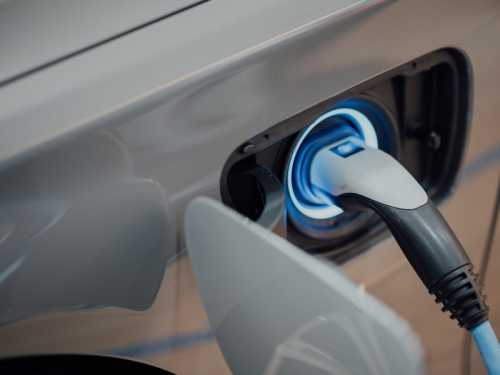
Imagine you have a super-fast, incredibly cool toy electric car. But there is a big problem with its battery. The battery is like a heavy, leaky water balloon. It takes a very, very long time to fill up with water (charge), and even when it is full, it only lets the car zoom around the living room for a few minutes before it runs out. Worse, if you leave it in the sun, the water balloon might get too hot and pop! For the last ten years, the giant businesses that make real electric cars for adults have been trying to invent a better battery. They wanted a battery that is not a leaky water balloon, but a solid, super-strong, lightweight magic brick. This magic brick would hold a massive amount of energy, fill up in just a few minutes, and never catch fire. Today, after billions of dollars of research, the biggest toy makers in the world—Toyota and Samsung—finally built the magic brick. And it is about to change the entire global business of transportation forever.
The Grand Announcement in Tokyo
On June 27, 2026, the global business world stopped spinning and focused all its attention on the Tokyo Motor Business Summit. The CEOs of Toyota Motor Corporation and Samsung SDI stood on a giant, brightly lit stage and pulled the cloth off a brand-new, revolutionary product: the world's first mass-producible Solid-State Battery (SSB) for commercial electric vehicles (EVs). To understand why the business investors in the room started cheering and crying, you have to understand the numbers they announced. This new solid-state battery allows an electric car to drive a staggering 1,000 kilometers (about 620 miles) on a single charge. That is like driving from New York City to Chicago without stopping once. Even more incredible, because of the new chemical structure, the battery can charge from empty to 80 percent full in just 10 minutes. In the business of selling cars, this is not just an upgrade; it is a completely different universe. It completely destroys the biggest argument people have against electric cars: the fear of running out of power and waiting hours to charge.
The Science of the "Magic Brick": What is Solid-State?
So, what exactly is this magic brick, and why did it take ten years and billions of dollars to build? To explain it simply, let us look inside the old leaky water balloon battery, which scientists call a Lithium-Ion battery. Inside that battery, there is a liquid soup called an electrolyte. This liquid soup helps the energy move from one side of the battery to the other. But liquid soup is heavy, it takes up a lot of space, and if it gets too hot, it can catch fire. The Solid-State Battery removes the liquid soup entirely. Instead, it uses a solid material—like a special type of glass or ceramic—as the bridge for the energy to cross. Because it is solid, it is incredibly stable. It cannot leak, and it does not catch fire even if you crush it or heat it up. Furthermore, because it is solid, the engineers can pack the energy parts much, much closer together. It is like taking a suitcase full of loosely folded clothes (the liquid battery) and using a giant vacuum sealer to shrink it down into a tiny, dense brick (the solid-state battery). You get twice the energy in half the space, and it is completely safe.
The future of mobility is here. ???????? Today, Toyota and Samsung SDI announce the successful mass-production readiness of our Solid-State Battery. 1000km range. 10-minute charge. 100% safe. We are not just changing the car; we are changing the world. ????⚡ #SolidStateBattery#EVRevolution
— Toyota Motor Corporation (@Toyota) June 27, 2026
The Business Earthquake: Stock Markets and Supply Chains
When this announcement hit the financial news wires, the global stock markets experienced a massive earthquake. The shares of Toyota and Samsung SDI skyrocketed, adding over $80 Billion in market value in a single afternoon. But the real business drama was happening to their competitors. The companies that make the old liquid lithium-ion batteries saw their stock prices drop sharply. Investors realized that the old technology was suddenly obsolete. Furthermore, the entire global supply chain had to pivot overnight. For the last decade, businesses had been building massive, billion-dollar factories to pump out liquid battery soup. Now, those factories need to be retrofitted to press solid ceramic sheets. The business war has shifted from who can make the best liquid to who can mine the special materials needed for the solid brick, like solid sulfides and advanced ceramics. Mining companies that hold the rights to these new minerals instantly became the most valuable businesses on the planet.
The Geopolitical Business War: US, China, and Europe
The business of solid-state batteries is not just about making cars; it is about global power. Currently, the country of China controls almost the entire global supply chain for the old liquid batteries. They mine the materials, they build the factories, and they make the cells. If the world switches to solid-state batteries, China wants to make sure they control this new magic brick too. However, the Toyota-Samsung partnership is a massive strategic alliance between Japan and South Korea, two countries that are fierce technological rivals but have joined forces to break the monopoly. Meanwhile, the United States government, realizing that whoever controls the magic brick controls the future of transportation, has just passed the 'Advanced Solid-State Manufacturing Act.' This law offers hundreds of billions of dollars in business subsidies to any company that builds solid-state battery factories on American soil. The business of batteries has become a high-stakes game of global chess, where the pieces are billions of dollars and the prize is the energy independence of entire nations.
The Death of the Gas Station: What This Means for the Oil Business
The most terrifying consequence of the solid-state battery revolution is happening to the oldest, richest business in the world: Big Oil. For a hundred years, the global economy has run on burning dinosaur juice (oil and gas). People hesitated to buy electric cars because they were inconvenient. But if an electric car can drive 1,000 miles and charge in 10 minutes—exactly the same time it takes to buy a snack and use the restroom at a gas station—the last major excuse for buying a gas-powered car disappears. Business analysts at Goldman Sachs predict that by 2030, the demand for gasoline will peak and then enter a permanent, unstoppable decline. The giant oil companies know this. That is why businesses like BP and Shell are rapidly selling off their oil wells and using that cash to buy electricity charging networks. They know that in twenty years, nobody will need their oil, but everybody will need to plug their magic brick cars into the wall. The solid-state battery is the nail in the coffin for the fossil fuel era.
The Common Driver: A New Era of Freedom
What does this massive, multi-billion-dollar business revolution mean for you, just a regular person driving to work or taking a family road trip? It means total freedom. You will no longer have to plan your life around where the charging stations are. You will no longer have to wait in the cold rain for forty-five minutes while your car drinks electricity. You will simply plug it in while you get a cup of coffee, and by the time you finish your coffee, the car is ready to drive across the country. Furthermore, because the battery is solid and cannot catch fire, the cars will be significantly safer in accidents. And because the battery is lighter and holds more energy, the cost of driving will drop to pennies per mile. The magic brick is not just a business triumph; it is a massive upgrade to the daily human experience, giving us the power to travel further, safer, and cleaner than ever before.
Conclusion: The Ultimate Business Pivot
The unveiling of the mass-producible solid-state battery by Toyota and Samsung is the most significant business pivot since the invention of the internet. It represents the culmination of decades of scientific frustration, billions of dollars of risky investment, and a refusal to accept the limits of the old water balloon technology. The global auto business, the energy business, and the mining business will never be the same. The leaky water balloons are being thrown into the history books, and the era of the magic brick has begun. The toy car has finally grown up, and it is ready to drive us all into a clean, limitless, and incredibly fast future.
Related Articles

The Multipolar Fracture: Navigating Defense Realignment, Institutional Arbitrage, and Tactical Instability
Aug 23, 2026
The Architecture of Fragmentation: Navigating the Multipolar Shift in Global Governance
Aug 22, 2026
Comments (0)
No comments yet. Be the first to share your thoughts!
Want to join the discussion?
Please log in to post a comment.
Login NoworCreate an Account