
The Margin Squeeze: How Supply Chain Fragmentation and Regulatory Overload Are Rewriting Global Business

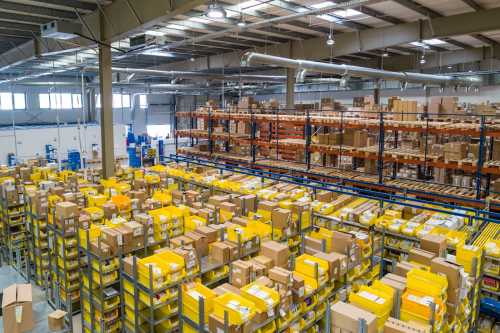
Navigating the modern global supply chain is akin to rebuilding an aircraft’s engine while it is cruising at 35,000 feet. The operational blueprint has been radically altered, replacement parts are increasingly scarce, and the regulatory airspace is growing more hostile by the quarter. This is not a temporary logistical hiccup; it is a fundamental, structural realignment of global commerce that is actively rewriting the cost basis of multinational enterprise.
Multinational corporations are currently executing a historic, capital-intensive realignment of their global supply chains, pivoting from highly efficient, centralized offshoring models to fragmented "friend-shoring" and nearshoring configurations. This structural shift, accelerated by persistent trade barriers, tariff uncertainties, and geopolitical friction, is forcing businesses to absorb massive transitional costs that threaten to permanently compress corporate profit margins.
The Infrastructure Bottleneck and Margin Compression
Mainstream business media frequently celebrates nearshoring as a definitive panacea for geopolitical risk, but this narrative willfully ignores the severe margin compression it triggers. Relocating manufacturing to alternative hubs like Mexico or Vietnam introduces profound, often underestimated infrastructural bottlenecks. For instance, while Vietnam has absorbed the largest portion of manufacturing relocation from China, its domestic power grids, port facilities, and logistics networks are now straining under the sudden, massive influx of foreign direct investment carraglobe.com . Consequently, companies are encountering higher input costs, delayed lead times, and elevated freight premiums that cannot be fully passed on to price-sensitive consumers, thereby eroding the very profitability that the original offshoring model once guaranteed.
The "Component Trap" Illusion
A critical, underreported dynamic in corporate strategy is the "Component Trap." While final assembly and packaging may visibly shift to Southeast Asia or Latin America to avoid direct tariffs, the underlying component supply chain remains heavily tethered to Chinese manufacturing ecosystems www.facebook.com . This means corporations are not actually achieving strategic decoupling. Instead, they are merely adding expensive, redundant layers of logistics, customs brokerage, and compliance oversight to the same foundational dependencies. This structural reality inflates working capital requirements and extends cash conversion cycles without delivering the promised geopolitical autonomy.
The ESG Compliance Cost Spiral
Concurrently, the regulatory burden of Environmental, Social, and Governance (ESG) reporting is spiraling out of control, acting as a hidden tax on global operations. As frameworks like the EU’s Corporate Sustainability Reporting Directive (CSRD) and California’s SB 253 mandate rigorous, audited disclosures, the financial impact is becoming severe. Recent data indicates that more than half of surveyed companies now spend over $1 million annually solely on ESG reporting compliance, a cost that frequently outpaces their actual, tangible sustainability investments www.linkedin.com . This bureaucratic overhead disproportionately penalizes small and medium-sized enterprises (SMEs) that lack the dedicated legal and compliance infrastructure of multinational conglomerates, effectively functioning as a non-tariff barrier to market entry and stifling mid-market innovation.
The Pricing Power Counterweight
Critics of this aggressive supply chain restructuring argue that trade barriers and logistical fragmentation will inevitably crush corporate earnings and trigger broad economic contraction. However, this perspective overlooks the adaptive capacity and pricing power of dominant market players. As noted by supply chain analysts, "Some companies face higher costs in one area but offset them in others," leveraging brand equity, operational efficiencies, and dynamic pricing models to protect their bottom lines www.ajg.com . Multinationals with entrenched market share can often pass these logistical premiums onto consumers, insulating their core earnings from the worst of the disruption and leaving smaller competitors to absorb the shock.
The Decoupling Myth
Conversely, some geopolitical hawks assert that aggressive tariff policies and export controls will successfully and permanently sever Western reliance on adversarial manufacturing hubs. This view is demonstrably naive and ignores the fluid nature of global capital. Empirical trade data shows that Chinese investment and manufacturing relocation are simply frontloading and rerouting through intermediary nations, meaning the underlying economic gravity remains largely intact www.elibrary.imf.org . True, absolute decoupling is a political fantasy; the operational reality is a more complex, opaque, and expensive web of indirect trade that benefits intermediary logistics providers while doing little to enhance genuine national security.
Echoes of the 1970s Corporate Restructuring
This current inflection point mirrors the corporate supply chain shocks of the 1970s. Following the oil embargoes and subsequent stagflation, multinational firms were forced to abandon the post-war paradigm of cheap, distant sourcing in favor of regional resilience and inventory buffering. That transition triggered a decade of severe margin pressure and operational friction before new, stabilized models could emerge. The historical lesson is unequivocal: structural supply chain realignments are not swift, painless pivots. They are multi-year, capital-intensive marathons that systematically weed out operationally inflexible firms and reward those with deep balance sheets and superior risk management.
Strategic Imperatives for Market Participants
For Corporate Leaders: Mid-market suppliers and local businesses must immediately audit their tier-2 and tier-3 supplier maps to identify hidden geopolitical and single-point-of-failure exposures. Investing in advanced supply chain visibility software is no longer a competitive advantage; it is a baseline requirement for securing trade finance and satisfying new regulatory mandates. Furthermore, corporate treasuries should actively hedge against currency volatility in emerging nearshoring hubs, as rapid capital inflows will drive significant, unpredictable exchange rate fluctuations.
For Investors and Citizens: Capital allocation should shift toward companies demonstrating proven supply chain agility and those providing the "picks and shovels" of this transition, such as industrial real estate in nearshoring corridors and compliance technology providers. Consumers should prepare for a persistent, structural baseline of higher prices on manufactured goods, as the era of hyper-deflationary, frictionless global trade has permanently concluded.
The Six-Month Horizon
Over the next six months, the global business landscape will be defined by aggressive, defensive consolidation. We will witness a pronounced wave of mergers and acquisitions as mid-tier logistics and manufacturing firms, unable to absorb the compounding costs of ESG compliance and nearshoring capital expenditures, are acquired for strategic value or liquidated. Simultaneously, corporate earnings reports will increasingly feature "geopolitical risk" and "supply chain restructuring" as standard, quantified line items. This transparency will signal to institutional investors that the market has fully priced in the end of globalization, shifting the overarching corporate narrative from relentless growth to ruthless, margin-focused operational discipline.



Comments (0)
No comments yet. Be the first to share your thoughts!
Want to join the discussion?
Please log in to post a comment.
Login NoworCreate an Account