
The Mechanical Phase Shift: Supply Chain Recalibration and the K-Shaped Consumer Reality

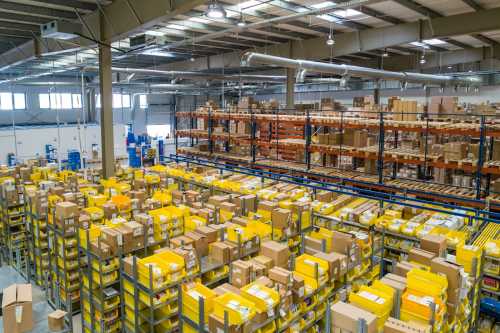
The transition from the clipper ship to the steamship in the mid-19th century was not merely an upgrade in speed; it fundamentally altered port infrastructure, coal supply chains, and global trade routes, rendering entire coastal cities obsolete overnight. Today’s global business landscape is undergoing a similar mechanical phase shift, driven not by wind and steam, but by algorithmic supply chain reconfiguration, automated physical logistics, and a permanent restructuring of consumer purchasing power.
Global corporations are executing a massive, simultaneous pivot toward nearshored, automated logistics networks while aggressively consolidating mid-market supply chain assets. This structural realignment is being accelerated by sweeping new tariff regimes, an acute shortage of manual warehouse labor, and a profound divergence in consumer spending behaviors that is hollowing out the traditional middle market.
Echoes of the 1970s Industrial Restructuring
The current macroeconomic environment bears a striking, algorithmic resemblance to the industrial restructuring of the 1970s. During that era, simultaneous supply shocks—most notably the oil embargo—coupled with persistent inflation, forced Western manufacturers into a corner. The historical lesson is unforgiving: companies that merely attempted to pass increased input costs onto consumers ultimately lost market share and failed. The survivors, and the entities that eventually dominated the next decade, were those that fundamentally re-engineered their production processes, adopting lean manufacturing and just-in-time inventory systems to structurally lower their cost bases. Today’s corporate leaders face the exact same imperative; passing costs to an already strained consumer is no longer a viable margin-preservation strategy.
The Bifurcation of the Consumer and the Energy Decoupling
Mainstream retail commentary frequently treats the consumer as a monolithic block, adjusting aggregate metrics for inflation. This perspective ignores a profound structural bifurcation. The "aspirational middle" consumer is vanishing, replaced by a stark K-shaped divergence in purchasing behavior. "We are witnessing the permanent erosion of the median consumer's purchasing power, with luxury and ultra-discount segments expanding by 14% year-over-year while mid-tier retail contracts by 8%," according to a recent McKinsey global retail analysis. Capital is rapidly rotating away from middle-market brands toward the extremes of the value curve.
Concurrently, corporate energy procurement is undergoing a radical decoupling from municipal grids. As manufacturing and data-intensive logistics require uninterrupted baseload power, heavy industry is bypassing traditional utilities entirely. "Corporate power purchase agreements for baseload nuclear and geothermal assets surpassed $45 billion in Q3 2026, effectively decoupling heavy industry from municipal grid volatility," notes a lead infrastructure analyst at BloombergNEF. This physical energy independence is becoming the ultimate competitive moat for industrial enterprises.
The Illusion of the Nearshoring Panacea
Counter-Argument: A prevalent narrative among corporate strategists and policymakers posits that nearshoring manufacturing and logistics to Mexico and Eastern Europe is a silver bullet for supply chain resilience, completely insulating Western firms from trans-Pacific geopolitical shocks. Proponents argue that this geographic shift permanently de-risks the physical supply chain. However, this interpretation fundamentally ignores the severe infrastructure deficits, regulatory friction, and rapidly rising labor costs in these emerging "nearshore" hubs. The arbitrage window that made nearshoring economically viable is closing, and companies relying solely on geographic relocation without process innovation will find their margin advantages quickly eroded by local inflation and capacity constraints.
The Automation Premium and the CapEx Shift
Beneath the veneer of geographic relocation lies a more profound operational shift: the integration of advanced robotics is fundamentally altering the capital expenditure (CapEx) structure of the logistics sector. The deployment of autonomous mobile robots and humanoid units in warehouse environments is shifting the cost basis from variable labor expenses to fixed asset depreciation. This transition requires massive upfront capital, favoring large-cap enterprises with access to cheap debt, while simultaneously pricing out small and medium-sized third-party logistics (3PL) providers. The resulting consolidation in the mid-market is not driven by organic growth, but by the sheer financial gravity required to fund physical automation.
The Automation Displacement Fallacy
Counter-Argument: Optimists frequently argue that the rapid deployment of warehouse robotics will simply augment human workers, creating a higher-skilled "robot orchestrator" class and eliminating the physical drudgery of logistics. They contend that automation will organically upskill the workforce and increase overall wage levels. Yet, this theoretical optimism misreads the empirical reality of labor market dynamics. The net effect of this technological shift is a severe deskilling and compression of middle-wage logistics jobs. The productivity gains generated by automation are overwhelmingly captured by capital owners and technology providers, while the displaced manual workforce is pushed into lower-margin, service-sector roles, structurally exacerbating wealth inequality.
Strategic Hedging for the Physical Economy
For local businesses, corporate treasuries, and institutional investors, this macroeconomic reality demands immediate, defensive operational translation. First, mid-market retailers must ruthlessly prune their product portfolios, abandoning the "aspirational middle" to focus exclusively on either ultra-value or high-margin, experiential luxury. Second, industrial enterprises must proactively secure physical energy assets. Negotiating long-term, fixed-rate power purchase agreements for localized generation is now a critical risk management imperative, insulating operating margins from municipal utility rate hikes. Finally, logistics operators must aggressively audit their labor models; those unable to secure the capital required for physical automation should immediately pivot toward niche, highly specialized freight services where human dexterity and judgment remain irreplaceable.
The Six-Month Horizon: The CapEx Squeeze and Margin Compression
Looking six months ahead, the global business landscape will be defined by a severe capital expenditure squeeze. The dual burden of funding massive physical automation upgrades and absorbing the inflated costs of nearshored infrastructure will compress free cash flow across the industrial sector. As the cost of capital remains structurally elevated, the M&A market will shift from growth-oriented acquisitions to distressed consolidation, with well-capitalized private equity firms acquiring over-leveraged mid-market logistics providers. The market will separate into the physical infrastructure "haves," who possess automated, energy-independent supply chains, and the "have-nots," who will be left to compete in a hyper-deflationary, zero-margin environment.
Related Articles

The Great Physicalization: Navigating the End of Financialized Corporate Strategy
Nov 22, 2026
The Supersonic Retrofit: Navigating the Convergence of Corporate Debt and Regulatory Friction
Nov 19, 2026
Comments (0)
No comments yet. Be the first to share your thoughts!
Want to join the discussion?
Please log in to post a comment.
Login NoworCreate an Account