
The Monopsony Threshold: How the Paramount-WBD Mega-Merger Reprices Hollywood


In maritime shipping, when three carriers control 80% of the trans-Pacific routes, they do not merely raise freight rates; they dictate what gets manufactured, where, and when, effectively governing global supply chains. Hollywood's distribution pipes have just reached that same structural chokepoint.
The Monopsony Threshold
Paramount Skydance's proposed $110.9 billion acquisition of Warner Bros. Discovery will collapse the major studio system from five dominant players to four, triggering immediate antitrust challenges from a dozen state attorneys general led by California [[14]]. This is not a standard media merger; it is an act of industrial consolidation that fundamentally reprices the entire entertainment supply chain, shifting leverage away from creators and squarely into the hands of distribution oligopolists [[15]].
Echoes of 1948
The closest structural analog to this consolidation is the 1948 U.S. Supreme Court ruling in United States v. Paramount Pictures, Inc., which forced studios to divest their theater chains to break the vertical integration monopoly. The empirical lesson from the Paramount Decrees is that forced structural separation temporarily creates a golden age for independent producers and exhibition, but capital inevitably finds a way to re-aggregate through output deals, library acquisitions, and talent exclusivity. In 2026, the integration isn't physical theaters—it is the digital distribution pipe and the algorithmic recommendation engine. If regulators force a breakup or impose heavy behavioral remedies, they will be fighting the 1948 war while the industry has already moved to algorithmic gatekeeping, rendering legacy antitrust frameworks largely cosmetic.
The Streaming Squeeze
Mainstream coverage focuses heavily on the cinematic legacy of these IP libraries, largely ignoring the actuarial reality of streaming margin compression. A combined Paramount-WBD entity controls a massive share of licensed content, but the underlying economics of subscription video on demand rely entirely on reducing third-party licensing costs. By consolidating, the new entity can internalize production and eliminate the "content treadmill" of paying rival licensing fees. According to recent market data, Netflix holds a 10.8% U.S. streaming market share, while a combined Disney and Hulu footprint commands 13.9%, leaving the new Paramount-WBD entity to fight for the remaining subscriber wallet share [[19]]. The unseen casualty is the mid-tier production house; as the buyer pool shrinks from five to four, the monopsony power of the studios will compress overall production budgets and flatten above-the-line talent compensation across the board.
In Defense of the Mega-Studio
The reflexive antitrust response assumes that fewer studios inherently harms consumers and creators, but the counter-argument heavily lobbied by the studios' legal teams is that global scale is the only viable defense against unregulated tech conglomerates. Apple and Amazon operate streaming services not as traditional profit centers, but as loss-leaders designed to sell hardware, prime memberships, and cloud infrastructure. From this vantage, traditional media companies cannot compete on a level playing field without achieving the $100 billion-plus valuation necessary to amortize global marketing spend and fund tentpole franchises. If regulators block the merger out of a nostalgic desire for a fragmented market, they may inadvertently ensure the slow bankruptcy of legacy Hollywood, leaving the entire entertainment ecosystem entirely captive to Silicon Valley's balance sheets.
The Exhibition Bottleneck
The theatrical exhibition sector operates on razor-thin margins and relies entirely on a steady cadence of wide-release tentpoles to maintain cash flow. A consolidated studio system optimizes for streaming-first or hybrid release windows to maximize internal subscriber retention, actively starving the theatrical window of the 15-to-20 mid-budget releases that keep regional multiplexes solvent year-round. The American theatrical box office is increasingly bifurcated into massive event cinema and dead zones. When a merged entity optimizes its release slate for global streaming churn rather than domestic exhibition foot traffic, secondary and tertiary market cinemas will face accelerated foreclosure rates, stripping local communities of cultural infrastructure without any corresponding regulatory intervention.
The Convenience Illusion
Consumer advocates routinely argue that consolidation will inevitably lead to higher subscription prices and bundled "walled gardens" that harm the public. The nuance often missed in this critique is that the consumer has already priced in convenience over fragmentation, rendering the "peak TV" era economically unviable. A consolidated market actually accelerates the return of the bundle—the very model consumers originally abandoned cable to escape. By aggregating HBO, Paramount+, and Showtime IP under one roof, the merged entity can offer a singular, high-value tier that stabilizes churn rates and reduces customer acquisition costs. The consumer isn't being harmed by a lack of choice; they are being rescued from the friction of managing six different monthly subscriptions, making the antitrust argument regarding consumer harm remarkably weak in the streaming era.
The Labor-AI Arbitrage
The most critical blind spot in the merger discourse is its intersection with the newly ratified 2026 SAG-AFTRA TV/Theatrical Agreement, which moved its AI enforcement provisions into an active phase on July 1 [[38]]. The union secured strict limitations on synthetic actors, but SAG-AFTRA's published summary notes the 2026 agreement includes 12 distinct provisions related to AI, creating a complex compliance web [[36]]. A mega-studio with unparalleled leverage can bypass these guardrails by classifying background and mid-tier character work as "pre-visualization" or "digital assets" rather than traditional performances. Furthermore, the monopsony power of a four-studio town allows the consolidated entity to dictate non-union or "new media" classifications for AI-heavy productions, effectively hollowing out the union's jurisdiction through corporate restructuring rather than direct contract violation.
The Regulatory Tailwind
It is easy to assume the Department of Justice will rubber-stamp the merger to preserve American cultural exports, but the current judicial appetite for monopoly enforcement suggests otherwise. As a stark warning to Hollywood executives, a federal jury on April 15, 2026, found Live Nation and its subsidiary Ticketmaster liable on every antitrust count submitted, signaling that juries are highly receptive to structural breakup arguments [[28]]. This Live Nation verdict establishes a hostile legal baseline for any entertainment conglomerate attempting to exert vertical control over both the creation and the exhibition of art. The attorneys general challenging the Paramount-WBD deal will leverage this exact precedent to argue that a four-studio oligopoly inherently suppresses wage growth for below-the-line crews and limits the diversity of theatrical distribution.
Navigating the Oligopoly
For industry operators and investors, the window to reposition before the buyer pool formally contracts is rapidly closing. Independent production companies must immediately secure multi-year output deals or lock in underlying IP rights; leverage evaporates the moment the merger clears regulatory hurdles and the studios realize they no longer need to bid against each other for content. Regional exhibition chains should pivot aggressively toward alternative content—live sports broadcasting, e-sports, and premium concert streaming—to decouple their revenue from the traditional studio theatrical slate. For talent representatives, the strategy must shift from negotiating upfront backend points to securing hard-coded contractual vetoes over digital likeness usage, as the new oligopoly will attempt to standardize AI-consent clauses across all deals.
The Six-Month Horizon
By February 2027, the Department of Justice and the coalition of state attorneys general will likely force a significant divestiture—perhaps the sale of a legacy cable network portfolio or a secondary streaming tier—as a condition for approval, rather than blocking the deal outright. The market will see a rapid homogenization of release strategies, with the "Big Four" adopting a unified 17-day theatrical exclusivity window before premium video-on-demand conversion. Mid-budget drama and adult-skewing comedies will functionally cease to exist in theatrical distribution, migrating entirely to algorithmic feeds. The organizing frame of Hollywood will shift from "content creation" to "IP lifecycle management," and the entities that treated this merger as a simple library acquisition, rather than a structural repricing of the entertainment supply chain, will find themselves locked out of the distribution oligopoly.
Related Articles

The Structural Recalibration of US Healthcare: Navigating Policy, Market, and Access Faultlines
Aug 22, 2026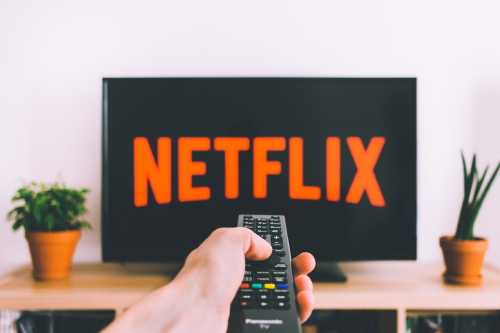
The Geopolitics of Global Streaming: AI, IP Fragmentation, and the End of the Hollywood Monopoly
Aug 22, 2026
Comments (0)
No comments yet. Be the first to share your thoughts!
Want to join the discussion?
Please log in to post a comment.
Login NoworCreate an Account