
The mRNA Cancer Vaccine Revolution 2026: Teaching the Body's Army to Hunt the Enemy

Imagine your body is a massive, peaceful kingdom, and your immune system is the royal army. The army's job is to walk around the kingdom and destroy any bad guys (germs) that try to invade. But cancer is a very tricky bad guy. Cancer is not an invader from outside; it is one of your own citizens who has gone rogue. The cancer cell looks almost exactly like a normal cell, so the royal army walks right past it, not realizing it is a monster. The cancer cell multiplies, builds a fortress, and starts taking over the kingdom. For decades, doctors tried to destroy the fortress using chemotherapy, which is like bombing the entire kingdom to kill the bad guy, hurting the good citizens in the process. But in 2026, a miraculous new technology is changing the war. It is called the "mRNA cancer vaccine." Instead of bombing the kingdom, this vaccine takes the rogue citizen's mugshot and shows it to the royal army. It teaches the army exactly what the cancer's face looks like, so the army can hunt it down and destroy it, without hurting any of the good citizens. Let us explore how this revolutionary technology works, the incredible 2026 trial results, and how it is curing the incurable.
The Magic Message: What is mRNA?
mRNA stands for "messenger RNA." Think of it as a tiny, microscopic instruction manual. Inside every cell in your body, there is a massive library called DNA, which holds all the blueprints for building you. When the cell needs to build a protein, it makes a temporary copy of that specific page from the library. That copy is the mRNA. It carries the message from the DNA to the cell's factory, telling it what to build. The mRNA cancer vaccine uses this exact same system. Scientists take a small piece of the cancer cell's DNA—the part that makes the cancer look unique, called a "neoantigen." They turn this into an mRNA message and put it inside a tiny fat bubble. When they inject this bubble into the patient, the patient's own cells read the message and build a piece of the cancer protein.
Now, the royal army (the immune system) sees this cancer protein floating around. They have never seen it before, so they sound the alarm. They create millions of special soldiers, called "T-cells," and teach them exactly what the cancer looks like. These T-cells then patrol the entire body. When they find a real cancer cell hiding in the liver, or the lungs, or the brain, they recognize its face, attach to it, and destroy it. The beauty of this is that the patient's own body does the healing. The vaccine just provides the instruction manual.
The 2026 Breakthroughs: Pancreatic and RET Cancers
The year 2026 has seen absolutely breathtaking results in clinical trials for mRNA cancer vaccines. One of the most devastating cancers in the world is pancreatic cancer. It is almost always caught too late, and the survival rate is very low. But scientists at Memorial Sloan Kettering and the University of Florida have been testing a personalized mRNA vaccine called autogene cevumeran www.mskcc.org . In early trials, they took the tumor out of the patient, sequenced its DNA, and created a custom mRNA vaccine for that specific person. The results were astonishing. Half of the patients who received the vaccine generated a massive immune response, and a year and a half later, not a single one of them had the cancer come back letswinpc.org . The vaccine had trained their immune system to stand guard and kill any microscopic cancer cells that tried to return.
Another massive breakthrough in April 2026 came from BioNTech. They opened a new cohort for their BNT116 mRNA vaccine, targeting a specific type of lung cancer with a RET mutation happylungsproject.org . This is an "off-the-shelf" vaccine, meaning it is not custom-made for one person; it is designed to target a common mutation shared by many patients. Early data shows that when this mRNA vaccine is combined with immunotherapy drugs, it shrinks tumors significantly. The market for these mRNA cancer biologic lines is projected to explode from half a billion dollars in 2026 to over a billion dollars by 2036 www.factmr.com , proving that this is not just a science experiment; it is the future of oncology.
History in the making. Phase 1 trial results for a therapeutic mRNA vaccine for pancreatic cancer show lasting immune responses and no recurrence in responders. We are teaching the immune system to hunt cancer. #mRNA #CancerResearch
— Memorial Sloan Kettering (@MSKCC) April 10, 2026
The Manufacturing Miracle: From Biopsy to Vaccine in Weeks
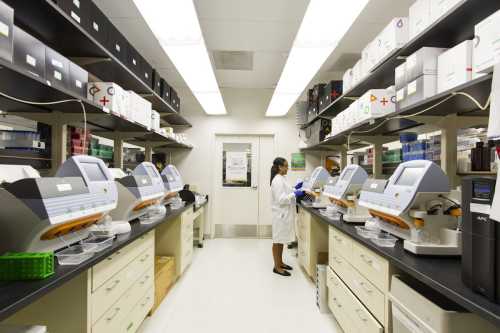
The most incredible part of this technology is the speed. In the past, creating a custom treatment for a patient took months. With mRNA, the process is almost like printing a document. When a patient is diagnosed with melanoma or pancreatic cancer, the surgeon removes a piece of the tumor. The tumor is sent to a lab, where a machine sequences the DNA in just 48 hours. A computer algorithm identifies the unique neoantigens—the "mugshots" of the cancer. Then, an automated factory synthesizes the mRNA strands, packages them in the fat bubbles, and ships them to the hospital. The entire process, from the surgery to the patient receiving their custom vaccine, takes less than six weeks. This speed is crucial for patients with aggressive cancers who do not have time to wait.
The Future: A World Without Cancer?
The Ultimate Goal
While the 2026 results are miraculous, scientists are careful to say that this is not a "cure" for all cancer yet. Cancer is not one disease; it is thousands of different diseases. What works for pancreatic cancer might not work for brain cancer. Furthermore, some tumors are very good at hiding, or they create a shield around themselves that the T-cells cannot penetrate. The next step in the research is to combine the mRNA vaccines with other drugs that break down the cancer's shield, allowing the immune army to rush in and finish the job.
But the potential is limitless. Imagine a future where, when you are diagnosed with cancer, the doctor does not offer you toxic chemotherapy that makes your hair fall out and makes you vomit. Instead, they take a small sample of your tumor, print a custom mRNA vaccine, and give you a few shots in the arm. Your own body then hunts down and destroys the cancer, leaving you completely cured with no side effects. We are moving from the era of poisoning the cancer to the era of educating the body to heal itself. The mRNA cancer vaccine revolution of 2026 is not just a medical breakthrough; it is a fundamental shift in how we understand and fight the most terrifying disease in human history. The royal army has finally been given the mugshots, and the reign of the cancer monsters is coming to an end. Learn more about BioNTech's mRNA platforms.

Comments (0)
No comments yet. Be the first to share your thoughts!
Want to join the discussion?
Please log in to post a comment.
Login NoworCreate an Account