
The Multipolar Fracture: De-Dollarization, Defense Bottlenecks, and the End of Unipolar Hegemony


The Multipolar Fracture
Navigating current world politics is akin to recalibrating a mechanical watch while its gears are actively being replaced by a decentralized digital network; the old mechanisms of deterrence and diplomacy are grinding against new, multipolar realities. The accelerated institutionalization of the expanded BRICS+ bloc, coupled with simultaneous fragmentation in transatlantic security architectures and Middle Eastern realignments, marks a definitive shift from a unipolar to a transactional multipolar world order. This is not a temporary diplomatic realignment, but a structural rewiring of global power dynamics that demands rigorous analytical recalibration.
The Parallel Financial Plumbing
Mainstream financial discourse frequently dismisses de-dollarization as mere geopolitical rhetoric, ignoring the systematic construction of alternative financial infrastructure. The unseen implication is that parallel payment systems and local currency settlements are actively insulating Global South trade from Western sanctions, fundamentally degrading the efficacy of United States Treasury weaponization. This is no longer theoretical; the New Development Bank, established by BRICS, has set a target of conducting 30% of its lending in local currencies of member nations by 2026 [[4]]. As this alternative plumbing matures, it creates a fragmented monetary ecosystem where secondary sanctions lose their coercive bite, allowing mid-tier powers to trade critical minerals and energy without exposing themselves to dollar-clearing vulnerabilities.
The Defense Industrial Bottleneck
Simultaneously, European strategic autonomy is transitioning from a theoretical policy debate to a desperate, underfunded scramble for indigenous defense manufacturing. The unseen implication here is the exposure of the hollowness of post-Cold War peace dividends. Despite ambitious political declarations, the European defense industrial base lacks the scalable capacity to meet surging demand. As recent analysis highlights, without a sufficient talent pool, the defence industrial base risks becoming a bottleneck rather than an enabler of security [[14]]. This structural deficit forces European capitals into a paradoxical position: demanding strategic independence while remaining entirely dependent on external supply chains for critical munitions and advanced aerospace components.
The Illusion of Monetary Decoupling
Critics of the prevailing narrative surrounding the collapse of Western financial hegemony correctly point out the enduring structural advantages of the United States dollar. Despite aggressive BRICS rhetoric, the greenback remains the undisputed anchor of global liquidity, and no viable, deep, and liquid alternative currently exists. In fact, President Vladimir Putin has made it clear that any new BRICS currency will not completely displace the role of the US dollar in global markets [[5]]. The transaction costs, capital controls, and lack of rule-of-law protections in alternative financial systems ensure that the dollar will retain its dominant reserve status for the foreseeable future, rendering predictions of an imminent dollar collapse highly premature.
Echoes of the Non-Aligned Movement
This contemporary geopolitical convergence uncomfortably mirrors the rise of the Non-Aligned Movement (NAM) during the 1950s and 1960s. During that era, newly independent states attempted to carve out a third path between the United States and the Soviet Union, seeking to leverage their collective voting power to extract concessions from both superpowers. The historical lesson is unambiguous: while ideological blocs frequently fracture when confronted with harsh economic realities, transactional hedging becomes the dominant survival strategy for mid-tier powers. Today’s Global South is not forming a unified anti-Western bloc, but rather engaging in sophisticated multi-alignment, playing Washington, Beijing, and Brussels against one another to maximize national economic advantage.
The Sovereignty Imperative and Institutional Gridlock
Furthermore, the institutional architecture of global governance is failing to adapt to this new reality. The voting record of states of the global South at the United Nations General Assembly indicates they are deeply dissatisfied with the US-led order and its entrenched privileges [[25]]. However, the counter-argument to the push for rapid UN reform is the sheer logistical impossibility of overhauling the Security Council veto structure. Western powers will not voluntarily dilute their authority, and emerging powers will not accept subordinate roles. Consequently, the unseen implication is that the UN will increasingly become a theater for diplomatic posturing, while actual geopolitical problem-solving migrates to ad-hoc, minilateral coalitions and regional security architectures that exclude traditional hegemonic actors.
Strategic Imperatives for Commerce and Statecraft
For multinational corporations, institutional investors, and policy planners, the era of relying on a single, predictable global order is definitively over. Businesses must immediately diversify their supply chains beyond single-bloc dependencies, treating geopolitical friction as a permanent cost of doing business rather than a temporary anomaly. Corporate treasuries should actively explore hedging currency exposure using non-USD instruments and regional clearing mechanisms to mitigate the risk of sudden financial decoupling. Furthermore, enterprises must conduct rigorous, continuous geopolitical risk audits on vendor compliance, ensuring that their operational footprints do not inadvertently trigger secondary sanctions or export control violations in an increasingly fragmented regulatory environment.
The Six-Month Horizon: A Fragmented Reality
Looking six months ahead, the global geopolitical landscape will sharply bifurcate into competing spheres of influence. We forecast heightened friction in dual-use technology export controls, as the United States and its allies attempt to seal loopholes that allow advanced semiconductors to reach strategic adversaries. Concurrently, expect a measurable spike in regional proxy conflicts, as middle powers test the red lines of retreating hegemonic guarantors in the Middle East and Eastern Europe. Finally, the formalization of at least one new non-Western multilateral financial clearing mechanism will be announced, cementing the reality that the global economy is no longer a unified system, but a contested archipelago of competing economic blocs.
Related Articles
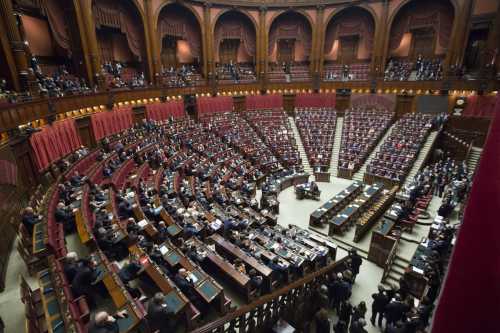
The Multipolar Fracture: Navigating Defense Realignment, Institutional Arbitrage, and Tactical Instability
Aug 23, 2026
The Architecture of Fragmentation: Navigating the Multipolar Shift in Global Governance
Aug 22, 2026
Comments (0)
No comments yet. Be the first to share your thoughts!
Want to join the discussion?
Please log in to post a comment.
Login NoworCreate an Account