
The Narrowing Strait: Decoding the Institutional Friction Reshaping U.S. Macroeconomic Policy

Navigating the Strait: The Anatomy of Institutional Friction
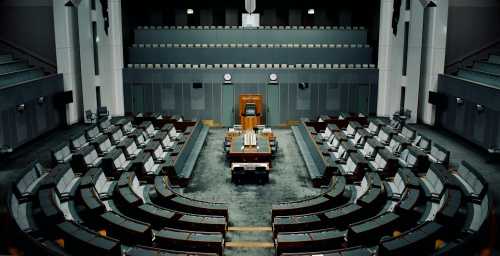
Managing the current United States political and economic trajectory is akin to navigating a supertanker through a narrowing strait while the bridge crew receives conflicting compass readings from the engine room, the chart room, and external observers. The core event defining this moment is the Federal Reserve’s recent 0.25% interest rate hike, bringing the target range to 3.75% to 4%, executed despite mounting political pressure to hold rates steady www.facebook.com . Concurrently, federal courts are actively blocking executive orders targeting public media funding, while Congress remains deadlocked, producing the fewest legislative enactments since 1989 www.facebook.com , www.facebook.com . This confluence of monetary tightening, judicial pushback, and legislative paralysis forms the baseline of a deeply fractured governance model.
The Hidden Cost of Legislative Paralysis
Mainstream narratives frequently frame congressional gridlock as mere political theater, a transient dysfunction that resolves before causing lasting damage. This perspective willfully ignores the profound, compounding macroeconomic drag such paralysis creates. Legislative inaction directly increases the cost of capital for municipal and state-level infrastructure projects, as global rating agencies systematically factor in the heightened risk of federal shutdowns and recurring debt ceiling brinkmanship [[18]]. When the federal government operates under a series of short-term continuing resolutions, it freezes adaptive economic policies and halts the deployment of authorized capital. This stasis stifles long-term private sector investment planning, as corporations cannot accurately forecast regulatory environments or infrastructure support. The opportunity cost of this gridlock is measured in delayed technological adoption and suppressed regional economic development, a reality that transcends partisan talking points.
The Judicialization of Macroeconomic Policy
A second, critically underreported implication is the accelerating judicialization of executive economic and regulatory policy. When the Supreme Court actively entertains disputes over nationwide injunctions and the standing of watchdog groups, it effectively transfers complex, technocratic decision-making from specialized federal agencies to the judiciary [[2]], [[5]]. This structural shift introduces profound regulatory uncertainty into the market. Industries can no longer rely on stable, predictable administrative rulemaking to guide multi-year capital expenditures. Instead, they are forced to price in the risk of abrupt, court-ordered policy reversals. This dynamic is already evident in recent federal court decisions temporarily blocking executive orders aimed at restructuring public media funding, highlighting a volatile feedback loop between the executive and judicial branches [[6]].
Challenging the Monolithic View of Polarization
A prevailing, yet dangerously one-sided, perspective within political analysis argues that deepening partisan polarization uniformly degrades all governance functions. However, this monolithic view overlooks the nuanced reality of localized bipartisan consensus. Primary research indicates that while elite polarization is acute, certain structural initiatives, such as supply chain resilience and critical mineral acquisition, continue to advance through targeted, bicameral executive actions [[27]]. The system possesses latent corrective mechanisms that prevent total institutional collapse, even amidst broad ideological divergence. Furthermore, public sentiment data reveals that nearly half of Americans describe the economy as poor, representing the highest share since late 2022, which often acts as a forcing function for pragmatic, if reluctant, legislative compromise [[8]].
Echoes of 1995: The Historical Precedent
To fully grasp the gravity of the current institutional juncture, one must examine the historical precedent of the 1995-1996 federal government shutdowns. During that period, a divided government faced an almost identical confluence of debt ceiling brinkmanship, legislative gridlock, and intense executive-legislative friction. The historical lesson from that era is stark: prolonged institutional standoff inevitably shifts public sentiment against the political faction perceived as obstructing basic governance, ultimately forcing a compromise that resets the fiscal baseline. However, the modern iteration of this dynamic is uniquely dangerous. It is compounded by algorithmic media fragmentation, which insulates political actors from the broad, unifying public pressure that historically catalyzed bipartisan resolution. Consequently, the corrective mechanisms that resolved the 1995 crisis are significantly blunted in the contemporary information ecosystem.
The Nuance of Monetary Independence
Similarly, financial markets frequently interpret Federal Reserve rate hikes amid political pressure as a definitive signal of institutional robustness and inflation control. Yet, this perspective dangerously overlooks the subtle erosion of central bank independence. As noted by economic analysts, persistent political rhetoric targeting monetary policy can anchor inflation expectations differently than the rate action itself. A 2026 economic analysis highlights that deepening political polarization within the United States is eroding longstanding bipartisan public consensus on key American foreign and domestic economic policy [[13]]. If markets begin to price in political interference, the efficacy of forward guidance is fundamentally compromised, regardless of the nominal rate.
Strategic Imperatives for Stakeholders
In light of these complex dynamics, stakeholders must adopt proactive, defensive strategies. For local businesses, the immediate imperative is to stress-test supply chains against regulatory volatility and secure fixed-rate financing before further monetary tightening materializes. Sectors reliant on federal contracts or subsidies must diversify revenue streams to mitigate the risk of continuing resolution funding freezes. For citizens and domestic investors, preserving capital requires diversifying asset holdings away from instruments highly sensitive to legislative gridlock, favoring instead companies with strong pricing power and minimal reliance on discretionary federal spending.
The Six-Month Horizon
Looking toward the six-month horizon, the geopolitical and economic landscape will likely be characterized by heightened volatility punctuated by narrow, reactive compromises. The Supreme Court’s impending rulings on executive authority will force a recalibration of administrative power, potentially invalidating key regulatory frameworks [[5]]. Simultaneously, as the next debt ceiling deadline approaches, expect a resurgence of market anxiety and credit rating warnings. However, if the administration successfully leverages targeted executive actions to bypass legislative bottlenecks, a stabilization of specific strategic sectors, such as energy and defense, remains achievable, providing a fragile foundation for measured economic growth [[25]].



Comments (0)
No comments yet. Be the first to share your thoughts!
Want to join the discussion?
Please log in to post a comment.
Login NoworCreate an Account