
The Physical Bottleneck: How AI Compute and Energy Grid Strain are Rewiring Global Infrastructure

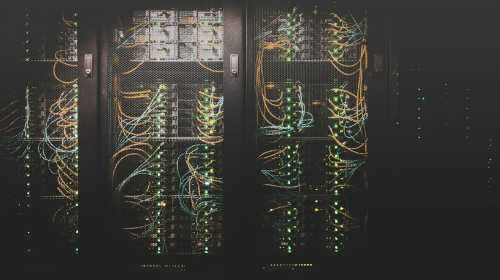
The Gigawatt Bottleneck: When Algorithms Hit the Physical Grid
When 19th-century factories transitioned from decentralized waterwheels to centralized coal-fired steam engines, they didn't just require more fuel; they fundamentally broke the existing logistics of energy distribution and forced the creation of entirely new regulatory frameworks. Today, the artificial intelligence compute boom is executing this exact maneuver on the global semiconductor and electrical grid infrastructure. The core event driving current market volatility is the simultaneous escalation of AI-driven energy grid strain and the intensifying antitrust scrutiny of cloud compute monopolies, creating a severe structural bottleneck in the physical infrastructure required for AI scaling. This dual shock is forcing a rapid repricing of risk across global capital markets, moving beyond transient software volatility into a structural repricing of physical asset classes.
Echoes of the 1880s: The New Railway Monopolies
To understand the trajectory of this infrastructure consolidation, one must examine the historical precedent of the 19th-century American railway monopolies. When railroads first connected the continent, they possessed absolute control over the physical movement of goods, allowing them to extract massive, monopolistic rents from farmers and manufacturers. It was only through the Interstate Commerce Act of 1887 that the government stepped in to regulate rates and prevent the strangulation of the broader economy. Today's cloud and AI compute providers are the digital railways. The lesson from the 1880s is unequivocal: when a single layer of infrastructure holds absolute monopoly power over the means of production, regulatory intervention to enforce open access and price controls is not just likely; it is an economic inevitability.
The Hidden Mechanics of Power Transmission
Mainstream financial discourse frequently fixates on the software capabilities of large language models, yet it systematically ignores the brutal physical constraints of power transmission. AI data centers are outbidding local municipalities and heavy industries for electrical capacity, creating localized grid failures and forcing a massive reallocation of municipal resources. As noted by the International Energy Agency, data center electricity consumption is projected to double by 2026, reaching over 1,000 terawatt-hours. This is not a transient supply chain friction; it is a structural reallocation of physical energy resources, forcing tech giants to acquire nuclear micro-reactors and effectively privatize the power grid to sustain their training clusters.
The Alignment Imperative: Why Centralization Might Be a Feature
However, characterizing the dominance of cloud compute monopolies solely as an antitrust violation ignores the critical necessity of centralized safety protocols. Proponents of centralized infrastructure argue that controlling the physical chokepoints of AI training is the only viable mechanism to enforce alignment and prevent rogue actors from accessing dangerous, dual-use models. From this vantage point, the high barriers to entry and the concentration of compute power are not a market failure, but a deliberate, calculated feature designed to purchase long-term existential security. This perspective posits that the economic inefficiency of monopolistic compute pricing is a necessary insurance premium against the proliferation of unaligned, catastrophic artificial general intelligence.
The Compute Cartel and Geopolitical Weaponization
A third, deeply overlooked implication involves the geopolitical weaponization of semiconductor manufacturing. Export controls on advanced AI accelerators have transformed compute into a state-controlled resource, fundamentally altering global trade dynamics. "As a leading technology economist at MIT recently stated, 'We are witnessing the financialization of compute, where processing power is becoming a tradable, state-controlled commodity rather than a public utility.'" This dynamic creates a "compute cartel" where allied nations must negotiate for digital infrastructure, locking developing economies out of the AI value chain and forcing a bifurcation of the global technology ecosystem into competing, walled-garden spheres of influence.
Margin Compression in the Application Layer
Furthermore, the narrative that AI will uniformly uplift corporate profitability overlooks the severe margin compression occurring within the application layer. While the infrastructure layer—chips, power, and cloud hosting—is generating unprecedented cash flows, the startups building user-facing AI applications are facing a brutal commoditization of their core offerings. Unless application-layer companies possess proprietary, non-replicable data moats, their gross margins will be entirely consumed by the underlying compute costs paid to the infrastructure monopolies. This divergence means that the much-hyped AI application boom is largely a value-transfer mechanism, moving capital from software developers directly to the physical infrastructure providers.
The Productivity Dividend: Augmentation Over Displacement
Conversely, the critique that AI is merely destroying white-collar jobs and compressing startup margins ignores the profound macroeconomic productivity dividend currently materializing. According to a 2026 McKinsey Global Institute report, generative AI is now automating up to 30 percent of hours currently worked across the U.S. economy, primarily by eliminating low-value cognitive friction rather than entire roles. Therefore, the current labor market displacement is actually a rapid reallocation of human capital toward higher-value, complex problem-solving tasks. This structural shift is ultimately expanding the total addressable market for knowledge work and driving unprecedented gains in aggregate corporate output, offsetting the localized pain of transitional unemployment.
Tactical Hedging in the Physical AI Era
For local businesses and institutional operators, navigating this physical AI era requires immediate, tactical adjustments rather than passive observation. Enterprises must audit their energy dependencies and explore co-location strategies with edge-compute providers to bypass the congested centralized grid. Corporations should also pivot their AI investments away from commoditized application layers and toward proprietary data collection and industry-specific orchestration models that cannot be easily replicated by foundational model providers. For individual citizens, upskilling must shift from basic prompt engineering to complex systems architecture and AI governance. Treat physical infrastructure resilience and proprietary data moats not as back-office IT functions, but as core, board-level strategic capabilities.
The Six-Month Horizon: Infrastructure Consolidation
Looking six months ahead, the capital markets will experience a violent bifurcation as the application layer undergoes a massive consolidation wave, wiping out undercapitalized AI startups. We will likely witness the Department of Justice initiating structural remedies against major cloud providers, forcing them to unbundle their compute and AI model offerings. To circumvent these regulatory threats, tech giants will aggressively open-source their foundational models while maintaining absolute control over the physical hardware, creating a paradoxical landscape where the software is free, but the physical compute required to run it is heavily monetized and strictly regulated. This environment will heavily favor companies with direct access to power generation and penalize highly leveraged, software-only business models, marking the definitive end of the pure-software AI boom and the beginning of the physical infrastructure era.
Related Articles

The Thermodynamics of Hegemony: How the GAAC Pact is Fracturing the Global AI Compute Ecosystem
Nov 21, 2026
The Hydroelectric Paradox: How Grid Moratoriums and Agentic Liability are Forcing AI to the Edge
Nov 19, 2026
Comments (0)
No comments yet. Be the first to share your thoughts!
Want to join the discussion?
Please log in to post a comment.
Login NoworCreate an Account