
The Physical Bottleneck of the AI Boom: Tech Giants Bypass the Grid in a Massive Nuclear Energy Grab

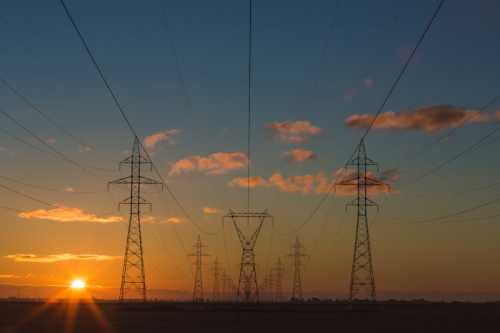
The greatest bottleneck in the artificial intelligence revolution is no longer the availability of advanced microchips, nor is it the sheer volume of training data. It is, quite simply, electricity. On Thursday, a consortium of the world's largest technology companies, including Microsoft, Amazon, and Google, announced a series of unprecedented, multi-billion-dollar power purchase agreements (PPAs) directly with next-generation nuclear energy developers. This massive capital deployment marks a fundamental shift in how the digital economy operates, effectively decoupling the tech giants from the aging, overburdened public utility grid. To understand the gravity of this shift, imagine buying a fleet of the fastest, most expensive supercars in the world, only to realize that the local gas stations can only pump fuel at the speed of a garden hose. You can have all the cars you want, but if you can't feed them, they are useless. This is the reality of the AI boom: we have built the digital supercars, but the physical infrastructure to power them is critically lacking.
The Gridlock: When Data Centers Outpace the Grid
The explosive growth of generative AI has resulted in a skyrocketing demand for computational power. Training a single large language model can consume as much electricity as a small city, and running inference (the actual use of the AI) requires a massive, continuous baseline of power. In major data center hubs like Northern Virginia, Central Texas, and Ireland, the local electrical grids are literally full. Utility companies are reporting wait times of up to five to seven years for new data centers to receive permission to connect to the grid. This physical constraint is no longer just an operational headache; it is a massive financial risk. If a tech company spends billions building a data center but cannot turn it on because the local substation cannot handle the load, that capital is entirely stranded. Recognizing this existential threat to their AI ambitions, the tech giants have realized that they can no longer rely on traditional utilities. They must become energy producers themselves.
The Nuclear Renaissance: Small Modular Reactors Take Center Stage
The solution the tech industry has landed on is nuclear energy, specifically Small Modular Reactors (SMRs). Unlike traditional massive nuclear power plants, which take a decade to build and cost tens of billions of dollars, SMRs are designed to be manufactured in factories, shipped to the site, and assembled relatively quickly. They provide a massive, continuous, zero-carbon baseline of power, which is exactly what AI data centers require. The PPAs announced on Thursday involve the tech giants providing the upfront capital to build these SMR facilities directly on or adjacent to their data center campuses. This "behind-the-meter" generation means the power never even touches the public grid, entirely bypassing the interconnection queues that are causing years of delays. The stock market reaction was instantaneous and violent. Shares of SMR developers like NuScale Power, Oklo, and massive independent power producers like Constellation Energy and Vistra Corp surged by over 20% in after-hours trading. The market is rapidly re-pricing the utility sector, no longer viewing them as slow-growing, regulated monopolies, but as the critical, high-growth enablers of the AI revolution.
The Financial Engineering of Power Purchase Agreements
The financial mechanics of these new deals are as innovative as the technology they support. Traditionally, a utility company would borrow money to build a power plant, and then sell the electricity to customers to pay off the debt. In the new AI-era PPAs, the tech giants are essentially acting as the bank. By guaranteeing to purchase 100% of the power generated by the SMR for the next 20 years at a fixed price, the tech company provides the nuclear developer with the ironclad revenue certainty needed to secure cheap construction financing. This shifts the financial risk from the ratepayer (the general public) to the balance sheet of the trillion-dollar tech company. For the tech giants, this is a highly attractive trade-off. They are willing to pay a premium for guaranteed, clean, uninterrupted power because the alternative—having a $10 billion data center sit idle—is far more expensive. This financial engineering is creating a new asset class on Wall Street: "AI-adjacent infrastructure," where the returns are tied not to software subscriptions, but to the physical flow of electrons.
The Regulatory Nightmare: The NRC Bottleneck
However, this nuclear renaissance faces a massive, looming hurdle: the Nuclear Regulatory Commission (NRC). The NRC is the federal agency responsible for licensing and overseeing nuclear power in the United States. Historically, the NRC's licensing process has been notoriously slow, bureaucratic, and incredibly expensive, often taking five to ten years to approve a new reactor design. The tech industry's timeline does not align with the NRC's timeline. Microsoft and Amazon need power in three to four years, not ten. This has triggered an intense lobbying effort in Washington to reform the NRC and create a "fast-track" licensing pathway for SMRs, especially those intended for industrial or data center use. The debate is highly contentious. Proponents argue that the existential threat of climate change and the economic imperative of AI dominance require a streamlined, risk-informed regulatory approach. Opponents, including many environmental groups and local community leaders, argue that fast-tracking nuclear power compromises safety and bypasses necessary environmental reviews. The outcome of this regulatory battle will ultimately determine the speed at which the AI boom can physically scale.
The Environmental Paradox of "Green AI"
This massive pivot to nuclear energy has also sparked a fierce philosophical debate within the environmental community. For years, the tech industry has branded itself as the vanguard of the green transition, powering its operations with wind and solar. However, wind and solar are intermittent; the sun doesn't always shine, and the wind doesn't always blow. Data centers, which run 24/7, cannot rely on intermittent power without massive, currently unviable battery storage solutions. Nuclear is the only scalable, zero-carbon source of baseline power. This reality has forced a strange bedfellow situation, with traditional environmentalists who have staunchly opposed nuclear power for decades suddenly finding themselves aligned with Big Tech in supporting a nuclear renaissance. However, a faction of the environmental movement remains deeply opposed, citing the unresolved issue of nuclear waste and the potential for catastrophic accidents. Furthermore, the sheer scale of the water required to cool these new nuclear reactors and data centers is raising alarms in drought-prone areas. The paradox is stark: to build the digital future that promises to optimize global energy use, we must first engage in a massive, physically destructive build-out of heavy industrial infrastructure.
"We spent the last ten years moving atoms to build better bits. Now, we realize that to build better bits, we have to move a lot more atoms. The digital age is fundamentally a physical age." - CEO of a Major AI Infrastructure Firm
As the market digests the implications of Thursday's announcements, it is clear that the investment thesis for the AI revolution is fundamentally changing. The winners of the next decade will not just be the companies that write the best algorithms or design the fastest chips. The winners will be the companies that can secure the physical resources—land, water, and most importantly, electricity—required to run those algorithms at a global scale. The tech giants, with their trillions in cash, are uniquely positioned to solve this physical bottleneck by essentially building their own private power grids. But this transition will not be cheap, and it will not be fast. The collision of Moore's Law with the laws of thermodynamics is creating a new, highly volatile market dynamic. Investors who are only looking at software margins and user growth are missing the most critical variable of all. In the end, the AI revolution will be limited not by the speed of our processors, but by the physical capacity of our power plants. The race to build the future is now a race to wire it, and the stakes have never been higher.
Related Articles

The Macro Fracture: Navigating AI Valuations, Bond Volatility, and the Emerging Market Debt Trap
Aug 23, 2026
The Market’s Fragile Equilibrium: Navigating Valuation Resets, Private Credit Risks, and Macro Fragmentation
Aug 22, 2026
Comments (0)
No comments yet. Be the first to share your thoughts!
Want to join the discussion?
Please log in to post a comment.
Login NoworCreate an Account