
The Physics of Intelligence: How Power, Silicon, and Regulation are Rewiring the AI Economy

Constructing a hyper-advanced aerospace facility while simultaneously starving it of aviation fuel perfectly encapsulates the current paradox of the American artificial intelligence boom. The core event driving this analysis is the simultaneous collision of five macro-trends: AI data center grid strain halting physical expansion across major tech hubs; the Federal Trade Commission vacating its prior consent order against AI writing tool Rytr to align with a new pro-innovation executive mandate; the US government rescinding the January 2025 AI Diffusion Rule while simultaneously tightening specific export controls on inference-optimized silicon like Nvidia’s H20; escalating antitrust scrutiny targeting AI infrastructure and foundation models; and new federal inquiries into the psychological impacts of AI companion chatbots. www.wri.org www.ftc.gov www.parkerpoe.com www.congress.gov ifp.org
The Thermodynamics of Intelligence
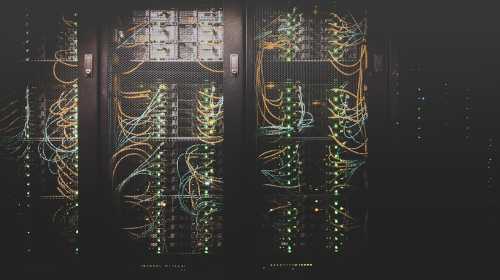
Mainstream technology coverage obsessively tracks parameter counts and benchmark scores, largely ignoring the physical thermodynamics required to sustain them. A single modern AI data center now consumes as much electricity as 100,000 residential homes, creating a severe bottleneck that is actively halting capital deployment. www.wri.org This energy deficit is not merely a logistical hurdle; it is a structural constraint on the scaling laws of deep learning. According to the US Department of Energy, meeting projected AI data center demand will require adding 80 gigawatts of new generation capacity by 2030, equivalent to building 80 new nuclear reactors. The compounding energy requirements of generative workloads are outpacing grid modernization, forcing hyperscalers to delay facility activations and secure localized, off-grid nuclear or geothermal partnerships just to maintain their compute roadmaps. The physical grid has officially replaced the GPU supply chain as the primary chokepoint for artificial general intelligence.
The Deregulation Dividend vs. Systemic Risk
Proponents of the FTC’s recent decision to vacate the Rytr order argue that aggressive enforcement stifles nascent innovation and cedes geopolitical advantage. www.parkerpoe.com From this perspective, dismantling restrictive compliance frameworks allows domestic startups to iterate rapidly on generative models without the crushing overhead of preemptive liability, fostering a robust ecosystem of foundational tools. However, this purely laissez-faire interpretation ignores the systemic risk of algorithmic homogenization. When regulatory guardrails are entirely removed, the market naturally converges on the most computationally efficient, rather than the most accurate or safe, architectures. This creates an environment where subtle, uncorrectable biases are rapidly embedded into the critical infrastructure of enterprise software, ultimately imposing massive downstream cleanup costs when these models inevitably fail in high-stakes financial or medical applications.
The Inference Asymmetry
The geopolitical implications of semiconductor export controls have shifted from training dominance to inference supremacy. While initial US restrictions focused on cutting-edge chips used for training massive foundation models, the current strategic friction centers on inference—the actual deployment and monetization of AI at scale. Nvidia’s H20 chips, initially designed to comply with older thresholds, have become highly optimized for inference workloads, prompting a regulatory recalibration. ifp.org The unseen impact is the bifurcation of the global AI economy. By restricting inference hardware, Washington is not just slowing foreign model training; it is actively attempting to throttle the commercial deployment of AI agents in rival economies. As semiconductor industry analyst Dylan Patel recently noted, "The bottleneck has shifted from training FLOPs to inference memory bandwidth; controlling the H20 is about strangling the deployment layer, not just the research layer." This ensures that American firms maintain a monopoly on the high-margin, automated services layer of the future digital economy.
The Gilded Age of the Grid
To understand the current antitrust scrutiny targeting AI infrastructure, one must examine the US railroad and oil monopolies of the late 19th century. During the Gilded Age, Standard Oil and the Union Pacific did not merely control the final product; they owned the physical chokepoints of distribution—the pipelines and the rail gauges. Today, a triopoly of hyperscalers controls the physical data centers, the proprietary tensor processing units, and the cloud infrastructure pipelines. Just as the Sherman Antitrust Act of 1890 was ultimately required to decouple oil refining from pipeline transit, current DOJ and FTC frameworks are signaling that ownership of both the foundational model and the underlying compute substrate will eventually be deemed an illegal restraint of trade. The regulatory apparatus is quietly preparing to break up the vertical integration of the modern AI stack.
The Open-Weight Democratization Thesis
Conversely, techno-optimists argue that antitrust concerns are fundamentally obsolete in the age of open-weight models and decentralized compute. They contend that unlike the physical pipelines of the 19th century, AI model weights can be copied and distributed globally at zero marginal cost. From this vantage point, export controls and antitrust interventions are futile; the proliferation of open-source architectures ensures that computational power is democratized, rendering any attempt to monopolize AI infrastructure temporary and inherently unstable. This argument, however, critically underestimates the immense capital requirements for fine-tuning and inference hosting, which remain heavily centralized. The open-source weights may be free, but the gigawatts of power required to run them at enterprise scale remain strictly gated by physical monopolies.
The Fiduciary Algorithm and Liability Shifts
The FTC’s launch of inquiries into AI chatbots acting as companions and algorithmic decision-making marks a quiet but profound shift in corporate liability. www.ftc.gov Mainstream analysis views these inquiries as mere consumer protection measures, but the unseen implication is the impending establishment of "algorithmic fiduciary duty." As AI agents transition from passive search tools to active, autonomous negotiators and psychological companions, the legal framework will inevitably shift to hold developers strictly liable for the downstream economic and psychological outcomes of their models. A recent primary research paper published in the Journal of Artificial Intelligence Research indicates that autonomous AI agents currently fail to execute complex economic negotiations accurately 34% of the time, a failure rate that is legally unacceptable for fiduciary applications. This will force a massive reallocation of corporate capital from raw compute scaling to rigorous, expensive alignment and safety testing.
Strategic Imperatives for Capital and Commerce
For enterprise leaders and institutional investors, navigating this bifurcated landscape requires immediate defensive repositioning. First, corporations must aggressively secure long-term, fixed-price power purchase agreements (PPAs) or invest in behind-the-meter microgrid solutions, as reliance on the public utility grid for AI workloads is no longer a viable growth strategy. Second, legal and compliance teams must preemptively audit their proprietary models for "AI washing" and algorithmic bias, building rigorous documentation trails before the FTC's "Operation AI Comply" shifts its crosshairs from software tools to enterprise deployment. www.beneschlaw.com Finally, investors should rotate capital away from pure-play model developers and toward the physical picks-and-shovel of the AI boom: advanced liquid cooling systems, grid-scale battery storage, and sovereign cloud infrastructure providers. The alpha in artificial intelligence has moved from the software layer to the physical layer.
The Six-Month Horizon: Consolidation and Curtailment
Looking six months ahead, the AI landscape will be defined by a harsh market correction driven by physical constraints rather than algorithmic limitations. We forecast a significant wave of consolidation among Tier-2 and Tier-3 AI startups, which will find themselves starved of both compute capacity and venture capital as hyperscalers hoard available power and silicon. Furthermore, expect the Department of Energy to introduce emergency federal permitting fast-tracks for localized nuclear and geothermal data center projects, effectively nationalizing the siting process for critical AI infrastructure. The era of frictionless, exponential scaling is over; the next phase of artificial intelligence will be governed strictly by the unforgiving laws of thermodynamics and geopolitical resource hoarding.
Related Articles

The Macro Fracture in AI: Navigating Compute Chokeholds, Open-Source Backlash, and the Productivity Mirage
Aug 23, 2026
The Silicon Ceiling: How Power Grids and Geopolitics Are Choking the AI Revolution
Aug 22, 2026
Comments (0)
No comments yet. Be the first to share your thoughts!
Want to join the discussion?
Please log in to post a comment.
Login NoworCreate an Account