
The Prophylactic Fracture: How Domestic Vaccine Rewiring and Zoonotic Endemism are Balkanizing Global Bio-Defense

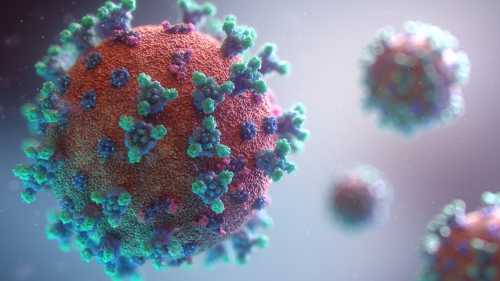
Imagine a global maritime fleet where the central navigation authority is simultaneously rewriting the rules of engagement for its own fleet's medical officers, while a silent, waterborne hull-rot spreads through the commercial cargo ships, and the international shipyards refuse to share the blueprints for the only effective sealant. The global public health architecture is currently enduring this exact structural fracture, as domestic immunization paradigms are aggressively rewritten just as zoonotic pathogens establish permanent agricultural reservoirs and multilateral pandemic treaties stall over intellectual property disputes.
The Core Event
The U.S. Department of Health and Human Services is executing a radical restructuring of the CDC’s Advisory Committee on Immunization Practices (ACIP) and vaccine guidance, fundamentally altering domestic prophylactic baselines. Concurrently, the endemic establishment of H5N1 in U.S. dairy cattle and the stalling of the WHO Pandemic Agreement’s implementation over pathogen-sharing disputes are permanently fracturing the global bio-defense supply chain.
The Unseen Implications
The Domestic Prophylactic Vacuum and Herd Immunity Degradation Mainstream coverage frames the HHS restructuring of the ACIP as a bureaucratic dispute, ignoring the severe actuarial and epidemiological shock it introduces to the domestic healthcare system. By altering vaccine guidance and defending health spending cuts, the administration is effectively decentralizing immunization protocols, shifting the financial and clinical burden onto localized health departments and private insurers www.pbs.org . This policy fragmentation degrades herd immunity thresholds for legacy pathogens like measles and pertussis, forcing commercial health insurers to price in a new "outbreak risk premium" for pediatric and maternal care. When federal prophylactic baselines are dismantled, the resulting localized outbreaks severely strain acute care capacity, transforming preventable public health externalities into catastrophic, unbudgeted hospital liabilities. Furthermore, the erosion of centralized guidance creates a severe compliance void for multi-state hospital networks, which must now navigate a labyrinth of conflicting state-level immunization mandates, drastically inflating their administrative overhead and legal exposure.
The Agricultural Reservoir and the End of Eradication Economics The confirmation that H5N1 has established a permanent mammalian reservoir in U.S. dairy cattle destroys the foundational economic model of zoonotic eradication. Primary research indicates that the virus causes a "sustained milk production drop" and exhibits molecular adaptations that allow it to evade traditional avian-centric surveillance www.cidrap.umn.edu . This is no longer a transient spillover event; it is an endemic agricultural tax. The resulting supply chain friction forces the dairy and beef industries to absorb massive biosecurity compliance costs, localized exhibition bans, and mandatory culling protocols www.dairyherd.com . As the virus adapts to mammalian sialic acid receptors, the capital expenditure required to develop and deploy bovine-specific vaccines shifts from an optional R&D project to a mandatory operational lifeline, permanently inflating the baseline cost of global dairy and protein commodities. The viral persistence in mammalian hosts also introduces a severe occupational hazard for agricultural workers, necessitating mandatory, federally subsidized PPE programs and rigorous serological monitoring that the current fragmented veterinary infrastructure cannot support.
The Multilateral Deadlock and the PABS IP Fracture The WHO Pandemic Agreement, which was officially "adopted on 20 May 2025", is currently paralyzed by severe implementation friction regarding Pathogen Access and Benefit Sharing (PABS) www.who.int . The innovative pharmaceutical industry has explicitly warned that without preserving intellectual property protections and addressing "what went wrong" during previous negotiations, private-sector R&D cooperation will collapse www.ifpma.org . This geopolitical deadlock means that when the next novel pathogen emerges, the Global South will withhold genomic sequencing data, and Western pharmaceutical conglomerates will refuse to scale manufacturing without guaranteed indemnification. This effectively neutralizes the WHO's rapid-response architecture, forcing multinational corporations and sovereign states to negotiate bilateral, ad-hoc biodefense treaties that bypass the multilateral framework entirely, ensuring that future pandemic countermeasures are hoarded by the highest bidder rather than distributed based on epidemiological need.
Counter-Argument
Area 1: The ACIP Restructuring and Regulatory Capture Proponents of the HHS restructuring argue that the legacy ACIP framework suffered from severe regulatory capture and a lack of rigorous, long-term safety surveillance for novel adjuvants. From this perspective, decentralizing vaccine guidance and introducing stringent safety reviews restores clinical autonomy to frontline physicians and forces pharmaceutical manufacturers to internalize the long-term epidemiological risks of their products. They argue that a slight, temporary dip in broad vaccination rates is an acceptable trade-off for establishing a more rigorous, evidence-based pharmacovigilance apparatus that ultimately restores public trust in the medical establishment. By demanding more rigorous, long-term post-market surveillance, these proponents argue that the market will naturally filter out low-efficacy prophylactics, ultimately driving capital toward highly targeted, personalized immunotherapies that offer superior clinical outcomes without the systemic risks associated with broad, population-level mandates.
Area 2: The PABS Framework and Biocolonial Correction Conversely, global health equity advocates counter that the pharmaceutical industry's resistance to the PABS framework is a calculated stalling tactic designed to protect monopoly rents on mRNA and viral vector platforms. They argue that without legally binding benefit-sharing mechanisms, the Global South has zero incentive to act as the world's open-source genomic surveillance network, effectively blinding the global early-warning system. In this view, the friction over the WHO Pandemic Agreement is not a failure of multilateralism, but a necessary correction to a historically extractive biocolonial model, forcing Western governments to directly subsidize technology transfer rather than relying on corporate charity during a crisis.
The Historical Precedent
The current macroeconomic friction perfectly mirrors the structural shock of the 1970s Swine Flu immunization campaign collapse combined with the 2009 H1N1 pandemic vaccine nationalism. In 1976, the U.S. government rushed a mass vaccination program that was halted due to adverse neurological events, permanently damaging public trust in federal prophylactic mandates and birthing the modern anti-vaccine legal landscape. Decades later, during the 2009 H1N1 outbreak, wealthy nations hoarded vaccine doses and blocked IP sharing, leaving the developing world entirely exposed and destroying the WHO's credibility. The lesson from these convergences is stark: whenever domestic political imperatives override epidemiological consensus, and multilateral treaties fail to align the financial incentives of private manufacturers with the sovereign security needs of developing nations, the resulting bio-defense architecture fractures. This inevitably leads to a "balkanized" global health landscape where survival is dictated by bilateral manufacturing capacity rather than coordinated scientific response.
Actionable Takeaways
Local Hospitals and Health Systems: Immediately establish localized, independent pharmacovigilance and outbreak-containment protocols. With federal immunization baselines in flux, regional health networks must secure independent stockpiles of broad-spectrum antivirals and isolate dedicated infectious disease wards to absorb the impending volatility in preventable disease admissions. Agricultural and Food Conglomerates: Pivot capital expenditure toward closed-loop, automated biosecurity infrastructure and bovine-specific mRNA vaccine development. The endemic presence of H5N1 in dairy reservoirs means that open-air grazing and traditional livestock transit are now permanent vectors for supply chain disruption; vertical integration of veterinary biotech is a mandatory survival strategy. Pharmaceutical and Biotech Firms: Bypass the paralyzed WHO PABS framework and aggressively negotiate direct, bilateral advance market commitments (AMCs) with allied sovereign wealth funds. Securing guaranteed, indemnified procurement contracts with G7 nations is the only viable mechanism to de-risk the massive capital expenditure required for next-generation pandemic countermeasures. Citizens and Investors: Rotate capital into domestic, decentralized diagnostic manufacturers and localized cold-chain logistics providers. As multilateral bio-defense treaties stall and domestic public health funding contracts, the premium will shift to private, direct-to-consumer pathogen surveillance and localized medical supply chain resilience.
Future Forecast
By February 2027, the friction between decentralized domestic vaccine policies and endemic agricultural zoonoses will trigger a severe, localized pertussis and measles resurgence in underfunded municipal health districts, forcing a chaotic, state-level emergency reallocation of Medicaid funds. Simultaneously, the complete collapse of the WHO's PABS implementation will prompt the U.S. and the EU to invoke the Defense Production Act, effectively nationalizing the supply chains for critical lipid nanoparticles and viral vector bioreactors. This will permanently bifurcate the global biodefense market into a heavily subsidized, sovereign-aligned Western bloc, and a fragmented, reverse-engineered non-aligned bloc, rendering the concept of a unified global pandemic response a historical relic.
Related Articles

The Healthcare Quadruple Bypass: Navigating Price Controls, Workforce Attrition, and Rural Desertification
Aug 22, 2026
The Fractured Laboratory: How Geopolitical Friction is Rewiring Global Science Economics
Aug 19, 2026
Comments (0)
No comments yet. Be the first to share your thoughts!
Want to join the discussion?
Please log in to post a comment.
Login NoworCreate an Account