
The Regulatory Schizophrenia of 2026: Energy Policy Whiplash and the Industrial Squeeze

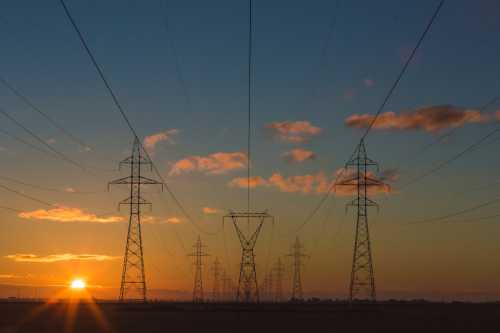
Imagine a heavy-lift cargo vessel where the chief engineer is actively venting ballast water to increase speed, while the cargo master is simultaneously welding massive steel wind-turbines to the deck, fundamentally altering the ship's center of gravity. This is the precise mechanical paradox defining [[Energy & Industrial Policy]] in the United States in August 2026. The U.S. Environmental Protection Agency’s August 3, 2026 decisions on six individual small refinery exemption petitions under the Renewable Fuel Standard are actively colliding with the impending September 30 expiration of the Inflation Reduction Act’s Energy Infrastructure Reinvestment financing window www.epa.gov . This regulatory schizophrenia defines the current federal apparatus, where aggressive fossil fuel deregulation—cemented by the February 2026 repeal of the greenhouse gas "endangerment finding"—is attempting to coexist with massive, state-mandated green capital expenditure www.facebook.com .
Echoes of the Synthetic Fuels Collapse
To contextualize this policy whiplash, one must examine the creation and subsequent collapse of the U.S. Synthetic Fuels Corporation (SFC) during the Carter and Reagan administrations in the early 1980s. In 1980, the federal government injected billions into the SFC to synthesize oil from coal and shale, driven by the geopolitical shock of the Iranian Revolution and strict environmental mandates. However, when global oil prices collapsed and the subsequent administration aggressively deregulated the energy sector, the SFC's heavily subsidized, capital-intensive projects were instantly rendered economically unviable, leading to a massive taxpayer bailout and a decade-long depression in domestic energy R&D. The historical lesson is clear: when massive, long-duration capital expenditure cycles are funded by legislative mandates that are immediately undermined by executive deregulation, the resulting stranded assets trigger a generational retreat from the sector. The current collision between the IRA's financing deadlines and the EPA's RFS exemptions is setting the stage for an identical wave of stranded biofuel and green hydrogen assets in late 2026.
The Capital Allocation Friction and Bio-Manufacturing Strike
The mainstream political press treats the EPA's RFS exemptions as a minor concession to the petroleum lobby, entirely ignoring how this fractures the forward curve for biofuel and renewable diesel producers. By granting these exemptions, the EPA is effectively destroying the demand certainty required to secure long-term debt financing for next-generation sustainable aviation fuel (SAF) refineries. The unseen implication for [[Energy & Industrial Policy]] is a severe capital strike in the bio-manufacturing sector; institutional allocators are pulling forward commitments from renewable diesel projects because the regulatory floor provided by the RFS has been proven to be politically malleable. This forces mid-stream energy companies to abandon multi-billion-dollar capex plans in favor of short-cycle, high-yield share buybacks, permanently stunting the domestic alternative fuels supply chain.
Counter-Narrative: The Deregulatory Input Dividend
Conversely, heavy industry lobbyists and traditional energy economists argue that this regulatory rollback is precisely what is required to maintain the global competitiveness of American manufacturing. The counter-argument posits that the rigid enforcement of the RFS and the GHG endangerment finding acted as an implicit, regressive tax on the marginal cost of production for energy-intensive sectors like steel, cement, and petrochemicals. By repealing the foundational climate mandates and granting refinery exemptions, the federal government is effectively lowering the baseline input costs for domestic heavy industry, allowing U.S. manufacturers to undercut European and Asian competitors who are burdened by carbon border adjustment mechanisms. From this perspective, the short-term pain inflicted on biofuel developers is a necessary sacrifice to preserve the structural profitability of the foundational industrial base.
Jurisdictional Balkanization and the Interstate Electron Tariff
Beneath the federal paralysis, a violent jurisdictional balkanization of the national energy grid is occurring. Following the EPA's abandonment of federal climate policy, states like California have launched aggressive legal counter-offensives to enforce their own stringent emissions standards, effectively creating a two-tiered regulatory regime for interstate commerce calmatters.org . As noted by legal analysts tracking the repeal, this reversal "overturns nearly two decades of climate policy rooted in a 2007 Supreme Court decision," fundamentally altering the risk calculus for interstate utility planners www.facebook.com . The unseen implication is the destruction of the unified national wholesale electricity market. Utility-scale developers can no longer deploy standardized turbine or solar arrays across state lines; they must now engineer bespoke, state-compliant interconnection architectures that satisfy localized carbon-intensity mandates. This regulatory friction acts as a massive, hidden tariff on interstate electrons, severely compressing the internal rate of return (IRR) for multi-state transmission projects and guaranteeing localized capacity shortfalls during peak summer cooling demands.
Official Earthjustice Legal Tracker Update
"On February 12, 2026, Trump's EPA repealed the endangerment finding... This reversal overturns nearly two decades of climate policy rooted in a 2007 Supreme Court decision." View the Official Earthjustice Analysis
The Healthcare-Energy Nexus and API Onshoring
The final, deeply overlooked implication lies at the bizarre intersection of healthcare policy and energy intensity. According to policy analysts, "the most meaningful change coming with the IRA is the ability for Medicare to negotiate drug prices starting in 2026," an operational shock that will force a violent reallocation of pharmaceutical expenditure en.wikipedia.org . The unseen implication for [[Energy & Industrial Policy]] is that pharmaceutical conglomerates will aggressively relocate their active pharmaceutical ingredient (API) manufacturing back to the United States to escape foreign supply chain vulnerabilities and capitalize on localized tax incentives, but they will do so in jurisdictions with the cheapest, most deregulated baseload power. The repeal of federal carbon constraints means that the onshoring of the pharmaceutical supply chain will be heavily tethered to cheap, unregulated natural gas and coal-fired generation in the Rust Belt, entirely negating the carbon-reduction goals of the broader healthcare sector.
Counter-Narrative: The Free-Market Stress Test
Defenders of the current legislative-executive friction argue that this chaotic policy environment is actually a highly efficient, free-market stress test for marginal energy technologies. The counter-argument to the "stranded asset" thesis asserts that the Inflation Reduction Act's subsidies artificially propped up economically unviable green hydrogen and carbon-capture projects that would have never survived without federal crutches. By simultaneously removing the regulatory stick of the EPA and allowing the IRA's financing windows to naturally expire, the market is finally being allowed to ruthlessly price-discover which alternative energy technologies possess genuine commercial utility versus those that are merely compliance theater. Proponents argue that the resulting bankruptcies in the bio-manufacturing sector are a healthy, necessary purge that will redirect capital toward genuinely scalable, grid-scale nuclear and advanced geothermal projects that do not require perpetual regulatory subsidies to survive.
Defensive Architecture for the Industrial Base
For local businesses, mid-market manufacturers, and enterprise risk managers, navigating this fractured [[Energy & Industrial Policy]] landscape requires an immediate pivot from passive utility reliance to aggressive, localized energy sovereignty. Enterprises must ruthlessly audit their exposure to interstate wholesale electricity markets and immediately accelerate the deployment of behind-the-meter, natural-gas-fired microgrids to hedge against the localized capacity shortfalls caused by jurisdictional balkanization. Citizens and retail investors should systematically underweight pure-play renewable diesel and sustainable aviation fuel equities that are heavily dependent on RFS compliance credits, reallocating capital into the physical infrastructure of grid hardening, such as high-voltage direct current (HVDC) transmission components and utility-scale battery storage integrators. Furthermore, corporate treasurers must utilize the final weeks of the IRA's EIR financing window—where the government "appropriates $5 billion through September 30, 2026, to carry out EIR, with a total cap on loans of up to $250 billion"—to lock in sovereign-backed debt for critical facility upgrades before the deadline irrevocably closes the federal capital tap www.energy.gov .
The Q1 2027 Reckoning: Distressed M&A and Grid Rationing
Looking six months ahead to the first quarter of 2027, the energy and industrial policy landscape will be defined by a severe repricing of utility-scale renewable assets and the violent unwinding of the voluntary carbon market. As the legal battles between the federal EPA and states like California reach the appellate courts, expect a sudden freeze in multi-state transmission permitting, forcing regional grid operators to implement rolling brownouts to manage localized capacity deficits. Simultaneously, the realization that the RFS exemptions have permanently impaired the demand curve for biofuels will trigger a wave of distressed mergers and acquisitions in the renewable diesel sector, as legacy oil majors acquire struggling bio-refineries purely for their physical footprint and pipeline access. The era of federally subsidized, harmonized energy transition is permanently over; the next cycle will be defined by brutal, jurisdiction-specific energy rationing and the ruthless optimization of legacy fossil-fuel infrastructure.
Related Articles

The Policy Paradox: Navigating Industrial Subsidies, Carbon Border Adjustments, and Fiscal Constraints
Aug 22, 2026
The Redrawn Regulatory Seascape: Navigating the Convergence of Global Policy Faultlines
Aug 22, 2026
Comments (0)
No comments yet. Be the first to share your thoughts!
Want to join the discussion?
Please log in to post a comment.
Login NoworCreate an Account