
The Senate Elections 2026: How Pakistan's 'Council of Elders' is Reshaping Federal Legislation

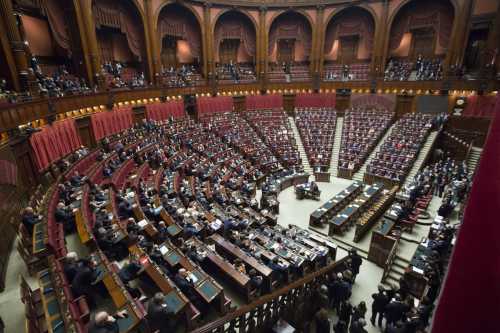
Imagine a massive, ancient tribe. The young, energetic hunters and gatherers run around, making quick decisions about where to hunt today and what to eat tonight. They are elected directly by the people, and they change every few years based on the current mood of the tribe. This is the National Assembly. But the tribe also has a "Council of Elders." These are the wise, experienced men and women who have seen many seasons, many droughts, and many floods. They are not elected by the whole tribe; they are chosen by the leaders of the different sub-tribes (the provincial assemblies). The Council of Elders does not rush. They sit in a circle, debate slowly, and make sure that the quick decisions of the young hunters do not harm the long-term survival of the tribe. They represent the interests of the sub-tribes, ensuring that the small, remote sub-tribes are not bullied by the massive, central sub-tribe. In Pakistan, this Council of Elders is the Senate. In June 2026, half of the Senate's seats are up for election, and the political maneuvering to win these seats is intense, secretive, and incredibly high-stakes. Let us explore how the Senate works, why it is the ultimate check on political power, and how the 2026 elections will shape the future laws of Pakistan.
The Architecture of the Senate: Why Pakistan Needs an Upper House
To understand the Senate elections, we must understand why the Senate exists. Pakistan is a federation of four provinces. If the Parliament only had one house (the National Assembly), the province with the largest population (Punjab) would dominate everything. They would have the majority of votes, and they could pass any law they wanted, regardless of what Sindh, Khyber Pakhtunkhwa, or Balochistan wanted. The smaller provinces would feel like colonized territories, ruled by the majority.
The Senate was created to fix this imbalance. It is the guardian of provincial rights. In the Senate, every province gets an equal number of general seats, regardless of its population. This means that Balochistan, with its tiny population, has the same voting power in the Senate as Punjab, with its massive population. Furthermore, the Senate is a "permanent house." Its members serve six-year terms, and only half of the house retires every three years. This means the Senate can never be completely dissolved, not even by a military dictator (as per the constitution). It provides continuity, stability, and a sober second thought to the often emotional, populist legislation that comes from the directly elected National Assembly.
The 2026 Election Mechanics: How the Elders are Chosen
The Senate elections are indirect. The common citizen does not vote for a Senator. Instead, the members of the Provincial Assemblies (the MPAs) and the National Assembly (the MNAs) vote. This makes the Senate elections a massive, high-stakes math problem. To win a Senate seat, a candidate needs a specific "quotum" of votes. This quotum is calculated by dividing the total number of assembly members by the number of seats to be filled, plus one.
In June 2026, the political parties are engaged in intense "horse-trading." Since the vote is secret (to prevent bribery and coercion, theoretically), political parties cannot be 100 percent sure that their own members will vote for the party's official candidate. A party might have exactly enough votes to win two seats, but if three of their members secretly cross over and vote for an independent candidate or a rival party, the party loses a seat. This leads to massive anxiety, secret midnight meetings in luxury hotels, and allegations of "harvesting" (buying votes with millions of rupees in cash). The Election Commission of Pakistan has set up special, secure polling booths with CCTV cameras to ensure the secrecy and integrity of the vote, but the psychological pressure on the lawmakers is immense.
The Senate Elections 2026 are underway. The ECP has ensured a transparent, secure voting process for the indirect election of the upper house. The results will shape the legislative balance of power in Pakistan. #SenateElections #Pakistan
— Election Commission of Pakistan (@ECPPakistan) June 27, 2026
The Political Stakes: Controlling the Legislative Agenda
Why do parties spend millions and risk their members' integrity to win Senate seats? Because the Senate controls the upper echelons of the state. The Chairman and Deputy Chairman of the Senate are next in the line of succession to become the President of Pakistan (if the office falls vacant). More importantly, the Senate houses the most experienced, technocratic, and influential politicians. When a controversial bill is passed by the National Assembly, it goes to the Senate. The Senate can send the bill back, force a joint sitting, or stall it for months. If the ruling coalition does not have a majority in the Senate, their legislative agenda grinds to a halt. They cannot pass major constitutional amendments, they cannot easily approve international treaties, and they face intense scrutiny from the Senate's standing committees, which have the power to summon ministers and grill them on their policies.
In the 2026 elections, the ruling coalition is desperate to secure enough seats to elect their preferred Chairman of the Senate. The opposition, sensing the coalition's weakness in the provincial assemblies, is fielding strong, independent-minded technocrats and dissident coalition members to break the ruling party's monopoly. The outcome of these elections will determine whether the federal government can smoothly pass its economic and digital reforms, or whether it will be constantly blocked by a hostile, opposition-led upper house.
The Rise of the Technocrats and the Non-Party Seats
Bringing Experts into the Room
One of the most beautiful features of the Senate is that it reserves seats for "technocrats and ulema" (religious scholars), as well as women and non-Muslims. Unlike the National Assembly, where you often see politicians who have inherited their seats from their fathers, the Senate brings in university professors, retired military generals, senior bureaucrats, and leading scientists. These members do not have to worry about facing the angry mob at a public rally; they are insulated by the indirect election process. This allows them to speak truth to power, to debate complex economic and foreign policy issues with depth and nuance, and to draft laws that are based on logic rather than populism.
In the 2026 elections, the political parties are carefully selecting their technocrat candidates. They are looking for individuals who have a strong public profile, impeccable academic credentials, and the ability to articulate the party's stance on national television. Winning a technocrat seat is a massive prestige victory for a political party. It shows that they are not just a crowd of street agitators; they are a serious, governing force that commands the respect of the intellectual elite of the country.
The Aftermath: A New Balance of Power
When the votes are counted and the new Senators take their oaths, the political landscape of Islamabad will shift. The Senate is the ultimate check on the power of the Prime Minister and the National Assembly. It is the house of review, the house of the provinces, and the house of the elders. The 2026 Senate elections are not just about filling seats; they are about defining the ideological and legislative direction of Pakistan for the next six years. Will the Senate be a rubber stamp for the ruling coalition, or will it be a fierce, independent watchdog that protects the constitution and the rights of the smaller provinces? The answers lie in the secret ballots cast by the provincial assembly members. The Council of Elders has been renewed, and the long-term survival of the tribal federation depends on their wisdom. Read the complete post-election analysis on Pakistan Today.
Related Articles
The Institutional Fault Line: How Judicial Overreach and Trade Wars Are Reshaping U.S. Markets
Aug 23, 2026
The Fractured Consensus: How Trade Volatility and Institutional Strain Are Rewiring U.S. Macroeconomics
Aug 22, 2026
Comments (0)
No comments yet. Be the first to share your thoughts!
Want to join the discussion?
Please log in to post a comment.
Login NoworCreate an Account