
World
The Silent Fracture: How Geopolitical Fragmentation is Rewiring Global Trade
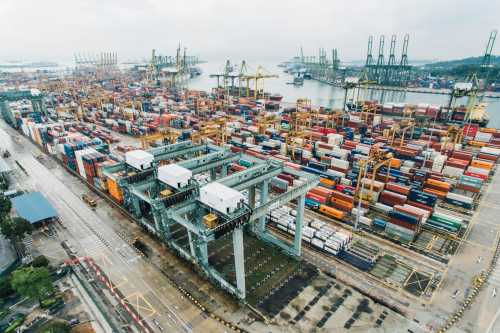
The Tectonic Shift in Global Commerce
Like a tectonic plate shifting silently beneath the ocean floor until it suddenly fractures a continent, the global economic order is undergoing a structural realignment. Five converging realities define this moment: global trade restrictions now cover nearly 12% of total merchandise trade; BRICS nations are actively engineering alternative settlement mechanisms to bypass weaponized financial networks; escalating US-China tariffs are reshaping auto and tech supply chains; Middle East tensions continue to disrupt critical energy and shipping corridors; and non-aligned nations are capturing redirected trade flows in an increasingly fragmented system. This is not a temporary disruption, but a permanent rewiring of international commerce.The Shadow Settlement Ecosystem
Mainstream financial coverage fixates on the hypothetical launch of a unified BRICS currency, missing the actual mechanism of change. The real shift is occurring through bilateral local-currency swap networks and expanded use of alternative messaging systems. As IMF First Deputy Managing Director Gita Gopinath warned, "FX reserves could be re-aligned to reflect new economic links and geopolitical risks," pointing toward a system with "multiple reserve currencies" rather than a sudden collapse of the dollar www.imf.org . For example, recent agreements allowing the UAE and India to settle oil trades in dirhams and rupees bypass traditional dollar clearinghouses. This decentralized approach allows nations to settle trade in yuan, rupees, or dirhams, gradually eroding the dollar's monopoly on cross-border transactions without triggering immediate market panic. It is a slow bleed rather than a sudden hemorrhage.The Friend-Shoring Illusion
Corporate earnings calls frequently celebrate supply chain relocation to Vietnam, India, or Mexico as a definitive solution to geopolitical risk. This narrative ignores a fundamental structural reality: these emerging manufacturing hubs remain deeply dependent on Chinese intermediate goods, raw materials, and machinery. Consider the electric vehicle battery supply chain; a vehicle assembled in Mexico may still rely entirely on cathode materials processed in China. Rather than achieving true supply chain independence, multinational corporations are merely adding a layer of geographic latency and tariff-avoidance markup. The underlying concentration risk remains intact, masked by a final assembly step in a third country.The Margin Squeeze on Main Street
While multinational conglomerates possess the balance sheets to absorb geopolitical friction costs, small and medium-sized enterprises face existential margin compression. The proliferation of fragmented regulatory regimes, such as the EU's deforestation-free products regulation and complex US tariff compliance protocols, functions as a regressive tax on smaller operators. Since 2009, cumulative import restrictions have surged, reaching nearly 12% of global trade by the end of 2024 www.worldbank.org . For an SME, navigating this labyrinth of overlapping compliance mandates diverts critical capital from innovation to legal administration, creating a barrier to entry that protects incumbent giants.The Sovereignty Imperative: A Reality Check
Critics rightly argue that de-dollarization narratives are frequently overstated by geopolitical optimists. The US dollar still comprises nearly 60% of known central bank reserves and dominates global trade invoicing. The push for alternative currencies currently lacks the deep, liquid capital markets, institutional transparency, and rule-of-law credibility that underpin the greenback's enduring dominance. Research indicates that while "BRICS aims to diminish the bloc's vulnerability to US sanctions, which have been weaponized to target" specific economies, the alternative frameworks currently lack the liquidity to genuinely dethrone the dollar www.emerald.com . The dollar's network effects remain a formidable moat, ensuring its centrality for the foreseeable future.Echoes of 1971: The Nixon Shock Parallel
History offers a stark precedent in the 1971 Nixon Shock, which abruptly terminated the dollar's convertibility to gold and dismantled the Bretton Woods system. That event triggered a painful decade of stagflation and forced a chaotic recalibration of global trade, ultimately giving rise to the petrodollar system. Today's fragmentation is the inverse: rather than a sudden, centralized collapse of a monetary regime, we are witnessing a deliberate, decentralized splintering of trade blocs. The lesson from 1971 is that transitional periods between global monetary orders are inherently volatile, characterized by sharp currency fluctuations and aggressive protectionist policies.The Compliance Theater Trap
Some market analysts argue that supply chain diversification is a panacea for geopolitical risk, advising companies to simply broaden their vendor lists. However, this overlooks the phenomenon of compliance theater. Companies frequently reroute goods through third countries with minimal value-added transformation, satisfying regulatory checklists without altering the underlying concentration risk. This creates a false sense of security for boards of directors while inflating operational costs and leaving the enterprise vulnerable to secondary sanctions or sudden regulatory crackdowns on transshipment.Strategic Imperatives for the Next Quarter
Local businesses and citizens must adopt defensive postures immediately. First, enterprises must diversify supplier bases beyond single-country dependencies, mapping their supply chains down to the tier-two and tier-three component levels. Second, treasury departments should hedge currency exposure by utilizing multi-currency accounts and exploring local-currency settlement options where feasible. Third, investment in supply chain visibility software is no longer optional; it is a critical risk-mitigation tool to identify bottlenecks before they trigger operational paralysis. Furthermore, corporate leadership must engage in active geopolitical scenario planning, stress-testing their operational models against potential escalations in regional conflicts or sudden shifts in trade policy.The Six-Month Horizon: A Fragmented Equilibrium
Over the next six months, the global landscape will not resolve into a neat new order, but will settle into a fragmented equilibrium. Expect a 15% to 20% increase in bilateral trade agreements explicitly designed to bypass traditional multilateral frameworks. Concurrently, energy and critical mineral markets, including copper and lithium, will experience heightened volatility as nations stockpile resources, anticipating further export controls. Central banks will face a delicate balancing act, attempting to curb inflation driven by supply-side shocks without triggering a credit contraction in an already fragile macroeconomic environment. Non-aligned nations will leverage their swing-state status to extract economic concessions from both Western and Eastern blocs. The era of frictionless globalized trade is over; the era of strategic, guarded commerce has begun.References: 1. IMF: Geopolitics and its Impact on Global Trade and the Dollar. Source. 2. World Bank: Trade Policy and Fragmentation Visualization Tools. Source. 3. Emerald Publishing: Currency without credibility: why BRICS de-dollarization falls short. Source.
Related Articles

The Architecture of Fragmentation: Navigating the Multipolar Shift in Global Governance
Aug 22, 2026
The Friction Premium: How Geopolitical Realignment is Rewiring Global Capital and Trade in 2026
Aug 22, 2026
Comments (0)
No comments yet. Be the first to share your thoughts!
Want to join the discussion?
Please log in to post a comment.
Login NoworCreate an Account