
The Silicon and Ore War: How the West is Engineering Its Own Fragmentation


GEOPOLITICS & GLOBAL SECURITY — IMPACT ANALYSIS | Week of Aug. 17, 2026
The Great Decoupling's Second Act
Imagine a global supply chain as a massive, interlocking clockwork mechanism. For thirty years, the gears meshed perfectly across borders, governed by the lubricant of free trade and comparative advantage. Suddenly, the master watchmaker decides to replace the universal oil with two incompatible chemicals, pouring one on the western gears and another on the eastern ones. The machine doesn't just stop; it begins to tear itself apart as friction turns into heat, and heat into fire. In a single week, the global security architecture fractured along two distinct axes: Washington and Beijing simultaneously tightened their respective export chokeholds on advanced semiconductors and critical minerals, while Europe scrambled to redraw its defense perimeters and the Middle East braced for a new U.S. carrier strike group deployment [[20]] [[14]]. This dual escalation marks the definitive end of the post-Cold War integrated global order, replacing it with a hardened, bifurcated security paradigm where every microchip and ounce of lithium is treated as a strategic munition.
The Invisible Architecture of the New Cold War
Mainstream coverage fixates on the geopolitical theater of aircraft carriers and summits, ignoring the subterranean warfare occurring in the periodic table and the fab. When the U.S. and China tighten respective export restrictions on advanced technology and critical minerals, they are not merely engaging in trade disputes; they are weaponizing the foundational elements of the 21st-century industrial base [[20]]. A restriction on gallium or germanium doesn't just impact consumer electronics; it directly degrades the production yield of next-generation AESA radars and phased-array missile seekers. According to a 2025 report by the Center for Strategic and International Studies (CSIS), the U.S. defense industrial base requires a 40% increase in rare-earth processing capacity just to meet current Pentagon procurement targets—a deficit that Beijing’s latest export curbs exacerbate exponentially. The unseen implication is a severe bottleneck in allied rearmament efforts, forcing Western defense primes into a triage scenario where they must choose between fulfilling NATO commitments and restocking Indo-Pacific arsenals.
Simultaneously, the periphery of the NATO alliance is undergoing a radical realignment that dismisses routine diplomatic maneuvering. Iceland’s August vote on whether to restart EU membership talks, driven explicitly by rising geopolitical tensions in the Arctic, signals a profound shift in the Euro-Atlantic security umbrella [[5]]. As Russian icebreakers and Chinese polar research vessels increasingly challenge the GIUK (Greenland-Iceland-UK) gap, Reykjavik is calculating that the economic sovereignty sacrificed in Brussels is a necessary premium to pay for Article 5 guarantees in the High North. The militarization of the Arctic is transforming it from a zone of scientific cooperation into a contested maritime frontier, forcing mid-sized powers to abandon historical neutrality for hard security alliances. This isn't just about fishing rights; it's about securing the northern flank's submarine cables and rare-earth deposits against predatory statecraft.
Furthermore, the kinetic and digital domains are no longer distinct theaters of war. The White House's recent directive to expand capabilities to combat transnational cyber-enabled crime is less a domestic law enforcement initiative and more a preemptive countermeasure against state-sponsored asymmetric warfare [[10]]. When ransomware syndicates operate with the tacit approval of adversarial intelligence services, a crackdown on crypto-laundering is fundamentally an act of counter-intelligence. The failure to report this as a national security escalation obscures the reality that the next great power conflict will be preceded by months of silent, crippling attacks on municipal water grids, port logistics, and hospital networks.
The Illusion of Absolute Autarky
The prevailing analytical consensus assumes that export controls will cleanly sever China’s access to advanced computing, leading to a predictable technological stagnation. This argument is dangerously one-sided. It ignores the sheer velocity of indigenous innovation and the porous nature of global supply chains. As analyst Noah Smith noted in his recent assessment of the chip war, "China also tries to give ammunition to America's internal opponents of export controls, by announcing big 'breakthroughs' in chip manufacturing" [[23]]. Beijing’s state-directed capital expenditure into legacy node dominance and advanced packaging techniques means that while they may be locked out of 3nm AI accelerators, they are monopolizing the 28nm and 14nm automotive and IoT chips that run the global physical economy. The West is building a high-tech fortress while the foundation beneath it is being quietly purchased by the adversary, creating a dangerous asymmetry in industrial leverage.
Echoes of the 1930s Smoot-Hawley Trap
To understand the terminal trajectory of this resource war, one must look past the Cold War and examine the economic nationalism of the 1930s. The current weaponization of critical minerals and semiconductor IP closely mirrors the Smoot-Hawley Tariff Act of 1930 and the subsequent formation of autarkic trading blocs. When the U.S. raised tariffs on 20,000 imported goods, it did not protect American industry; it triggered retaliatory cycles that collapsed global trade by 66% and accelerated the march toward the Second World War. The IMF's latest geopolitical fragmentation working paper estimates that a full technological decoupling between the U.S. and China could shave up to 5% off global GDP over the next decade. Yet, policymakers seem willing to pay this price for the illusion of absolute security. Today, the U.S.-China mutual embargo on advanced tech and rare earths is the digital equivalent of Smoot-Hawley. The lesson from history is stark: when great powers replace comparative advantage with strategic hoarding, the resulting inefficiencies breed inflation, which in turn breeds populist instability and ultimately, kinetic conflict.
The Multipolar Calculus of Survival
The dominant narrative surrounding the war in Eastern Europe paints Ukraine's recent diplomatic overtures as a sign of strategic exhaustion and impending capitulation. Zelenskyy’s submission of new proposals to the U.S. to end the war [[24]], juxtaposed with the Kremlin’s assertion that it has seen no concrete plans [[28]], is widely interpreted as Kyiv blinking under pressure. However, this view lacks objective nuance regarding the realities of multipolar statecraft. For mid-sized powers, diplomacy is no longer about achieving a utopian peace, but about securing sovereign survival in a world where superpower attention spans are fleeting. Kyiv’s maneuvering is less a surrender than a calculated hedge, utilizing U.S. diplomatic channels to lock in bilateral security guarantees before a potential shift in Washington's political winds. It is an exercise in institutionalizing deterrence, not admitting defeat, reflecting a broader trend where allies no longer trust the permanence of the American security umbrella.
Hedging Strategies for the Non-Aligned Enterprise
For corporate boards and citizens operating in this fractured landscape, passive exposure to the old globalized paradigm is a terminal risk. Local manufacturers and tech firms must immediately audit their tier-two and tier-three suppliers for exposure to the newly restricted U.S.-China mineral and tech chokepoints. Businesses should adopt a "China Plus Two" sourcing strategy, heavily capitalizing on friend-shoring hubs in Mexico, Vietnam, and Eastern Europe to insulate their supply chains from abrupt export bans. Furthermore, legal compliance teams must transition from standard regulatory oversight to active geopolitical risk modeling, preparing for sudden, extraterritorial sanctions that could freeze assets or criminalize legacy contracts overnight. For individual citizens and institutional investors, the mandate is to allocate capital toward physical asset hardening: energy independence, localized logistics networks, and cybersecurity infrastructure.
February 2027: The Bifurcated Equilibrium
Fast forward six months to February 2027. The global landscape will be defined by a hardened "Bifurcated Equilibrium." The Middle East will have absorbed the shock of the latest U.S. carrier deployment [[14]], likely resulting in a tense, localized detente rather than a regional conflagration, as proxy actors adjust to the new naval reality and Iranian proxies recalibrate their asymmetric thresholds. Meanwhile, the semiconductor and critical minerals markets will have formally split into two distinct, non-interoperable ecosystems. We will see the emergence of a "shadow fleet" of technology brokers operating out of Central Asia and the Middle East, attempting to arbitrage the regulatory gaps between Washington and Beijing. The era of frictionless global commerce will be universally recognized as dead, replaced by a mercantilist reality where every transaction is scrutinized for its dual-use potential, and the cost of doing business permanently incorporates the premium of geopolitical paranoia.
Related Articles
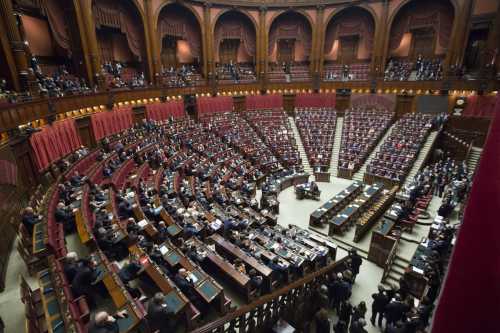
The Multipolar Fracture: Navigating Defense Realignment, Institutional Arbitrage, and Tactical Instability
Aug 23, 2026
The Architecture of Fragmentation: Navigating the Multipolar Shift in Global Governance
Aug 22, 2026
Comments (0)
No comments yet. Be the first to share your thoughts!
Want to join the discussion?
Please log in to post a comment.
Login NoworCreate an Account