
The Silicon Bottleneck: How Nvidia's New 'Blackwell Ultra' Architecture is Rewiring the Global Economy and Redrawing Geopolitical Borders

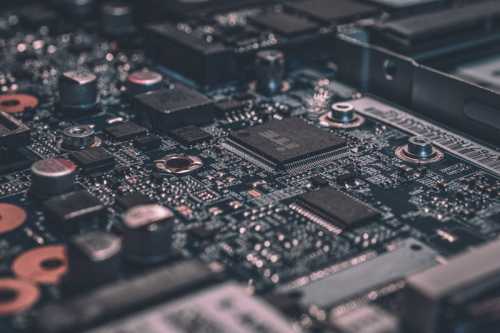
In the relentless, high-stakes race to dominate the future of artificial intelligence, the finish line keeps moving, and the hurdles are getting exponentially higher. On Thursday, the technology world was once again captivated by Nvidia, the undisputed kingmaker of the AI revolution, as the company unveiled the next iteration of its silicon architecture, codenamed 'Blackwell Ultra.' This is not just another incremental hardware update; it represents a fundamental paradigm shift in how we compute, process, and store the massive datasets required to train the next generation of artificial general intelligence. To understand the magnitude of this announcement, imagine you are trying to build the fastest, most luxurious fleet of supercars in the world. You have the best engineers, the finest materials, and unlimited funding. But suddenly, you realize that the paved roads you are driving on are only wide enough for a single bicycle. No matter how fast your cars are, they are bottlenecked by the infrastructure. This is the exact problem Nvidia's new architecture solves. For the past three years, the AI industry has been constrained not by the intelligence of the algorithms, but by the physical limitations of memory bandwidth and data transfer speeds between chips. Blackwell Ultra effectively paves a ten-lane superhighway directly onto the silicon, shattering the previous physical bottlenecks and allowing AI models to scale to sizes that were previously considered physically impossible.
The Technical Leap: Beyond Moore's Law
To appreciate the technical brilliance of Blackwell Ultra, we have to look at the graveyard of Moore's Law. For decades, the tech industry relied on the predictable shrinking of transistors to double computing power every two years. That era is effectively over; we have hit the physical limits of atomic physics. You can only shrink a transistor so much before quantum tunneling causes it to leak electricity and fail. Nvidia's solution was not to shrink the transistors, but to completely reimagine how they talk to each other. The new architecture introduces a revolutionary chip-to-chip interconnect technology that allows thousands of GPUs to act as a single, monolithic super-brain. In traditional computing, moving data from the memory to the processor consumes vastly more energy and time than the actual computation itself. Blackwell Ultra utilizes a groundbreaking packaging technique that stacks memory directly on top of the compute logic, reducing data travel distance from millimeters to microns. The result is a staggering 30x improvement in energy efficiency for large language model inference. For the average consumer, this means that the AI features on your smartphone, your car, and your home devices are about to become exponentially smarter and faster, without draining your battery or requiring a constant internet connection to a massive server farm.
The Economic Tsunami: Trillions in Capital Expenditure
The financial markets reacted to the unveiling with a mix of awe and sheer panic. Nvidia's stock surged in pre-market trading, pushing the company's valuation closer to the mythical $5 trillion mark, but the real story is happening in the boardrooms of the world's largest cloud providers and sovereign wealth funds. The hyperscalers—Microsoft, Amazon, Google, and Meta—are currently engaged in an arms race of capital expenditure that dwarfs the dot-com bubble of the late 1990s. They are committing hundreds of billions of dollars to build massive, gigawatt-scale data centers, and Blackwell Ultra is the engine that will power them. However, this massive influx of capital is creating a severe supply chain squeeze. The advanced packaging required for these chips is exclusively handled by TSMC in Taiwan, and their production lines are booked solid for the next three years. This creates a fascinating economic dynamic: the companies with the deepest pockets and the strongest political alliances will secure the compute power necessary to build the next generation of AI, while smaller startups and international competitors will be locked out, unable to buy the silicon required to compete. We are witnessing the consolidation of the global digital economy into the hands of a few hyper-capitalized entities.
The Geopolitical Chessboard: Silicon as the New Oil
Beyond the balance sheets of Silicon Valley, Blackwell Ultra has profound and immediate geopolitical implications. The United States government has made it explicitly clear that maintaining absolute supremacy in AI compute is a matter of national security. The export controls placed on advanced semiconductors to China and other adversarial nations are not just trade policies; they are the modern equivalent of an oil embargo. The release of Blackwell Ultra necessitates an immediate update to these export controls, as the performance metrics of the new chip far exceed the thresholds set by the Department of Commerce. This creates a intense diplomatic tightrope for the Biden administration. On one hand, they must prevent the Chinese military and tech giants from acquiring the compute power needed to develop advanced autonomous weapons and surveillance systems. On the other hand, Nvidia derives a significant portion of its revenue from the Chinese market, and overly restrictive bans could cripple the company's ability to fund the next generation of research and development. Furthermore, this technological blockade is accelerating the fragmentation of the global internet. China is pouring hundreds of billions into its domestic semiconductor industry, determined to build a completely independent, non-American AI supply chain. The world is splitting into two distinct technological spheres, each with its own hardware, software ecosystems, and AI models, fundamentally altering the landscape of global trade and diplomacy.
"We are no longer just building faster computers; we are building the foundational infrastructure for the next century of human civilization. The entity that controls the silicon controls the future of intelligence itself." - Leading Semiconductor Industry Analyst
However, this relentless pursuit of silicon supremacy is colliding with a harsh physical reality: the power grid. The data centers required to house tens of thousands of Blackwell Ultra chips consume electricity at a rate that rivals entire mid-sized cities. The environmental and infrastructural cost of the AI boom is becoming impossible to ignore. Tech companies are now having to negotiate directly with nuclear power providers and invest in localized renewable energy grids just to secure the baseline power required to turn their new servers on. This physical constraint is forcing a radical rethinking of data center architecture, pushing the industry toward liquid cooling technologies and modular, decentralized compute facilities. The AI revolution is no longer just a software problem; it is a profound physical and environmental challenge that will require trillions of dollars in traditional infrastructure investment.
The Software Ecosystem: The CUDA Moat
While the hardware specifications of Blackwell Ultra are undeniably impressive, Nvidia's true monopoly lies in its software ecosystem. For over a decade, Nvidia has cultivated CUDA, a parallel computing platform and programming model that has become the universal language of AI research. Every major AI framework, from PyTorch to TensorFlow, is deeply optimized for CUDA. When a researcher develops a new AI model, they write the code assuming it will run on Nvidia hardware. This creates a massive 'moat' that competitors like AMD and Intel find nearly impossible to cross. Even if a competitor produces a chip that is theoretically faster or cheaper than Blackwell Ultra, the millions of lines of legacy code and the sheer convenience of the CUDA ecosystem keep developers locked in. Nvidia is not just selling a product; they are selling the foundational language in which the future of computing is being written. This software lock-in ensures that their dominance will persist long after the current hardware cycle peaks, making them one of the most formidable monopolies in the history of capitalism.
As the dust settles on the Blackwell Ultra announcement, the implications for the global economy are staggering. We are witnessing the birth of a new industrial age, one where the primary commodities are not steel and oil, but compute and electricity. Nvidia has successfully positioned itself as the indispensable tollbooth on the highway to artificial general intelligence. But this immense power comes with immense responsibility. The concentration of so much technological capability in the hands of a single corporation, operating within a highly fragmented geopolitical landscape, raises profound questions about the future of innovation, competition, and global stability. The silicon bottleneck has been broken, but the societal bottlenecks—regulatory, environmental, and ethical—are just beginning to form. The race to build the smartest machine in the world is well underway, but we are still desperately trying to figure out how to power it, how to control it, and ultimately, how to live alongside it. The future is here, and it is running on Blackwell Ultra.
Related Articles

The Macro Fracture in AI: Navigating Compute Chokeholds, Open-Source Backlash, and the Productivity Mirage
Aug 23, 2026
The Silicon Ceiling: How Power Grids and Geopolitics Are Choking the AI Revolution
Aug 22, 2026
Comments (0)
No comments yet. Be the first to share your thoughts!
Want to join the discussion?
Please log in to post a comment.
Login NoworCreate an Account