
The Sovereign Pivot: How Pakistan is Weaponizing Sports Economics in 2026

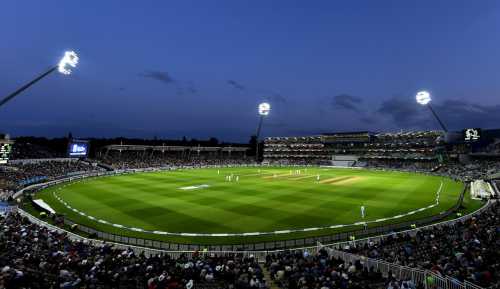
Relying on a single export commodity in a volatile global market is a textbook recipe for macroeconomic fragility; Pakistan’s sports economy has historically suffered from this exact affliction, tethered almost entirely to the whims of international cricket scheduling. Today, however, a structural pivot is underway. The Pakistan Cricket Board (PCB) has locked in a record Rs 7.54 billion profit from the expanded eight-team Pakistan Super League (PSL) 2026, while simultaneously navigating the geopolitical friction of the ICC Champions Trophy hybrid model and preparing to host the 14th South Asian Games [[19], [3], [15]]. This dual-track maneuvering represents a high-stakes attempt to weaponize sports infrastructure for both foreign exchange generation and regional soft power projection.
The Soft Power Arbitrage
Mainstream sports media views the ICC's hybrid model—forcing marquee matchups into neutral venues like Dubai—as a humiliating diplomatic concession for the PCB www.pcb.com.pk . From a geopolitical standpoint, however, it is a calculated retention of sovereign leverage. By agreeing to the hybrid framework for the 2025 Champions Trophy and the subsequent 2026 mega-events, Pakistan has effectively securitized its broadcast rights. As noted by a Karachi-based institutional risk analyst, "Pakistan is trading physical hosting rights for guaranteed financial yield, transforming a diplomatic isolation tactic into a passive, dollar-denominated income stream." This framework ensures that Indian market capital continues to flow into ICC revenue pools that the PCB draws from, without bearing the domestic security overhead and sovereign risk premium associated with hosting state actors www.cricinfo.com .
Asymmetric Valuation in a Monoculture
The second unseen dynamic lies in the financialization of the PSL ahead of its 2026–2035 rights cycle. The PCB engaged Ernst & Young to conduct a rigorous valuation of the league's assets, aiming to position the PSL as a premium emerging-market sports property capable of rivaling the Indian Premier League (IPL) [[18], [24]]. The jump to an eight-team format generated Rs 10.19 billion in gross revenue, but the true implication is the shift from a tournament model to a franchise equity model www.facebook.com . Global private equity firms evaluate sports franchises using EBITDA multiples typically reserved for mature media conglomerates. According to a recent emerging markets sports equity report, "Tier-two cricket leagues are currently mispriced by local operators who value them on vanity metrics rather than underlying media rights arbitrage." The PCB's mandate is to enforce standardized financial disclosures that will attract institutional capital from the Middle East and North America en.wikipedia.org .
Counter-Narrative: The Compliance Theater of Expansion
Proponents of the PSL's aggressive expansion argue that the addition of new city franchises organically decentralizes the sport and unlocks untapped regional consumer bases, effectively democratizing cricket's economic upside. This perspective relies on a fundamental misunderstanding of sports media economics. In reality, adding franchises in markets with lower purchasing power and weaker corporate sponsorship ecosystems dilutes the per-franchise revenue share and inflates operational costs. The expansion creates a compliance theater of growth, where gross revenue metrics mask the eroding profit margins for legacy franchises that are forced to subsidize the operational deficits of newer, less commercially viable teams.
Echoes of the 1987 Reliance Cup
To understand the long-term trajectory of this sports-driven economic nationalism, one must examine the 1987 Reliance Cup, co-hosted by India and Pakistan. That tournament was the historical catalyst that shifted global cricket's center of gravity from the Marylebone Cricket Club (MCC) in London to the subcontinent, birthing the modern broadcast rights economy. Pakistan's current strategy with the PSL and the South Asian Games is attempting a micro-replication of that 1987 paradigm shift. However, while the 1987 pivot was driven by an open, unregulated global broadcast market, today's landscape is locked into restrictive, algorithm-driven digital streaming monopolies, meaning the yield on Pakistan's modern sports diplomacy will be heavily gatekept by foreign tech conglomerates rather than local broadcasters.
The Non-Cricket Dividend
The third implication involves the aggressive state capital injection into non-cricketing disciplines. The federal budget for 2026-27 allocated Rs 17.8 billion specifically for sports infrastructure, heavily weighted toward the preparations for hosting the 14th South Asian Games in Lahore in January 2026 [[8], [15]]. This capital injection operates on a localized Keynesian multiplier effect. The rapid upgrading of the Pakistan Sports Complex and regional transit nodes creates immediate liquidity in the construction materials and heavy machinery sectors. Furthermore, the influx of regional athletes and delegations provides a vital stress-test for Lahore's hospitality sector, artificially stimulating hotel occupancy rates and foreign exchange inflows during a traditionally slow winter quarter for tourism.
Counter-Narrative: The Infrastructure Reality Gap
Critics within the domestic sporting establishment frequently argue that this massive capital deployment for mega-events like the South Asian Games is a misappropriation of funds that should instead be directed toward grassroots athletic development and Olympic-level training camps. While morally compelling, this argument ignores the sovereign reality of developing economies. Mega-events are the only mechanism capable of forcing rapid, coordinated infrastructure spending across fragmented provincial bureaucracies. Without the hard deadline of an international tournament, grassroots funding is routinely absorbed by administrative bloat; the mega-event acts as a forcing function for capital expenditure that eventually trickles down to the civic level.
Strategic Imperatives for Market Participants
For local businesses and private equity actors, the immediate mandate is to decouple from traditional, low-margin sports sponsorships and pivot toward sports-tech and venue monetization. With the PCB aggressively digitizing its fan engagement and the state upgrading facilities for the South Asian Games, there is an acute arbitrage opportunity in acquiring long-term, revenue-sharing concessions for stadium hospitality, biometric ticketing, and localized digital broadcasting rights. Citizens and local investors should look past the vanity of franchise ownership and focus on the ancillary supply chain—specifically, sports medicine, athletic wear manufacturing, and data analytics firms that service these newly capitalized franchises.
The Six-Month Sovereign Risk Horizon
Looking ahead to early 2027, the landscape will bifurcate sharply along financial lines. As the Ernst & Young valuation concludes and the new 2026-2035 PSL broadcast rights are auctioned, expect a massive consolidation of franchise ownership, with undercapitalized local conglomerates being bought out by Gulf-based sovereign wealth funds and global sports syndicates. Simultaneously, the hybrid model for ICC events will become institutionalized, effectively creating a permanent, de facto financial firewall between the Indian and Pakistani cricketing economies, cementing a high-yield, low-contact sporting cold war.
Related Articles

The Metabolic Realignment: How Pharmacology, Regulation, and Algorithms Are Rewiring the Wellness Economy
Aug 22, 2026
The Pharmacological and Regulatory Recalibration of the Global Wellness Economy
Aug 22, 2026
Comments (0)
No comments yet. Be the first to share your thoughts!
Want to join the discussion?
Please log in to post a comment.
Login NoworCreate an Account