
The Super-Smart Robot Tutor: HEC's National AI and Digital Education Policy 2026

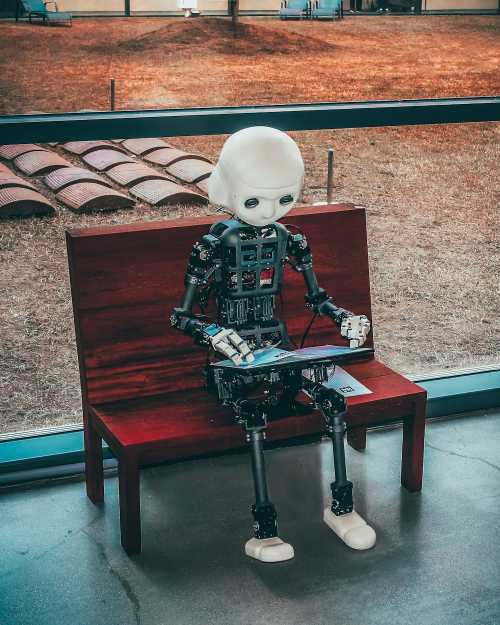
Imagine you are trying to learn how to play the piano. You have a giant, thick book of sheet music, but no teacher. You press a key, and it sounds terrible, but you do not know why. You press another key, still terrible. You get frustrated and want to quit. Now, imagine if a super-smart, infinitely patient robot sat next to you. It listens to every note you play, instantly tells you exactly which finger moved wrong, adjusts the lesson to your exact learning speed, and encourages you when you get it right. In 2026, the Higher Education Commission (HEC) of Pakistan realized that the country's universities were like students trying to learn the piano without a teacher. To fix this, they launched the National AI and Digital Education Policy .
The core of this policy is the mandate that every single public and private university in Pakistan must integrate Artificial Intelligence into their core curriculum by the end of 2026. This does not just mean computer science students learning to code; it means medical students using AI to diagnose diseases from X-rays, agriculture students using AI to predict crop yields, and law students using AI to scan thousands of legal precedents in seconds . The HEC recognized that the world is changing so fast that traditional, textbook-based education is becoming obsolete. If a student graduates in four years without knowing how to leverage AI tools, they will be unemployable in the modern global economy.
To provide the "super-smart robot tutor" to every student, the HEC has launched the "National Digital Knowledge Grid." In the past, a student in a remote university in Balochistan had no access to the expensive, international research journals that a student in Lahore could read. The new policy creates a unified, AI-powered digital library accessible from any smartphone or computer in the country . This platform uses natural language processing to allow students to ask complex research questions in Urdu or English, and the AI instantly retrieves, summarizes, and translates the most relevant global research papers. It democratizes knowledge, ensuring that a brilliant mind in a village has the exact same research tools as a student at Harvard.
The policy also completely overhauls how teachers are trained. You cannot teach AI if you do not understand it. The HEC has mandated a massive "Faculty Upskilling Program" where every university professor must complete a certified course in AI integration within their specific field . The government is paying for top-tier professors from MIT, Oxford, and local tech leaders to conduct virtual masterclasses for Pakistani faculty. This ensures that the teachers are not just reading from outdated slides, but are actively guiding students through the latest technological breakthroughs.
Research is the engine of a university, and the policy introduces "AI-Driven Grant Allocation." Previously, research grants were given based on long, written proposals that took months to review. Now, the HEC uses AI algorithms to scan research proposals, predict their potential impact, check for plagiarism, and allocate seed funding to the most promising, innovative ideas in a matter of days . This rapid funding cycle allows researchers to start their experiments immediately, keeping Pakistan competitive in the fast-moving global race for scientific discovery, particularly in genomics, climate science, and materials engineering.
Furthermore, the policy forces universities to partner directly with the industry. The "Dual-Track Degree" program requires that every tech and engineering student must spend at least one semester working on a real-world problem provided by a local company or government ministry . The AI tools they build during this semester are not just graded by a professor; they are tested in the real market. If the solution works, the company invests in it, and the student graduates not just with a degree, but with a funded startup. This bridges the massive gap between academic theory and practical, economic application.
The National AI and Digital Education Policy is not just about buying computers and software; it is a fundamental rewiring of the Pakistani mind. It shifts the education system from rote memorization—where students act like hard drives storing facts—to critical thinking and problem-solving, where students act like processors analyzing data. By giving every student a super-smart robot tutor and connecting them to the global grid of knowledge, the HEC is ensuring that Pakistan's youth will not just be consumers of the future technology; they will be the architects who build it.
Official HEC Directive
The Higher Education Commission officially rolled out the National AI and Digital Education Policy, mandating AI integration across all disciplines and launching the National Digital Knowledge Grid.
Education is evolving. The HEC National AI & Digital Education Policy 2026 is live! From AI-integrated curricula to the National Digital Knowledge Grid, we are building the future of learning in Pakistan. #HEC #AIEducation #DigitalPakistan
Related Articles

The Policy Paradox: Navigating Industrial Subsidies, Carbon Border Adjustments, and Fiscal Constraints
Aug 22, 2026
The Redrawn Regulatory Seascape: Navigating the Convergence of Global Policy Faultlines
Aug 22, 2026
Comments (0)
No comments yet. Be the first to share your thoughts!
Want to join the discussion?
Please log in to post a comment.
Login NoworCreate an Account