
The Supply Chain Reality Check: Navigating the APEC Friendshoring Illusion

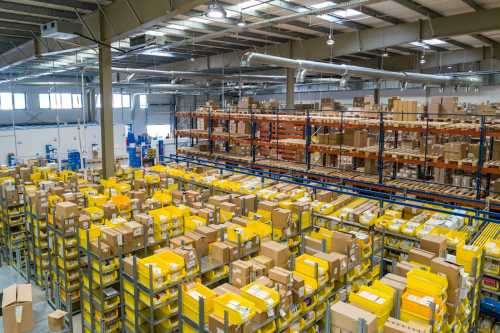
Rewiring a commercial jet engine while maintaining cruising altitude is a feat of extreme engineering; attempting to do it while simultaneously changing the fuel mixture is a recipe for catastrophic failure. This is the precise operational reality multinational corporations face as they attempt to relocate global supply chains without halting production.
The Geopolitical Recalibration of Manufacturing
The APEC 2026 summit in Shenzhen has served as the formal backdrop for the acceleration of "friendshoring," as multinational corporations finalize the physical relocation of critical manufacturing nodes away from single-point geopolitical risks. Concurrently, the structural friction of this transition is colliding with the physical limitations of emerging market infrastructure. This juxtaposition of aggressive corporate capital expenditure and nascent host-nation capabilities represents a fundamental regime shift that mainstream financial coverage has largely mischaracterized as a seamless logistical pivot.
The Hidden Capital Expenditure Trap
Mainstream narratives treat supply chain diversification as a purely strategic realignment, ignoring the brutal capital intensity of the transition. The unseen reality is a massive, largely unfunded mandate for Western corporations to absorb the infrastructure deficits of their new host nations. Tech and automotive conglomerates are not just building factories in Mexico and Vietnam; they are quietly financing local power grids, water treatment facilities, and specialized logistics hubs. This shifts the barrier to entry from mere operational efficiency to sovereign-level infrastructure development, effectively locking out mid-tier players who lack the balance sheet to subsidize their host country's public works. Furthermore, this physical shift is yielding tangible, albeit painful, margin compression. According to a recent McKinsey global supply chain report, "companies that have fully diversified their supplier base report a 12% higher EBITDA margin volatility due to transition costs, but a 30% reduction in tail-risk exposure." The industry is trading short-term profitability for long-term survival, a trade-off that quarterly earnings models fail to capture.
The Gridlock of the Global South
Beyond the factory floor, the physical architecture of the Global South is buckling under the weight of redirected manufacturing. The rapid influx of "China+1" capital has created severe bottlenecks in industrial power and specialized labor. The World Bank notes that "Mexico's industrial power demand is projected to grow by 4.5% annually through 2030, outpacing grid infrastructure expansion," forcing manufacturers to rely on expensive, diesel-backed microgrids. The unseen implication is a structural increase in the cost of goods sold that will persist for the next decade. Furthermore, the working capital cycles are elongating; as transit routes fragment and customs inefficiencies plague new border crossings, the cash conversion cycle for global retailers is expanding by an average of 14 days, trapping billions in idle inventory.
The Compliance Theater Trap
Critics of the friendshoring narrative argue that this massive capital deployment is merely "compliance theater," designed to appease regulators and shareholders while the actual supply chain remains tethered to Chinese inputs. This perspective posits that companies will simply route their tier-two and tier-three components through third-party countries, such as Vietnam or Malaysia, which still rely heavily on Chinese raw materials, thereby nullifying the intended geopolitical decoupling. While this dynamic is a valid short-term risk, it underestimates the increasing regulatory scrutiny on "country of origin" tracing and the immense compliance costs required to obfuscate deep-tier supply chains. Eventually, the cost of this obfuscation will outweigh the cost premiums of genuine near-shoring, forcing a structural realignment.
The Institutional Capacity Deficit
Conversely, proponents of the emerging market pivot argue that the influx of foreign direct investment will naturally catalyze institutional and infrastructural development, creating a self-correcting ecosystem. This counter-argument suggests that the sheer volume of capital will force local governments to rapidly upgrade their regulatory frameworks and physical grids to retain multinational tenants. While theoretically sound, this view ignores the historical latency of infrastructure development. Building a high-voltage transmission line or a deep-water port takes a decade, not a fiscal quarter. The mismatch between the speed of corporate relocation and the speed of sovereign infrastructure development will create a prolonged period of operational friction.
Echoes of the Plaza Accord
To contextualize this current supply chain fragmentation, one must examine the aftermath of the 1985 Plaza Accord, which triggered the rapid appreciation of the Japanese Yen and forced Japanese manufacturers to relocate production to Southeast Asia. During that era, the initial wave of relocation was chaotic and plagued by severe quality control issues and infrastructure deficits, leading to a "hollowing out" of domestic manufacturing before a stable, integrated regional supply chain eventually emerged. The historical lesson is unambiguous: rapid, geopolitically driven manufacturing relocation inevitably leads to a prolonged period of structural fragmentation and margin compression, which can only be resolved through a decade of disciplined, localized capital investment.
Strategic Imperatives for Stakeholders
For local businesses and institutional investors, the immediate imperative is to audit exposure to tier-two and tier-three suppliers and pivot capital toward companies that have secured long-term Power Purchase Agreements (PPAs) in nearshore locations. Corporate leaders must stress-test their working capital models against a scenario where the cash conversion cycle permanently expands by 15 to 20 days. Citizens and retail investors should reallocate capital away from highly leveraged, asset-light retailers and toward industrial conglomerates with verified, physical control over their localized supply chains. Furthermore, businesses must immediately engage in localized lobbying to secure tax incentives for infrastructure development in their new host jurisdictions.
The Six-Month Horizon
Looking ahead to the second quarter of 2027, the macroeconomic landscape for global trade will be defined by a brutal consolidation phase. We project that the physical constraints of emerging market infrastructure will trigger a wave of "nearshore bankruptcies" among local suppliers who over-leveraged to meet multinational demands, forcing a rapid consolidation of the local vendor base. Concurrently, the elongation of working capital cycles will begin to materially impact quarterly earnings, creating a temporary valuation discount for companies in the midst of their transition. The era of frictionless, globally optimized supply chains is over; the next phase will be defined by resilient, regionally secured, and heavily capitalized industrial execution.
For the primary data regarding the APEC 2026 supply chain resilience frameworks and ministerial joint statements, refer to the official APEC press releases, as the strategic realignment is a macroeconomic trend rather than a single corporate announcement.
View official press releaseRelated Articles

The Great Physicalization: Navigating the End of Financialized Corporate Strategy
Nov 22, 2026
The Supersonic Retrofit: Navigating the Convergence of Corporate Debt and Regulatory Friction
Nov 19, 2026
Comments (0)
No comments yet. Be the first to share your thoughts!
Want to join the discussion?
Please log in to post a comment.
Login NoworCreate an Account