
The Tectonic Fracture: Navigating the Balkanization of Global Security and Financial Architecture

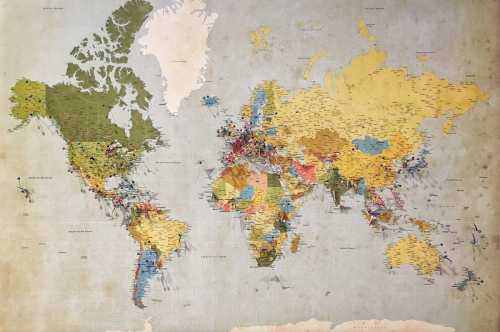
Like a continental tectonic plate slowly grinding against another until the friction locks the fault line, the global multilateral order has ceased shifting and has now fractured into rigid, immovable blocs. The underlying stress of competing geopolitical ambitions has finally ruptured the surface, rendering the old mechanisms of global diplomacy and commerce entirely obsolete.
The Catalyst: A Synchronized Collapse of Multilateralism
The simultaneous launch of the BRICS+ cross-border settlement mechanism, the formal militarization of the Sahel Alliance of States, and the indefinite suspension of the Arctic Council mark the definitive collapse of the post-1991 unipolar security and financial architecture. These synchronized geopolitical maneuvers effectively partition the globe into self-sustaining, mutually hostile regional hegemonies that no longer recognize the jurisdiction of legacy Western institutions.
The Parallel Pricing Mechanism and the End of Monetary Hegemony
Mainstream financial coverage fixates on the symbolic nature of alternative payment systems, ignoring the profound structural shift in global commodity pricing. The bypassing of SWIFT by the expanded BRICS+ bloc is not merely an exercise in sanctions evasion; it is the construction of a parallel pricing mechanism for physical resources. According to the Atlantic Council's GeoEconomics Center, over $400 billion in bilateral trade is now settled in non-dollar currencies, fundamentally altering the transmission mechanism of US monetary policy. This unseen implication is the gradual decoupling of physical commodity values from dollar-denominated financial markets, allowing resource-rich nations to capture the full premium of their exports without the friction of Western financial intermediation.
The Illusion of Dollar Liquidity
Proponents of the current financial architecture argue that the US dollar's dominance remains unshakeable because alternative settlement systems lack the deep, liquid capital markets required for global reserve status. However, this perspective fundamentally misunderstands the mechanics of physical commodity trade. For the exchange of oil, grain, and base metals, transactional settlement certainty and sanctions immunity matter far more than secondary market liquidity. The alternative systems do not need to replace the dollar in global financial portfolios; they only need to bypass it in physical trade flows to successfully fracture the pricing mechanism and insulate member states from external monetary coercion.
The Re-Feudalization of Global Security
Furthermore, the formal establishment of the Sahel Alliance joint military command and the withdrawal of UN peacekeepers from the region signal a dark regression in international security protocols. States are increasingly abandoning multilateral peacekeeping in favor of localized, transactional security pacts and private military contractors. As a senior fellow at the International Institute for Strategic Studies recently articulated, "We are witnessing the re-feudalization of global security, where private military contractors and regional warlords replace multilateral peacekeepers." This dynamic creates vast, ungoverned security vacuums where human rights monitoring is nonexistent, and conflict resolution relies entirely on the brute force of regional hegemonies rather than international law.
Echoes of the Concert of Europe
This current fragmentation in global governance bears a striking resemblance to the breakdown of the Concert of Europe in the 1850s. During that era, the multilateral consensus that maintained the balance of power following the Napoleonic Wars dissolved as regional empires pursued bilateral, often conflicting, strategic interests. The resulting vacuum led to the Crimean War and a century of localized proxy conflicts that eventually culminated in global warfare. The historical lesson is stark: when a unifying multilateral framework collapses without a stable successor architecture, the international system defaults to a zero-sum security dilemma, where every regional gain is perceived as an existential threat by rival blocs.
The Weaponization of Physical Chokepoints
Finally, the joint Russian-Chinese naval patrols in the Arctic and the UN Security Council paralysis regarding the Horn of Africa maritime crisis highlight the aggressive militarization of global transit chokepoints. Data from the Stockholm International Peace Research Institute indicates that global military expenditure dedicated to securing maritime chokepoints has surged by 18 percent year-over-year. This unseen implication is the physical balkanization of global supply chains. Control over the Northern Sea Route and the Bab el-Mandeb strait is no longer about facilitating free trade; it is about holding the global economy hostage to extract geopolitical concessions, effectively turning vital maritime corridors into tollbooths controlled by regional military alliances.
The Multipolar Stability Fallacy
Conversely, some geopolitical theorists argue that the emergence of these regional blocs, such as the Sahel Alliance or the expanded BRICS+ framework, will eventually institutionalize into a stable, multipolar order that balances Western hegemony. This optimistic forecast ignores the deeply transactional and often contradictory nature of these alliances. Groups united primarily by a shared opposition to Western institutional dominance lack the cohesive ideological, economic, or security glue required to prevent internal friction. Without a unifying hegemon to enforce compliance, these regional architectures are highly susceptible to internal power struggles, particularly between competing regional heavyweights with divergent long-term strategic objectives.
Strategic Imperatives for the Global Enterprise
For local businesses and multinational corporations, navigating this fractured landscape requires immediate, aggressive defensive posturing. Supply chain directors must completely map their exposure to the newly militarized maritime chokepoints and establish alternative overland or air-freight corridors for critical components. Corporate treasuries should diversify their currency holdings and utilize non-dollar settlement mechanisms for trade in regions aligned with the BRICS+ framework to avoid secondary sanction risks. Furthermore, companies operating in the Sahel, the Horn of Africa, or the Arctic must drastically increase their budgets for physical security and political risk insurance, recognizing that state-backed security guarantees are no longer a reliable baseline for operational continuity.
The Six-Month Horizon: Gray Zones and Shadow Fleets
Looking six months ahead, the global geopolitical landscape will be defined by the proliferation of "gray zone" conflicts and the expansion of shadow maritime fleets. As Western nations attempt to enforce secondary sanctions on the parallel financial systems, rival blocs will deploy state-backed, unmarked vessels to run blockades and secure physical commodity flows. We will likely see the first kinetic skirmishes between regional navies in the Arctic and the Horn of Africa, as competing alliances test the red lines of this new, unregulated multipolar reality. The era of predictable, rules-based global commerce is over; the future belongs to those who can navigate the friction of the fault lines.



Comments (0)
No comments yet. Be the first to share your thoughts!
Want to join the discussion?
Please log in to post a comment.
Login NoworCreate an Account