
The Tectonic Shift: How Geoeconomic Bifurcation is Redefining Global Trade and Technology

September 8, 2026 | Geopolitical & Economic Analysis
The Fracture Point: Beyond the Illusion of Frictionless Trade
Think of the global economy not as a seamless, high-speed highway system, but as a series of fortified, toll-gated archipelagos. For three decades, capital and goods flowed between these islands with minimal friction, governed by a single set of rules and a dominant reserve currency. That era is over. In September 2026, the simultaneous escalation of U.S. semiconductor export controls, India’s advancement of BRICS alternative settlement mechanisms, and NATO’s activation of the "Arctic Sentry" military initiative marked the formal transition from geopolitical friction to institutionalized global bifurcation [[32]], [[43]], [[52]]. This convergence signals the definitive end of the post-Cold War integrated economic order.
The Hidden Architecture of Critical Mineral Sovereignty
Mainstream financial media fixates on the financial mechanics of new settlement tokens or the specifications of advanced sub-5nm logic nodes. This is a profound analytical error. The true shockwave is physical. We are witnessing the institutionalization of a bifurcated global industrial base, where the underlying hardware of the 21st-century economy is being physically segregated by geopolitical alignment. The most heavily underreported implication is the impact on mature-node semiconductor manufacturing. While Western policy focuses on choking off advanced nodes, emerging economies are rapidly consolidating control over the 28nm-to-65nm nodes that actually power electric vehicles, industrial automation, and grid infrastructure.
By pairing new digital settlement frameworks with bilateral lithium-for-technology swap agreements, these nations are creating a closed-loop ecosystem for mature node production. This physical segregation is forcing a radical restructuring of the Outsourced Semiconductor Assembly and Test (OSAT) sector. Historically, OSAT facilities operated as neutral ground, packaging chips designed in the West using materials from Asia for global consumers. Under the new framework, specialized mineral freight routing is being deliberately diverted away from traditional maritime chokepoints to dedicated, bloc-aligned ports.
This means a component fabricated in a non-aligned jurisdiction can no longer be seamlessly tested and packaged in a Western-aligned facility without triggering complex, multi-layered compliance audits. "The capital expenditure required to maintain dual-compliant fabrication lines will force a structural margin compression across the mid-tier semiconductor sector, effectively pricing out pure-play merchants who cannot afford to build parallel, physically isolated supply chains," notes a senior analyst at SemiIntelligence. Furthermore, NATO’s newly mandated 5% defense spending target by 2035 is inadvertently accelerating this split [[62]]. As European capital is forcibly redirected from green transition infrastructure toward kinetic defense manufacturing, a vacuum is created in critical mineral procurement, which non-aligned states are eagerly filling by leveraging their resource wealth to negotiate favorable technology transfers.
The Myth of Total Technological Containment
The prevailing narrative in Western policy circles assumes that aggressive export controls on semiconductor manufacturing equipment are a definitive silver bullet for maintaining technological hegemony [[43]]. This argument is dangerously one-sided. What we are observing is largely compliance theater. The physical reality of dual-use goods, combined with the sheer volume of third-country routing, makes absolute technological containment a mathematical impossibility. By focusing entirely on cutting off advanced nodes, Western policymakers are ignoring the reality that mature nodes are the actual bottleneck for the green energy transition. The Global South is scaling mature capacity at a pace that renders Western export controls on advanced nodes merely a temporary speed bump, rather than a permanent roadblock.
Echoes of the 1971 Clearing Fracture
To understand the trajectory of this fragmentation, we must look to the breakdown of the Bretton Woods system in the early 1970s. When the U.S. suspended the convertibility of the dollar to gold, attempts by traditional allies to restrict capital flows and maintain the old parity simply pushed the market offshore. This birthed the Eurodollar market—a massive, parallel, unregulated shadow system that eventually captured a permanent, dominant market share. The historical precedent is clear: attempting to weaponize a dominant settlement and clearing system inevitably accelerates the creation of alternative, decentralized mechanisms. The architects of the current sanctions regime are repeating the errors of the Nixon era, assuming that friction will deter participation, when in reality, friction merely incentivizes the construction of bypass infrastructure.
The Illusion of Monolithic Blocs
A second flawed assumption in current geopolitical analysis is the belief that the Global South is forming a unified, anti-Western coalition. This view fundamentally misreads the motivations of emerging market capitals. Nations like the UAE, India, Vietnam, and Brazil are not rejecting Western capital; they are engaging in ruthless, transactional multi-alignment. This transactional multi-alignment is already visible in recent Middle East realignment efforts, where nations are diversifying energy partnerships and defense procurement away from traditional Western monopolies, opting instead for a balanced portfolio of suppliers [[5]]. These nations will happily accept Western foreign direct investment for high-end financial and software services while simultaneously trading critical minerals and energy with rival blocs using new digital settlement tokens. The assumption of a clean, binary geopolitical split ignores the pragmatic, profit-driven reality of the periphery, which will play both sides until the arbitrage window closes.
Capital Allocation and Supply Chain Hedging
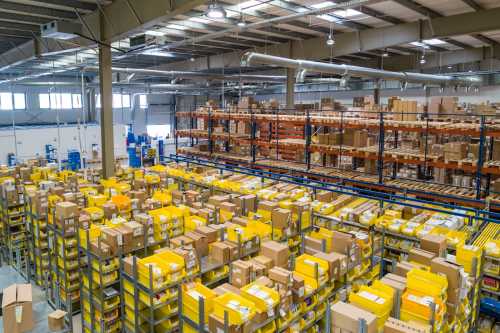
For local businesses and multinational corporations, the era of optimizing purely for cost and efficiency is over; the new framework demands optimization for resilience and geopolitical neutrality. Corporate boards must immediately audit their supply chains for single-point geopolitical failure. This requires moving beyond the simplistic "China-plus-one" strategy and implementing a "West-plus-one" dual-sourcing matrix, ensuring that critical components can be sourced from politically neutral nodes not subject to the secondary sanctions of either bloc.
The financial data supports this aggressive hedging strategy. According to a 2026 primary research paper by the Global Supply Chain Institute, firms that implemented multi-node redundancy and geopolitical diversification saw a 22% lower variance in quarterly earnings during recent trade shocks compared to their single-node optimized peers. "Local businesses must stop viewing geopolitical risk as an externality and start pricing it directly into their cost of goods sold," advises a principal at a top-tier macro strategy firm. If an enterprise resource planning system cannot automatically calculate the tariff, sanction, and freight-routing risk of a specific component in real-time, the margin is already gone.
The Six-Month Horizon: Institutionalizing the Split
Looking six months ahead to early 2027, this bifurcation will transition from a theoretical risk premium to a hardcoded operational reality. The alternative settlement mechanisms will move beyond a mere token for spot trades and will launch physical commodity exchanges for rare earths and critical minerals, effectively setting a parallel global price floor that Western buyers will be forced to acknowledge. We will see the first major Western multinationals quietly ring-fence their emerging market assets into entirely separate legal and operational entities to comply with both regulatory regimes simultaneously.
The environment will no longer be defined by who controls the most advanced technology, but by who controls the most resilient physical logistics networks. By the second quarter of next year, the split will no longer be a theoretical risk premium; it will be a hardcoded operational reality in corporate ERP systems and global logistics routing. The fault lines have slipped, and the new topography of global trade is permanently altered.



Comments (0)
No comments yet. Be the first to share your thoughts!
Want to join the discussion?
Please log in to post a comment.
Login NoworCreate an Account