
The Tectonic Shift: How Geopolitical Fragmentation is Rewiring Global Trade and Emerging Markets

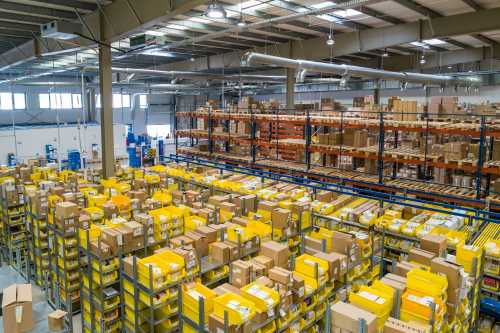
The Tectonic Shift in Global Trade Architecture
Like a massive container freighter navigating a sudden, violent squall, the global economy is no longer merely adjusting its sails; it is fundamentally rewiring its hull to survive. The core event driving this structural shift is the simultaneous expansion of the BRICS+ bloc to include major Middle Eastern energy producers, coupled with the resultant rerouting of global trade flows away from traditional Western-centric corridors www.mckinsey.com . This realignment is not merely diplomatic posturing or symbolic coalition-building. It is actively rewriting the rules of capital allocation, energy transit, and supply chain resilience, forcing emerging markets to navigate an increasingly fragmented global order.
Beyond the Headlines: The Silent Squeeze on Emerging Markets
While mainstream financial coverage fixates on headline GDP figures and central bank rate decisions, the deeper, unseen threat lies in the quiet fragmentation of global correspondent banking networks. As nations navigate a projected 1.3 percent regional economic contraction due to conflict spillover, access to hard currency is increasingly bottlenecked by the aggressive de-risking policies of global financial institutions www.instagram.com . This creates a secondary, often invisible crisis where otherwise solvent enterprises fail not from a lack of market demand, but from an inability to process routine cross-border transactions. The liquidity exists, but the financial pipes are clogged by prohibitive compliance overhead.
Furthermore, the global energy transition is being actively hijacked by geopolitical survivalism. The strategic inclusion of major hydrocarbon exporters into alternative economic frameworks means that a commanding portion of global energy exports is now coordinated outside traditional pricing systems www.aljazeera.com . For import-dependent economies, this translates to volatile pricing mechanisms that are no longer tethered to transparent, liquid global benchmarks. Instead, pricing is increasingly dictated by bilateral barter arrangements and localized currency swaps, introducing unprecedented opacity and counterparty risk into national balance of payments.
Finally, the corporate supply chain is undergoing a forced, painful evolution from lean efficiency to fortress-building. Recent primary research indicates that geopolitical fragmentation has already pushed more than $165 billion in trade away from traditional corridors, fundamentally altering capital flows and forcing a redesign of logistics networks www.mckinsey.com . This shift is disproportionately punishing smaller emerging market exporters who lack the capital to certify dual-sourcing capabilities or absorb the mounting compliance costs of navigating competing, mutually exclusive sanction regimes.
The Multipolarity Mirage: A Necessary Counter-Argument
However, viewing this emerging coalition as a monolithic, unstoppable economic juggernaut represents a significant analytical overreach. The internal macroeconomic divergences between member states—ranging from structural demographic slowdowns to increasingly protectionist trade policies—create inherent friction that severely limits cohesive policy execution. The assumption that this coalition can seamlessly replace established financial infrastructure ignores the immense technical, legal, and trust hurdles required to establish a viable, liquid alternative to dominant global payment networks and deep capital markets. Multipolarity is indeed emerging, but it is messy, inefficient, and fraught with internal competition.
Echoes of the Past: When Energy and Geopolitics Collided
The current geopolitical fragmentation bears a striking, cautionary resemblance to historical energy embargoes, albeit with a critical modern twist: deep digital and financial interdependence. In previous decades, the weaponization of energy exports led to global stagflation and a permanent, painful restructuring of industrial policy. Today’s parallel is evident in how nations are aggressively stockpiling critical minerals, subsidizing domestic semiconductor production, and restructuring long-term energy contracts. The primary lesson from historical precedents is that reactive, protectionist measures often exacerbate the very vulnerabilities they seek to mitigate, leading to prolonged periods of suppressed global growth, entrenched inflation, and diminished innovation.
The Resilience Premium: Why Decoupling Is Not a Panacea
Furthermore, the prevailing corporate narrative that supply chain nearshoring or friendshoring guarantees absolute operational resilience is fundamentally flawed. While diversifying suppliers geographically mitigates single-point failures, it simultaneously multiplies operational complexity and exposes firms to a broader, more unpredictable array of regional regulatory risks. A recent primary research report explicitly warns that supply chain disruption will be constant and structural, driven by geopolitical fragmentation, shifting trade rules, and chronic labor shortages www.weforum.org . Simply shifting manufacturing geography does not eliminate systemic risk; it merely changes its coordinates and often increases the baseline cost of goods sold.
Strategic Imperatives for Businesses and Policymakers
For local businesses and policymakers, the immediate imperative is to conduct a rigorous audit of supply chain exposure, looking beyond logistical bottlenecks to identify vulnerabilities to geopolitical contagion. Companies must actively diversify their foreign exchange reserves and explore regional currency settlement mechanisms to hedge against sudden, politically motivated liquidity freezes. Recent market intelligence identifies specific emerging economies as highly vulnerable to prolonged regional conflicts, explicitly citing energy import dependence and interrupted transit trade as primary vectors of exposure papers.ssrn.com . Policymakers must counter this by prioritizing bilateral trade agreements that include explicit, binding dispute resolution frameworks, insulating domestic industries from the collateral damage of great power competition.
The Six-Month Horizon: Structural Volatility as the New Baseline
Looking six months ahead, the global economic landscape will be defined by structural volatility rather than discrete, isolated shocks. We can expect an acceleration in the bifurcation of technology standards, with emerging markets increasingly forced to make expensive, binary choices between competing digital and telecommunications ecosystems. The billions already redirected in global trade will serve as merely a down payment on a new, fragmented economic order www.mckinsey.com . In this environment, corporate agility, regulatory neutrality, and robust scenario-planning will transition from being advantageous differentiators to absolute prerequisites for survival.



Comments (0)
No comments yet. Be the first to share your thoughts!
Want to join the discussion?
Please log in to post a comment.
Login NoworCreate an Account