
The Tectonic Shift in Global Trade: Navigating the New Era of Weaponized Economic Statecraft

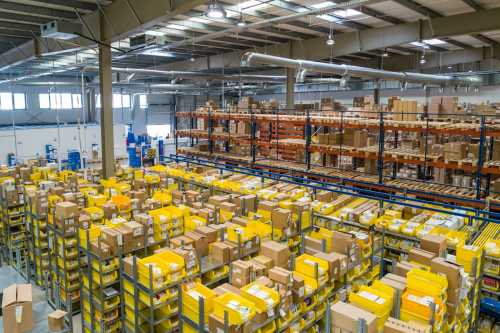
The Tectonic Shift in Global Trade
Global trade today resembles a game of Jenga played on a vibrating foundation. For decades, the global economy was built on the assumption of frictionless, rules-based commerce, where efficiency was the sole metric of success. Today, that tower is being systematically dismantled, block by block, by the intersecting forces of climate regulation and geopolitical rivalry. The United States Trade Representative has initiated a formal investigation into the European Union’s Carbon Border Adjustment Mechanism (CBAM), citing discriminatory trade barriers, even as escalating US-China tariffs and Middle East shipping disruptions continue to fracture global supply networks. This convergence of climate policy and geopolitical friction marks a definitive shift from free-trade globalization to weaponized economic statecraft.
The Hidden Fracture Lines of Climate Protectionism
Mainstream coverage predominantly fixates on the transatlantic rift between Washington and Brussels, yet it systematically ignores the cascading impact on emerging markets. The CBAM effectively exports European regulatory standards, forcing nations like India and Turkey to absorb disproportionate compliance costs. This dynamic risks forging a new axis of Global South trade resentment, as developing economies are penalized for historical carbon disparities they did not create, effectively turning climate policy into a neo-colonial trade barrier.
Furthermore, the reallocation of supply chains is not merely a geographic shift but a structural inflation driver. According to a 2026 Oxford Economics analysis, third-country realignment following US-China tariffs has structurally increased global logistics costs, embedding a persistent "geopolitical premium" into consumer goods that central banks are ill-equipped to tame. This premium manifests not only in finished goods but in intermediate components, creating a compounding effect that elevates the baseline cost of living across advanced economies.
Concurrently, the persistent volatility in the Strait of Hormuz and Red Sea corridors is compounding these tariff-induced bottlenecks. As supply chain analysts at Freightos observe, "capacity realignments driven by tariff escalations and regional maritime risks have elevated global freight indices by double digits, fundamentally altering baseline shipping economics." The intersection of physical shipping risks and regulatory friction creates a compound vulnerability, where a single regional escalation can trigger disproportionate global market contagion.
The Sovereignty Imperative: A Necessary Defense
Critics frequently frame these trade barriers as purely protectionist maneuvers, yet this perspective overlooks the legitimate sovereignty imperative driving them. The EU’s CBAM is fundamentally designed to prevent "carbon leakage," ensuring that domestic industries adhering to strict environmental regulations are not undercut by foreign competitors operating in unregulated, high-emission environments. Without such mechanisms, the EU’s aggressive domestic decarbonization targets would simply result in the relocation of heavy industry to jurisdictions with laxer environmental oversight, achieving zero net reduction in global emissions while devastating local employment. From this vantage point, the policy functions not as a blunt trade weapon, but as a necessary mechanism to preserve the integrity of global climate commitments.
Echoes of Smoot-Hawley: The Specter of Retaliatory Spirals
The current trajectory bears a striking resemblance to the fragmentation of the 1930s, specifically the aftermath of the Smoot-Hawley Tariff Act of 1930. During that era, the imposition of broad tariffs triggered immediate retaliation from trading partners, collapsing international trade by nearly two-thirds and exacerbating the Great Depression. While today’s financial systems possess more robust shock absorbers, and the modern context is driven by climate mandates and national security rather than pure agricultural protectionism, the mechanical outcome remains identical. History demonstrates that when major economic blocs substitute multilateral cooperation with unilateral defensive measures, the resulting efficiency losses inevitably precipitate broader economic contractions and heighten the risk of systemic financial instability.
The Compliance Theater Trap
However, a critical nuance often missed in this debate is the risk of "compliance theater." While the CBAM and similar tariffs are framed as rigorous environmental or security measures, the administrative burden frequently favors large multinational corporations with dedicated legal and lobbying apparatuses. A recent World Bank policy research paper indicates that compliance with emerging carbon border mechanisms can increase administrative overhead for developing market exporters by up to 15%, disproportionately penalizing smaller firms. Multinationals can absorb these compliance costs as a mere line item, passing them on to consumers or absorbing them through economies of scale. Conversely, a mid-sized textile manufacturer in Bangladesh or a steel fabricator in Vietnam lacks the capital to navigate these complex, multi-jurisdictional reporting frameworks. The unintended consequence is a market consolidation that stifles innovation and entrenches the dominance of legacy corporations.
Navigating the New Normal: Strategic Imperatives
For local businesses and supply chain managers, the era of just-in-time, cost-optimized globalization is definitively over. Enterprises must immediately diversify their supplier base across multiple geopolitical blocs, adopting a robust "China Plus One" strategy, and invest in advanced carbon-accounting software to preemptively meet CBAM-like reporting standards. Supply chain mapping must evolve from a periodic audit to a continuous, real-time monitoring function, leveraging AI-driven risk analytics to identify single points of failure. Furthermore, corporate treasuries must re-evaluate their hedging strategies, incorporating geopolitical risk premiums into their foreign exchange and commodity derivatives portfolios. Citizens and investors should hedge portfolios against persistent inflation by allocating capital to domestic infrastructure and near-shoring beneficiaries, while actively demanding that political representatives prioritize supply chain resilience over populist tariff rhetoric.
The Six-Month Horizon: Fragmentation Accelerates
Over the next six months, the global trade landscape will accelerate toward entrenched fragmentation. We can expect the USTR probe to culminate in targeted retaliatory measures against specific EU exports, likely in the agricultural or digital services sectors, prompting Brussels to double down on its climate tariffs. Simultaneously, as the US-China tariff wall solidifies, ASEAN nations will experience a temporary manufacturing boom. However, this will be heavily scrutinized for transshipment loopholes. This scrutiny will likely manifest as enhanced rules of origin requirements, designed to prevent Chinese goods from being minimally processed in Southeast Asia before being exported to the West. The resulting regulatory cat-and-mouse game will introduce a new layer of friction, ensuring that supply chain volatility remains a permanent feature of the macroeconomic landscape rather than a temporary disruption.



Comments (0)
No comments yet. Be the first to share your thoughts!
Want to join the discussion?
Please log in to post a comment.
Login NoworCreate an Account