
The Tectonic Shift in Washington: Fiscal Brinkmanship and the New Macro Reality

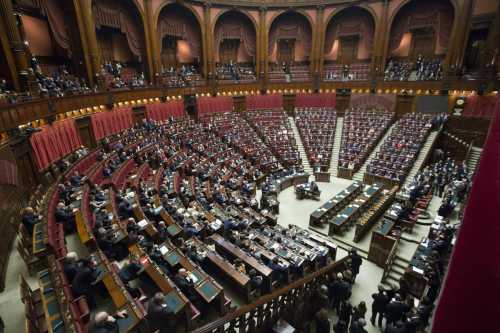
Managing the modern U.S. economy under the current political paradigm is akin to performing open-heart surgery with a dull scalpel while the patient is running a marathon. The physiological stress is immense, the tools are inadequate, and the margin for error is virtually nonexistent. This analogy perfectly captures the current state of Washington, where Congress has narrowly advanced a short-term continuing resolution to stave off a government shutdown, even as the federal budget deficit breaches the $2 trillion mark www.facebook.com . Concurrently, the White House has rolled out an aggressive 2026 regulatory agenda targeting over 700 federal rules, projecting massive shifts in compliance burdens across multiple sectors www.facebook.com . This legislative maneuvering masks a deeper structural fragility in American fiscal governance, substituting temporary patches for long-term solvency.
The Regulatory Chilling Effect on Mid-Cap Innovation
Mainstream discourse fixates on the macroeconomic noise of deficit spending, yet it entirely overlooks the microeconomic paralysis induced by regulatory whiplash. When federal agencies are forced to rapidly draft, retract, or rewrite hundreds of rules under compressed political timelines, the primary casualty is mid-cap enterprise capital allocation. These firms lack the sprawling legal departments of multinational conglomerates, forcing them to freeze hiring and research and development investments in anticipation of compliance shifts. According to recent primary data from the Office of Information and Regulatory Affairs, the current unified agenda reflects a regulatory bottleneck that has delayed major project approvals by an average of several months, creating profound operational uncertainty www.federalregister.gov . This is not merely an administrative inconvenience; it is a direct tax on innovation that quietly stifles domestic productivity growth.
Echoes of the 1995-1996 Fiscal Standoff
To understand the trajectory of this dysfunction, one must look to the 1995-1996 government shutdowns, though the modern iteration carries far more systemic risk. During that era, partisan brinkmanship over the budget resulted in a temporary cessation of non-essential government services, ultimately forcing a negotiated compromise that balanced the federal budget by the decade's end. However, the critical lesson from that epoch is that temporary shutdowns eventually calcify into permanent institutional distrust. Today, the stakes are exponentially higher due to the interconnectedness of global financial markets and the sheer magnitude of the national debt. Relying on short-term continuing resolutions no longer buys time; it actively degrades the creditworthiness of the sovereign issuer, inviting higher risk premiums on Treasury yields.
The Compliance Theater Trap: A Necessary Counter-Perspective
Critics of the deregulatory push often frame it exclusively as a race to the bottom that endangers consumer and environmental protections. While this concern is valid, it presents an incomplete picture of the regulatory landscape. A rigorous counter-argument posits that the existing federal rulebook has become so labyrinthine that it actively prevents effective enforcement of core safeguards. As noted by legal scholars analyzing the current regulatory bottleneck, "When every regulation is contested in court, the resulting litigation paralysis means that neither industry nor regulators have clear operational boundaries." Therefore, a strategic consolidation and elimination of redundant rules may not be a surrender of oversight, but rather a prerequisite for restoring functional, targeted governance that actually protects public interests without suffocating enterprise.
Municipal Bond Markets and the Hidden Sovereign Risk
Another blind spot in contemporary political analysis is the cascading impact of federal fiscal instability on municipal finance. As the federal government leans heavily on short-term debt instruments to manage the deficit, it crowds out private capital and distorts the yield curve. According to the Congressional Budget Office, net interest payments are projected to reach $830 billion, or 3.0% of GDP, in FY2026, fundamentally altering capital allocation priorities www.congress.gov . Local municipalities, which rely on predictable federal grant disbursements for infrastructure and social programs, are now pricing in a sovereign risk premium to their own bond issuances. This phenomenon forces local taxpayers to absorb the cost of Washington's dysfunction through higher borrowing costs for essential projects, from water treatment facilities to public transit expansions. The federal paralysis is effectively being subsidized by local balance sheets.
The Bipartisan Infrastructure Baseline: Nuancing the Doom
Despite the pervasive narrative of legislative collapse, it is analytically flawed to ignore the resilient undercurrents of bipartisan cooperation that continue to function beneath the surface. While headline-grabbing shutdown threats dominate the news cycle, Congress has consistently passed targeted, high-impact legislation, such as recent multi-billion dollar allocations for airport modernization and supply chain resilience www.stlpr.org . This demonstrates that the legislative branch retains the capacity for functional governance when the economic imperative is sufficiently acute and geographically distributed. Acknowledging this baseline prevents the analysis from devolving into pure cynicism and recognizes that strategic, sector-specific deals remain viable even amid broader partisan gridlock.
The Geopolitical Ripple Effect of Domestic Paralysis
The most profound, yet least discussed, consequence of this domestic fiscal theater is its erosion of American geopolitical leverage. When the U.S. Congress cannot reliably fund its own government, let alone articulate a coherent, long-term fiscal strategy, allied nations and adversarial powers alike recalibrate their strategic assumptions. Foreign policy is inextricably linked to fiscal credibility; a nation that cannot manage its domestic ledger is viewed as an unreliable partner for long-term security pacts or trade agreements. This perception emboldens rival economic blocs to accelerate the development of alternative financial clearing mechanisms, gradually eroding the exorbitant privilege of the U.S. dollar in global trade settlements.
Strategic Imperatives for Capital Allocators and Citizens
For local businesses and institutional investors, the immediate priority must shift from aggressive growth to structural resilience. Corporations should actively diversify their supply chains and lock in long-term fixed-rate debt now, before the cumulative effect of deficit spending forces the Federal Reserve to maintain a structurally higher interest rate environment. Hedging strategies must be recalibrated to account for sustained regulatory volatility, moving beyond traditional compliance checklists to scenario-based stress testing. For citizens and retail investors, the imperative is to prioritize liquidity and inflation-protected assets, reducing exposure to highly leveraged equities that are vulnerable to sudden shifts in fiscal policy or unexpected government service disruptions. Cash flow management must supersede growth-at-all-costs mentalities.
The Six-Month Horizon: A Fragmented Legislative Landscape
Looking six months ahead, the U.S. political landscape will not revert to pre-crisis normalization. Instead, we will witness the formalization of a fragmented legislative environment characterized by frequent, short-term funding extensions rather than comprehensive budgetary reform. The White House will likely accelerate the use of executive actions to bypass congressional gridlock on regulatory matters, inviting a fresh wave of judicial challenges that will further clog the federal docket. Emerging markets and domestic industries that successfully navigate this transition will be those that build operational flexibility into their core models, treating political volatility not as an anomaly, but as a permanent feature of the macroeconomic environment. The window for passive reliance on stable governance has closed; the era of active, strategic risk management has begun.



Comments (0)
No comments yet. Be the first to share your thoughts!
Want to join the discussion?
Please log in to post a comment.
Login NoworCreate an Account