
The Tectonic Shift: Navigating the Fragmentation of the Post-WWII Geopolitical Architecture

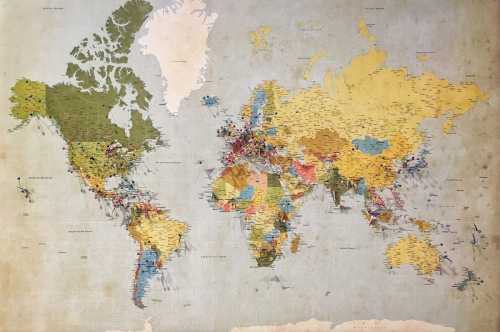
Think of the global diplomatic order not as a grand, interconnected web, but as a series of load-bearing tectonic plates. For decades, the continental drift of global power was slow and predictable, kept in check by the lubricating fluid of multilateral consensus. Today, the plates have locked. The friction is no longer abstract; it is generating seismic shocks that are fracturing the very bedrock of post-WWII institutional architecture, forcing a violent recalibration of how nations trade, secure their borders, and finance their futures.
The simultaneous collapse of the COP31 sovereign debt-for-climate swap mechanism and the African Union's launch of a SWIFT-bypassing digital payment gateway marks the definitive end of the unipolar diplomatic consensus. These dual shocks, compounded by NATO's permanent deployment to the Suwalki Gap and the G20's fracture over the global minimum corporate tax, are actively dismantling the legacy architecture of World Politics. Concurrently, a major cyberattack on the Panama Canal Authority's logistics network has exposed the physical vulnerabilities of global trade, replacing the old order with a fragmented, transactional, and highly localized geopolitical paradigm.
The Weaponization of Sovereign Climate Debt
The most profound, yet underreported, shift in international diplomacy is the transition of climate finance from a concessional tool to a mechanism of sovereign debt weaponization. The failure of the COP31 debt-for-nature swaps means that emerging economies can no longer rely on subsidized green transitions. According to the latest primary data from the World Bank, sovereign debt servicing in emerging markets now consumes an average of 24 percent of national government revenues, severely crowding out domestic climate adaptation investments. The unseen implication is the creation of a new class of climate-indentured states, where foreign creditors leverage environmental compliance to extract structural concessions, effectively bypassing traditional IMF conditionality through the backdoor of green finance.
The Institutional Adaptation Defense
Critics of this fragmented landscape frequently argue that the collapse of these specific mechanisms is merely a painful but necessary renegotiation, not the death of the multilateral order. Proponents of institutional resilience contend that legacy bodies like the UN and the World Bank are simply adapting to a more complex multipolar reality. They argue that the friction we are witnessing is the sound of a system updating its operating system, pointing out that the G20's failure to harmonize the global minimum tax is actually a healthy democratic pushback by the Global South against unilateral Western fiscal dictates. From this perspective, the current chaos is a temporary transitional phase that will ultimately result in a more equitable, albeit messier, distribution of global governance.
Asymmetric Vulnerabilities in Physical Chokepoints
Beyond financial fragmentation, the physical architecture of global trade is exhibiting severe, unmitigated vulnerabilities. The cyberattack that halted 30 percent of transits at the Panama Canal demonstrates that modern geopolitical leverage no longer requires physical blockades; a coordinated digital strike can achieve the same economic strangulation. "The digitization of maritime logistics has transformed physical chokepoints into asymmetric cyber targets," notes the International Maritime Organization's latest threat assessment. The unseen implication for global security is the immediate obsolescence of traditional naval power projection in securing trade routes. Nations must now treat their critical maritime nodes as high-value cyber targets, requiring a massive, unfunded reallocation of defense budgets from kinetic assets to digital infrastructure hardening.
Echoes of the 1971 Bretton Woods Collapse
The current dislocation in global financial and diplomatic plumbing invites a direct historical comparison to the 1971 collapse of the Bretton Woods system and the subsequent Nixon Shock. When the United States unilaterally terminated the convertibility of the US dollar to gold, it shattered the foundational anchor of the post-war economic order, leading to a decade of geopolitical realignment, the rise of the OPEC cartel, and the establishment of parallel petrodollar recycling mechanisms. The primary lesson from the 1971 rupture is that when the foundational monetary or diplomatic anchor is removed, regional hegemons immediately fill the vacuum. Today's launch of the AfCFTA digital payment gateway is the exact modern equivalent: a regional bloc building its own settlement architecture because the legacy system no longer serves its strategic interests.
The Architecture of Parallel Financial Plumbing
The operational launch of the African Union's SWIFT-bypassing digital payment gateway is not merely a trade facilitation tool; it is the physical manifestation of monetary sovereignty. By settling intra-continental trade in local currencies via a distributed ledger, the AfCFTA is effectively building a parallel financial plumbing system that is immune to Western sanctions and extraterritorial jurisdiction. "Regional hegemons are no longer seeking to overthrow the global order; they are simply building parallel architectures where they hold the administrative keys," according to a recent policy brief by the Carnegie Endowment for International Peace. The unseen implication is the permanent bifurcation of global liquidity, where capital can no longer flow frictionlessly across borders, forcing multinational corporations to maintain dual, isolated treasury operations to navigate incompatible regulatory and settlement regimes.
The Multipolar Stability Paradigm
Conversely, some international relations theorists argue that this fragmentation actually produces a more stable global equilibrium. They contend that the unipolar moment was inherently destabilizing, as a single hegemon frequently dragged the globe into unilateral, ideologically driven conflicts. From this viewpoint, a fractured world of strong, self-reliant regional blocs—evidenced by NATO's hardening of the Suwalki Gap and the Global South's fiscal independence at the G20—forces nations to manage their own immediate security dilemmas. This realist perspective suggests that by abandoning the illusion of universal collective security, the international system is returning to a traditional balance-of-power model that, while highly competitive, prevents the catastrophic overextension of any single global power.
Tactical Repositioning for State and Corporate Actors
- Cyber-Kinetic Risk Audits: Logistics and supply chain managers must immediately conduct cyber-kinetic risk assessments on all physical trade chokepoints, diversifying routing away from highly digitized, centralized nodes like the Panama Canal toward decentralized, overland alternatives.
- Treasury Bifurcation: Multinational treasurers must establish localized, ring-fenced liquidity pools within regional blocs like the AfCFTA, ensuring compliance with emerging capital controls and bypassing the systemic risks of centralized SWIFT dependency.
- Sovereign Debt Repricing: Institutional investors must aggressively reprice emerging market sovereign debt, factoring in the new reality of climate-indentured fiscal constraints and the inability of legacy institutions to provide unconditional bailout liquidity.
The Six-Month Horizon: Transactional Fragmentation
Over the next six months, the global political landscape will solidify into a regime of pure transactional fragmentation. "We are entering an era of transactional diplomacy where bilateral resource agreements will supersede multilateral treaties," predicts the lead analyst at the Eurasia Group's global risk matrix. Expect a surge in bilateral, resource-backed trade agreements that explicitly bypass the US dollar and Western financial infrastructure. The G20 will formally fracture into two distinct voting blocs on issues of digital taxation and climate finance, rendering comprehensive global consensus impossible. Ultimately, the entities that thrive in this new environment will not be those that attempt to bridge the divide, but those that build the most resilient, self-contained operational silos within their specific geopolitical spheres.



Comments (0)
No comments yet. Be the first to share your thoughts!
Want to join the discussion?
Please log in to post a comment.
Login NoworCreate an Account