
The Thermal Stress of Stabilization: Pakistan's Macro-Equilibrium and the Illusion of Market Recovery

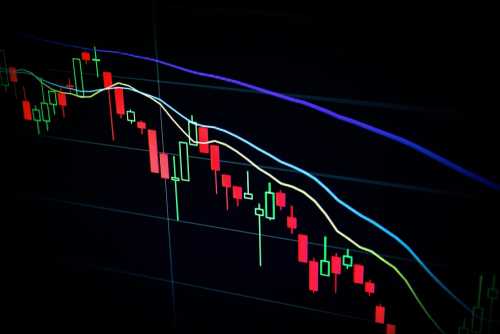
Managing Pakistan’s macroeconomic trajectory currently resembles operating a high-performance engine on low-octane fuel with a patched radiator. The vehicle accelerates, but the underlying thermal stress is accumulating invisibly beneath the hood. The Pakistan Stock Exchange (PSX) has recently breached nominal record highs, buoyed by a resilient Rupee and the successful disbursement of the latest International Monetary Fund (IMF) Extended Fund Facility tranche. However, this surface-level stability masks a fragile equilibrium built on restrictive monetary policy and non-recurring capital inflows rather than organic, structural economic expansion.
The Equity Mirage and Credit Crowding-Out
Market optimists point to the KSE-100 index as definitive proof of renewed investor confidence and economic normalization. Yet, this rally is heavily skewed toward the banking and exploration and production (E&P) sectors, which are direct, mechanical beneficiaries of the State Bank of Pakistan’s (SBP) elevated policy rate. This is not organic, broad-based corporate earnings growth; it is a yield-driven concentration. According to the SBP’s latest Quarterly Bulletin, private sector credit growth has contracted by 4.2 percent year-on-year, indicating that prohibitive borrowing costs are actively suffocating industrial expansion. The equity market is pricing in financial sector rent-seeking rather than productive capital formation, creating a dangerous divergence between asset prices and real economic activity.
The Monetary Policy Paradox
Critics of this bearish outlook argue that the SBP’s tight monetary stance is a necessary, successful intervention that has anchored inflation expectations and stabilized the foreign exchange market. They point to the Rupee’s relative stability against the US Dollar over the past two quarters as empirical proof that the policy is functioning as intended. While this stabilization is factually accurate, it represents a pyrrhic victory. The resultant credit crunch has disproportionately impacted small and medium enterprises (SMEs), which lack the balance sheet resilience to absorb double-digit financing costs. The central bank is effectively trading long-term industrial capacity and employment generation for short-term currency stabilization, a trade-off that will inevitably cap the country's potential GDP growth.
The Remittance Paradox and Export Atrophy
Simultaneously, worker remittances have surged to historic highs, providing a vital buffer to the current account deficit. However, mainstream financial analysis frequently misinterprets this as a sign of broad economic vitality. In reality, it highlights a structural degradation in formal export competitiveness. Data from the Pakistan Bureau of Statistics indicates that while remittances grew by 18 percent year-on-year, merchandise exports declined by 3.4 percent over the same period. As noted by Dr. Ishrat Husain, former Governor of the State Bank, "Reliance on remittance inflows to finance the current account is a dangerous macroeconomic crutch; it masks the underlying atrophy of the tradable goods sector and creates a fragile dependency on diaspora liquidity." When global host economies inevitably tighten their labor markets or face recessions, this lifeline will constrict, exposing the unaddressed deficit in hard-currency earnings.
Defensive FDI and the Sovereign Risk Premium
Foreign Direct Investment (FDI) data further corroborates this defensive capital allocation posture. While headline FDI figures show a marginal uptick, the composition is heavily skewed toward telecommunications and renewable energy. International capital is actively avoiding long-cycle manufacturing and export-oriented industries due to persistent policy unpredictability and regulatory friction. Investors are prioritizing dollar-hedged, utility-like returns over genuine productive capacity. A recent World Bank enterprise survey revealed that 68 percent of foreign investors cite "regulatory unpredictability" as the primary deterrent to expanding operations, overshadowing even infrastructure deficits. Multinational corporations are structuring their local operations as self-contained, dollarized entities, ring-fencing their capital from broader macroeconomic volatility and nullifying the traditional spillover effects of FDI, such as technology transfer and local supplier development.
The Necessity of Fiscal Consolidation
Skeptics of the current reform trajectory frequently argue that IMF conditionalities are purely extractive, designed to crush domestic demand and exacerbate poverty without yielding structural benefits. This perspective, while emotionally resonant in political discourse, ignores the mathematical reality of sovereign debt dynamics. Primary research from the International Finance Corporation indicates that without the fiscal consolidation mandated by the current EFF, Pakistan’s debt-to-GDP ratio would have breached the 90 percent threshold by late 2025, triggering an outright sovereign default and a catastrophic collapse in living standards. The fiscal pain is acute, but the alternative is terminal macroeconomic failure and complete exclusion from international capital markets.
Echoes of the 2013-2018 Stabilization Trap
To contextualize the current trajectory, one must examine the 2013-2018 economic cycle under the previous IMF program. That period also featured initial macroeconomic stabilization, a temporary surge in consumption-led growth, and a stabilized currency. However, because the underlying structural issues—namely, a narrow tax base and an uncompetitive export sector—were left unaddressed, the economy rapidly overheated, culminating in a severe balance of payments crisis. The historical lesson is clear: stabilization without structural export expansion is merely deferred insolvency. The current administration risks replicating this exact cycle if the political will to implement deep-rooted tax and energy sector reforms falters in the face of electoral pressures.
Strategic Posturing for Market Participants
For local enterprises and institutional investors, passive observation is no longer a viable strategy. The immediate actionable imperative is the aggressive hedging of currency and interest rate liabilities. Manufacturing firms must accelerate supply chain localization to mitigate import-related forex volatility. Furthermore, corporate treasurers must actively utilize forward contracts and currency swaps to lock in exchange rates for essential imported raw materials, as the SBP’s foreign exchange reserves, while improved, remain insufficient to defend against sudden external shocks, such as a spike in global Brent crude prices. Institutional investors should rotate portfolios away from interest-rate-sensitive consumer discretionary stocks and toward export-oriented firms with verified dollar-denominated revenue streams. Retail investors must anticipate that elevated policy rates will persist longer than the market currently prices in, necessitating a shift toward short-duration, high-yield fixed-income instruments.
The Six-Month Horizon: Stagflationary Bifurcation
Projecting six months into this structural adjustment, the macroeconomic landscape will not resemble a synchronized recovery. Instead, we will witness a pronounced stagflationary bifurcation. The financial and utility sectors will continue to post robust nominal earnings, supported by high interest rates and administrative tariff adjustments. Conversely, the real economy will experience creeping stagnation as the lagged effects of monetary tightening and energy cost passthroughs filter through to consumer prices. The IMF will declare the structural benchmarks met, but the resulting socio-economic stratification will fundamentally alter the domestic political calculus, replacing acute balance-of-payments crises with chronic, low-growth inflationary pressure.
Related Articles

The Torsional Stress of Credit: How the Yen Carry Trade Unwind is Shattering Global Liquidity Anchorages
Nov 21, 2026
The Bifurcated Ledger: Navigating the Illusion of Market Breadth and the Reality of Refinancing Risk
Nov 19, 2026
Comments (0)
No comments yet. Be the first to share your thoughts!
Want to join the discussion?
Please log in to post a comment.
Login NoworCreate an Account