
The Thermodynamic Bottleneck: Navigating the Bifurcation of Global AI Infrastructure

The Thermodynamic Bottleneck: Navigating the Bifurcation of Global AI Infrastructure
An expert impact analysis synthesizing current geopolitical, regulatory, and infrastructural inflection points in artificial intelligence.
Building Supersonic Jets Without Runways
Constructing a fleet of supersonic jets without first building the runways or refining the aviation fuel is a fatal architectural flaw; yet, this is the precise reality defining the current artificial intelligence boom. We are scaling computational intelligence at an exponential rate while relying on mid-20th-century electrical grids and fragmented geopolitical alliances. The defining event of this quarter is the simultaneous convergence of the United States expanding semiconductor export controls to allied nations, the European Union initiating its first wave of financial penalties under the AI Act, and severe localized grid failures in primary data center hubs caused by unprecedented power demand. This is not a transient market correction; it is a structural recalibration of how digital intelligence is physically generated, regulated, and distributed.
The Silicon Iron Curtain and Regulatory Divergence
The core geopolitical event shaping the innovation landscape is the formal expansion of United States semiconductor export controls to include allied nations in Europe and Asia, effectively bifurcating the global AI supply chain, while the European Union simultaneously initiated its first wave of financial penalties under the AI Act for non-compliant foundation models. Mainstream analysis treats these as isolated regulatory and diplomatic maneuvers. However, the unseen implication is the forced decoupling of the global technology stack. By restricting advanced node access even to allies, Washington is prioritizing national security over allied technological sovereignty, forcing European and Asian firms to either build redundant, inferior domestic supply chains or accept permanent subservience to American compute infrastructure. Concurrently, the EU's punitive regulatory approach is not merely about safety; it is a protectionist mechanism designed to slow the deployment of American hyperscaler models, attempting to preserve domestic software markets through compliance friction.
The Thermodynamic Bottleneck: Energy as the New Compute Constraint
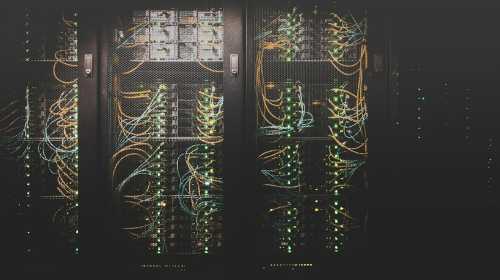
The most ignored consequence of the current AI expansion is the physical thermodynamic limit being imposed on digital growth. According to the International Energy Agency, global data center electricity consumption is projected to double by 2026, reaching over 1,000 terawatt-hours. This is not merely an infrastructure challenge; it is a profound macroeconomic shift. The unseen implication is that energy availability, not algorithmic efficiency, will now dictate the pace of AI deployment. Utility monopolies and nuclear energy providers are quietly becoming the most critical nodes in the technology value chain. We are witnessing a transfer of economic power from software engineers to grid operators and energy traders. As noted by the U.S. Department of Energy in its recent infrastructure briefing, "The bottleneck is no longer silicon; it is the grid," highlighting the physical limits of digital expansion and forcing a complete re-evaluation of data center real estate economics.
Counter-Argument: The Compute Democratization Fallacy
Techno-optimists frequently argue that open-source models and decentralized compute networks will democratize artificial intelligence, preventing a monopoly by a few hyperscalers. This perspective is overly simplistic and fundamentally ignores the physics of modern machine learning. Training frontier models requires millions of interconnected GPUs operating in perfect synchronization, a feat that demands billions of dollars in capital expenditure and massive, dedicated power substations. The reality is that the barrier to entry for foundational model training has become so astronomically high that it inherently centralizes power. Open-source models will thrive in application-layer deployment, but the foundational infrastructure will remain an oligopoly controlled by entities that can secure both the silicon and the gigawatts required to run it.
Echoes of the Atomic Energy Act: The Dual-Use Dilemma
This current matrix of export controls, regulatory fragmentation, and infrastructure strain uncomfortably mirrors the United States' management of nuclear technology following the Atomic Energy Act of 1946. During that era, the government attempted to strictly control dual-use technology while simultaneously trying to foster a commercial nuclear power industry. The historical lesson is stark: when a technology possesses profound dual-use capabilities, the state will inevitably prioritize containment over commercial velocity, leading to massive inefficiencies and the creation of entrenched, state-subsidized monopolies. We are replicating this exact dynamic with AI compute. The attempt to strictly control advanced semiconductors while demanding rapid commercial deployment is creating a distorted market where only heavily capitalized, state-aligned entities can survive, stifling genuine grassroots innovation.
Counter-Argument: The Capital Concentration Reality
Critics often argue that the massive influx of venture capital into AI will foster a vibrant, diverse ecosystem of disruptive startups. While capital is flowing, the distribution reveals a starkly different reality. Data from PitchBook indicates that global AI venture capital funding reached $150 billion in the first nine months of 2026, with nearly 70% concentrated in just three hyperscalers. This demonstrates that the market is not funding a broad wave of innovation; it is merely recapitalizing the existing compute oligopoly. The unseen implication is that the "AI boom" is largely a B2B infrastructure build-out for a few dominant players, rather than a decentralized explosion of new commercial applications. Investors must recognize that they are funding the expansion of incumbent monopolies, not the disruption of the market.
Strategic Hedging for Market Participants
For local businesses and institutional investors, the immediate imperative is to pivot capital allocation away from pure-play software and toward physical infrastructure enablers. Companies must secure long-term power purchase agreements (PPAs) for their data centers, locking in energy costs before grid congestion drives prices to prohibitive levels. Furthermore, enterprises should aggressively audit their software supply chains to ensure compliance with emerging regional AI regulations, avoiding the severe financial penalties currently being levied in the European market. Citizens and retail investors should avoid the temptation of chasing momentum in highly valued, unprofitable AI application startups, instead allocating capital toward utility providers, grid modernization firms, and the select few hyperscalers that possess the physical infrastructure to sustain long-term growth.
The Six-Month Horizon
Over the next six months, the innovation landscape will undergo a violent physical correction. The illusion of infinite digital scaling will shatter as major hyperscalers announce delayed deployment timelines due to localized grid failures and transformer shortages. We will see the first major AI startups fail not because their algorithms were inferior, but because they could not secure the physical power required to run their inference workloads. Geopolitically, the export control regime will fracture further, with allied nations quietly establishing back-channel silicon procurement networks to bypass American restrictions. The market will transition from a phase of algorithmic hype to a brutal phase of physical infrastructure reality, where only those who control the electrons will control the intelligence.
Related Articles

The Thermodynamics of Hegemony: How the GAAC Pact is Fracturing the Global AI Compute Ecosystem
Nov 21, 2026
The Hydroelectric Paradox: How Grid Moratoriums and Agentic Liability are Forcing AI to the Edge
Nov 19, 2026
Comments (0)
No comments yet. Be the first to share your thoughts!
Want to join the discussion?
Please log in to post a comment.
Login NoworCreate an Account