
The Thermodynamic Ceiling: How Power Constraints and Regulatory Fragmentation are Rewiring Global Tech Economics

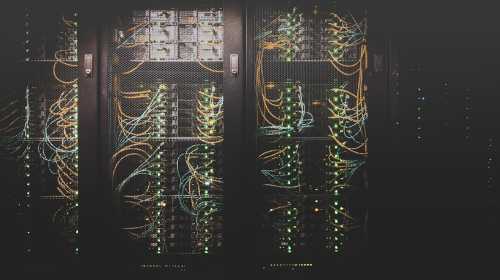
The Thermodynamic Ceiling
Building a modern artificial intelligence infrastructure in August 2026 is like trying to fuel a fleet of nuclear supertankers using a municipal network of garden hoses while the maritime authority simultaneously rewrites the navigation charts. The core event defining this quarter is the violent collision between the physical limits of the electrical grid and the regulatory enforcement of algorithmic scaling, marked by the August 2 activation of the EU AI Act's high-risk transparency mandates and the simultaneous halting of AI data center growth due to severe power grid strain [[9], [26]]. Concurrently, the US has aggressively redrawn semiconductor export controls targeting advanced logic chips, while quantum computing laboratories finally demonstrate exponential error suppression, fundamentally altering the timeline for cryptographic obsolescence [[17], [31]].
The Physics of Compute
Mainstream financial media treats the current AI boom as a purely software-driven margin expansion, ignoring the brutal thermodynamic reality that compute is ultimately a physical commodity. AI data centers in 2026 demand between 100 and 750 megawatts per site, a localized power draw that routinely exceeds the capacity of regional municipal substations techplustrends.com . When a single hyperscale campus requires the baseload equivalent of a mid-sized European city, the resulting voltage fluctuations—such as those recently documented in northern Virginia—threaten the stability of the broader grid www.belfercenter.org . This is not a temporary supply chain hiccup; it is a hard physical ceiling on Moore’s Law. According to the Electric Power Research Institute (EPRI), data centers are projected to consume 9% to 17% of total U.S. electricity by 2030, up from roughly 4% today, forcing utility commissions to ration power and effectively capping the scaling laws of large language models www.epri.com .
The Compliance Theater Trap
Critics of the current regulatory environment argue that the EU AI Act, which officially expanded its enforcement powers on August 2, 2026, is engaging in "compliance theater" that stifles innovation without materially improving algorithmic safety artificialintelligenceact.eu . By imposing transparency obligations and threatening fines of up to €35 million or 7% of global revenue for non-compliance, Brussels is forcing startups to divert critical R&D capital toward legal auditing and bureaucratic documentation x.com . From this perspective, the heavy-handed classification of high-risk AI systems creates an insurmountable moat for legacy tech giants who can afford armies of compliance officers, while simultaneously starving agile, open-source developers of the capital required to build competitive, localized models.
Official EU Council Update (August 2026):
"Most of the AI act's rules come into force today. The EU's #AI act is the world's first law on artificial intelligence. The act aims to ensure that AI systems are safe, ethical and trustworthy." View Source
The Sovereignty Imperative
Conversely, defenders of the aggressive US semiconductor export controls argue that treating advanced silicon as a standard commercial good ignores the dual-use reality of modern compute. The recent tightening of restrictions on Nvidia’s H200 and advanced integrated circuits is not merely protectionism; it is a necessary geopolitical quarantine [[17], [22]]. Proponents point out that unrestricted access to advanced logic chips directly accelerates adversarial capabilities in autonomous weapons systems and cryptanalysis. In this view, the resulting fragmentation of the global semiconductor supply chain and the accelerated domestic chip output in China are acceptable costs to maintain a strategic latency advantage in foundational AI infrastructure www.astutegroup.com .
Echoes of the 1973 Embargo
To understand the macroeconomic shock of the current compute-power bottleneck, one must examine the 1973 OPEC oil embargo. Just as the sudden restriction of crude oil forced the global automotive and manufacturing sectors to rapidly pivot toward fuel efficiency and alternative energy, today’s restriction of gigawatt-scale power and advanced lithography is forcing a brutal optimization cycle in silicon design. In the 1970s, the embargo ended the era of the gas-guzzling V8 engine and birthed the modern microprocessor. Today, the "power embargo" imposed by grid constraints is killing the brute-force scaling of dense neural networks, forcing the industry toward sparse matrix computing, neuromorphic architectures, and specialized ASICs. The historical lesson is clear: when the primary fuel source of an industrial revolution becomes constrained, the subsequent decade is defined not by who has the most raw material, but by who achieves the highest thermodynamic efficiency.
The Quantum Catalyst
Compounding the pressure on classical compute architectures is the sudden maturation of quantum error correction. In 2026, multiple research organizations, including IBM’s internal "Loon" platform, have demonstrated that logical error rates now reliably decrease as more physical qubits are added, crossing the critical surface code threshold [[35], [54]]. According to primary research published in Nature, achieving below-threshold logical qubits allows engineers to systematically probe error mechanisms, effectively turning quantum hardware into a predictable manufacturing yield rather than a science experiment www.nature.com . This breakthrough shifts quantum computing from a theoretical physics experiment into an applied engineering discipline. For the technology sector, this means the timeline for "Q-Day"—the moment quantum systems can systematically break RSA and ECC encryption—has been violently accelerated. The capital markets are currently mispricing this risk, assuming a linear progression in cryptographic migration, while the reality is an exponential compression of the transition window for global financial and state secrets.
The Algorithmic Reallocation
The convergence of these physical and regulatory constraints is triggering a massive reallocation of capital within the technology sector, best exemplified by Nebius Group NV’s recent move to raise $3.75 billion in debt following a strategic infrastructure deal with Meta Platforms www.bloomberg.com . Sovereign wealth funds and hyperscalers are no longer investing in generic cloud capacity; they are aggressively acquiring localized power generation assets, nuclear micro-reactors, and liquid-cooling infrastructure. The technology landscape is bifurcating into "energy-rich" and "energy-poor" compute zones. Companies that cannot secure dedicated, off-grid baseload power will be structurally locked out of training frontier models, reducing them to mere API consumers rather than foundational architects.
Hedging the Silicon Squeeze
For enterprise technology leaders and institutional investors, the era of assuming infinite, cheap cloud compute is definitively over. Businesses must immediately audit their algorithmic portfolios, aggressively pruning low-yield, high-compute inference workloads and pivoting toward small language models (SLMs) that can run efficiently on edge devices. Data center operators must immediately pivot toward securing long-term Power Purchase Agreements (PPAs) tied to small modular nuclear reactors (SMRs) or geothermal assets, as traditional municipal grid interconnect queues now stretch past 2030. Furthermore, facility managers must accelerate the retrofitting of legacy air-cooled server racks to direct-to-chip liquid cooling architectures, as the thermal design power (TDP) of next-generation AI accelerators routinely exceeds the dissipation limits of ambient air. Chief Information Security Officers (CISOs) must accelerate their migration to post-quantum cryptography (PQC) standards, treating the 2026 quantum error correction milestones as a definitive starting gun rather than a distant theoretical threat.
The Q1 2027 Infrastructure Bifurcation
Looking six months into Q1 2027, the global technology landscape will be defined by a stark infrastructure bifurcation. The market will split between heavily regulated, compliance-burdened "sovereign clouds" in the West, and highly subsidized, state-directed compute clusters in the East that operate outside Western ESG and grid constraints. We anticipate a wave of hostile M&A activity where cash-rich legacy energy utilities acquire distressed AI startups purely to harvest their algorithmic IP and optimize grid load-balancing. The winners of the next cycle will not be the companies with the largest parameter counts, but those that achieve the highest intelligence-per-watt ratio in a world where electrons are the ultimate scarce resource.
Related Articles
The Compute Reckoning: Navigating Sovereign AI, Quantum Tipping Points, and Antitrust Friction
Aug 23, 2026
The Structural Recalibration of Global Technology: Navigating Compute, Cryptography, and Geopolitical Faultlines
Aug 22, 2026
Comments (0)
No comments yet. Be the first to share your thoughts!
Want to join the discussion?
Please log in to post a comment.
Login NoworCreate an Account