
The Thermodynamic Wall: How Grid Constraints and the Mid-Tier Pivot are Rewiring the AI Economy

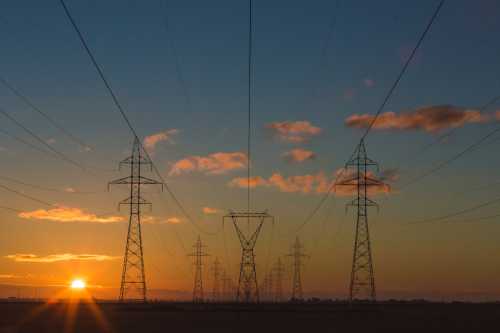
Constructing a fleet of Bugattis in a municipality with only dirt roads and a single, failing gas station is an exercise in capital destruction, not innovation. For the past two years, the artificial intelligence industry has obsessively engineered digital Bugattis—trillion-parameter frontier models—while entirely ignoring the fact that the municipal power grid cannot supply the voltage required to start the engine.
The Core Event
The explosive deployment of enterprise AI agents is colliding with severe physical energy grid constraints, triggering localized power instabilities and forcing a strategic corporate pivot away from frontier models toward cheaper, mid-tier open architectures. This thermodynamic bottleneck is fundamentally rewiring the economics of AI deployment and exposing the fragility of centralized hyperscale compute.
The Unseen Implications
The mainstream narrative assumes that AI scaling is purely a software and silicon constraint, ignoring the physical limits of the electrical grid. Unprecedented capital investment in AI compute is colliding with the physical limits of power infrastructure, creating a bottleneck where project success is dictated by utility interconnection queues rather than algorithmic superiority enkiai.com . Energy grid connection timelines for hyperscale facilities now routinely exceed model development cycles, effectively freezing the geographic expansion of current compute hubs www.hanwhadatacenters.com . This physical reality is causing severe grid stress; for example, high-frequency undamped power oscillations have already appeared in data center-rich regions like Dominion Energy's grid, threatening broader municipal stability arxiv.org . The implication for capital allocators is severe: compute is no longer an elastic cloud resource; it is a geographically constrained, heavily rationed utility that requires physical asset securitization to guarantee uptime.
Because power is rationed and expensive, the economic rationale for running every enterprise workflow through a trillion-parameter frontier model is rapidly evaporating. TechCrunch recently noted that the real AI race may no longer be at the frontier, as production workloads shift to highly optimized, smaller models techcrunch.com . The economics of this pivot are undeniable: mid-tier models are now roughly 80% cheaper than frontier models were just 18 months ago, offering comparable utility for the vast majority of enterprise routing and extraction tasks medium.com . This forces a brutal repricing of AI API margins and shifts the competitive moat from raw parameter count to inference efficiency, latency, and quantization. Enterprise architects are quietly abandoning monolithic frontier dependencies in favor of multi-model routing fabrics that dynamically allocate compute based on real-time spot pricing and task complexity.
As enterprises attempt to maximize their constrained compute by deploying autonomous AI agents, they are walking into a structural governance trap. Gartner explicitly warns that "applying uniform governance across AI agents will lead to enterprise AI agent failure," predicting severe operational disruption for organizations that treat autonomous agents like static software www.gartner.com . When agents are granted the autonomy to plan, reason, and execute multi-turn workflows across legacy databases, traditional API rate limits and static guardrails fail catastrophically. The unseen implication is that enterprise IT architectures must be entirely rewritten to support "agent-to-agent" authentication, dynamic resource allocation, and localized rollback protocols, creating a massive, hidden technical debt for companies that simply bolted agents onto legacy 2023 cloud stacks.
The Historical Precedent
The closest historical analog is the 1973 OPEC oil embargo and its permanent alteration of the global automotive industry. Prior to 1973, Detroit’s engineering prowess was focused entirely on raw horsepower and physical scale, assuming cheap, abundant fuel was a permanent law of nature. When the physical supply of oil was constrained, the market violently rejected the gas-guzzling muscle cars in favor of highly efficient, smaller-engine imports that delivered the same utility at a fraction of the thermodynamic cost. Today’s frontier models are the digital equivalent of the 1970s V8 engine: magnificent, resource-intensive, and fundamentally misaligned with the new thermodynamic reality of the power grid. The lesson is stark: when the underlying resource becomes constrained, the market ruthlessly rewards efficiency and modularity over raw, unoptimized power. The hyperscalers that fail to pivot to highly efficient, specialized inference engines will suffer the same margin compression that devastated legacy automakers in the late 20th century.
Actionable Takeaways
Enterprise CIOs must immediately audit their inference workloads and migrate all non-critical, high-volume tasks to mid-tier or open-weight models to avoid the impending hyperscale compute rationing and margin collapse. Local businesses should avoid signing long-term, fixed-rate API contracts with frontier labs, opting instead for flexible, multi-model routing architectures that can dynamically shift traffic based on real-time spot pricing and grid availability. Citizens and retail investors should rotate capital out of pure-play frontier model wrappers and into the physical "picks and shovels" of the AI stack: high-voltage transformer manufacturers, liquid cooling infrastructure firms, and independent power producers with nuclear or advanced geothermal assets. Software engineers must prioritize inference optimization, quantization, and latency reduction over raw prompt engineering, as the cost of compute will soon dominate the unit economics of every digital product.
Future Forecast
Over the next six months, the landscape will be defined by a brutal consolidation in the AI API market as the "inference margin" collapses, forcing mid-tier open-source labs to acquire or be acquired by hardware-rich hyperscalers. We will see the first major municipal moratoriums on new AI data center permits in grid-constrained regions like Northern Virginia and Texas, effectively freezing the geographic expansion of the current compute hubs. Concurrently, expect a wave of enterprise "agent rollbacks," where companies that deployed poorly governed autonomous agents will be forced to pull them back into human-in-the-loop workflows to prevent cascading operational failures and regulatory fines.
Related Articles

The Biopharma Bottleneck: How Supply Chains and Regulatory Reality Are Restraining Medical Innovation
Aug 22, 2026
The Structural Faultlines of Modern Medicine: Navigating the Convergence of Capital, Compute, and Geopolitics
Aug 22, 2026
Comments (0)
No comments yet. Be the first to share your thoughts!
Want to join the discussion?
Please log in to post a comment.
Login NoworCreate an Account