
The Thermodynamic Wall: How Sovereign AI and Federal Preemption Are Rewiring the Global Compute Stack

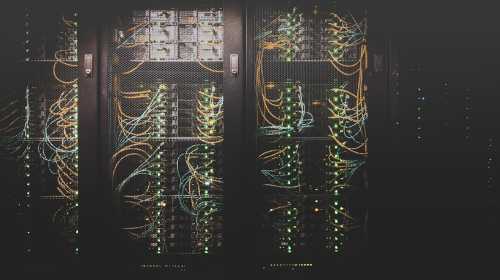
Imagine a global arms race where the primary ammunition isn't enriched uranium, but high-bandwidth memory chips, and the battleground isn't a physical territory, but the municipal electrical grid. For the past three years, the artificial intelligence race was defined by algorithmic elegance and parameter scaling; today, it is defined by thermodynamic limits and jurisdictional brute force.
The Core Event
The U.S. federal government has moved to preempt fragmented state-level AI regulations via sweeping executive orders, attempting to consolidate a unified national compute strategy while global sovereign AI infrastructure projects explode in parallel to secure domestic capacity. This geopolitical pivot occurs precisely as AI data center power demands threaten to overwhelm regional electrical grids, forcing a brutal collision between algorithmic ambition and thermodynamic reality.
The Unseen Implications
The mainstream narrative remains fixated on the ethics of frontier models, entirely ignoring the jurisdictional warfare currently unfolding over the physical stack. The recent U.S. executive order explicitly targets "eliminating state-law obstruction of national artificial intelligence policy," effectively neutering localized compliance regimes in favor of a monolithic federal framework www.whitehouse.gov . This fundamentally impacts [[AI & Innovation Policy and Infrastructure]] by shifting the regulatory burden from software safety to physical infrastructure permitting. As the Stanford HAI 2026 AI Index Report notes, "Industry produced over 90% of notable frontier models in 2025," meaning the state is no longer regulating nascent academic tools, but heavily capitalized, dual-use industrial assets hai.stanford.edu . The federal government is treating compute clusters not as commercial real estate, but as critical national security installations, preempting state environmental and zoning laws that might slow down hyperscaler deployment.
The second unseen implication is the rapid escalation of the sovereign AI compute land grab, which has evolved from a corporate capital expenditure cycle into a geopolitical resource war. The World Economic Forum's 2026 framework highlights that an economy must now "secure AI compute" as a matter of national sovereignty, leading to 23 new sovereign infrastructure projects worldwide in the last quarter of 2025 alone reports.weforum.org . The global sovereign AI infrastructure market is projected to hit $177.09 billion by 2030 www.precedenceresearch.com . The implication for enterprise architecture is profound: multinational corporations will increasingly face data localization mandates that fracture their global model deployments. To comply with sovereign compute laws, enterprises will be forced to maintain localized, air-gapped model weights, destroying the economies of scale that previously justified centralized, monolithic cloud architectures.
The third implication involves the thermodynamic wall and the resulting supply chain bottleneck. The physical limits of the grid are colliding violently with the exponential scaling laws of agentic AI. Projections from Deloitte specify the acute impact in the U.S., with "power demand from AI data centers alone potentially surging from 4 GW in 2025 to 123 GW by 2030" enkiai.com . Furthermore, the hardware supply chain is entirely subsumed by this buildout, with estimates indicating that up to 70% of all memory chips produced globally in 2026 will be consumed by AI data centers accuristech.com . This means the broader consumer electronics, automotive, and industrial IoT sectors are about to face severe component rationing, fundamentally altering unit economics and forcing non-AI industries into a prolonged cycle of hardware scarcity.
The Historical Precedent
The closest historical analog is the global rollout of the telegraph and undersea cable networks in the late 19th century, coupled with the subsequent "scramble for gutta-percha" (a natural rubber used to insulate cables) in the early 20th century. Just as the British Empire leveraged its naval supremacy to lay and protect the "All Red Line" telegraph network—ensuring that global financial and military communications routed exclusively through sovereign territory—today's superpowers are securing the physical and energy perimeters of their AI clusters. During World War I, the first act of naval aggression was the severing of enemy telegraph cables, proving that control over the physical routing layer dictates geopolitical leverage. The lesson for today's policymakers is stark: algorithms are merely the messages sent over the wire. The nations that secure the power generation, cooling infrastructure, and silicon supply chains will monopolize the cognitive output of the next century, rendering those who only focus on software subservient to the owners of the physical stack.
Actionable Takeaways
Local businesses and mid-market enterprises must immediately audit their cloud dependencies and migrate non-essential compute workloads to off-peak, non-AI-contended availability zones to avoid the impending surge in hyperscaler pricing. Corporate boards must treat power purchase agreements (PPAs) and municipal water rights as tier-one strategic assets, on par with intellectual property, locking in long-term fixed-rate energy contracts before regional utilities implement AI-specific peak demand surcharges. Citizens and retail investors should rotate capital away from pure-play software wrappers and into the physical "picks and shovels" of the AI stack: specialized liquid cooling manufacturers, high-voltage transformer suppliers, and independent power producers with nuclear or advanced geothermal assets. For software engineers, the mandate is clear: optimize code for inference efficiency and token economy, as the cost of compute will soon dominate the unit economics of every digital product.
Future Forecast
Over the next six months, the landscape will be defined by a brutal consolidation in the AI agent software layer as the underlying compute costs outpace the revenue generated by early autonomous deployments. We will see the first major sovereign defaults, where mid-tier nations that over-leveraged to build domestic GPU clusters will be forced to lease their compute back to U.S. hyperscalers to service their sovereign debt. Concurrently, expect a fierce regulatory backlash in the EU as their Digital Omnibus framework clashes with the U.S. federal preemption strategy, resulting in a fractured, transatlantic digital iron curtain that will force enterprise architects to maintain entirely separate codebases for American and European AI deployments.



Comments (0)
No comments yet. Be the first to share your thoughts!
Want to join the discussion?
Please log in to post a comment.
Login NoworCreate an Account