
The Tollbooth Seizure: How Antitrust Verdicts, Streaming Mega-Mergers, and AI Pacts are Rewiring the Entertainment Economy

Think of the modern entertainment conglomerate not as a creative studio, but as a heavily leveraged municipal utility that controls the water supply, the plumbing, and the billing department. For the past decade, these utilities operated with unchecked geographic monopolies and infinite venture capital subsidies. Today, the federal government is seizing the tollbooths, the capital markets are forcing a violent merger of the reservoirs, and the labor unions are successfully unionizing the algorithms.
The Core Event
The U.S. entertainment sector is undergoing a violent structural repricing, triggered by a federal jury finding Live Nation-Ticketmaster liable for antitrust violations and Netflix’s $82.7 billion pursuit of Warner Bros. Discovery’s streaming assets [[4], [11]]. Concurrently, SAG-AFTRA has ratified a landmark 2026 contract codifying AI consent, while the video game industry hemorrhages over 40,000 jobs in a brutal post-pandemic labor liquidation [[23], [26]].
The Unseen Implications
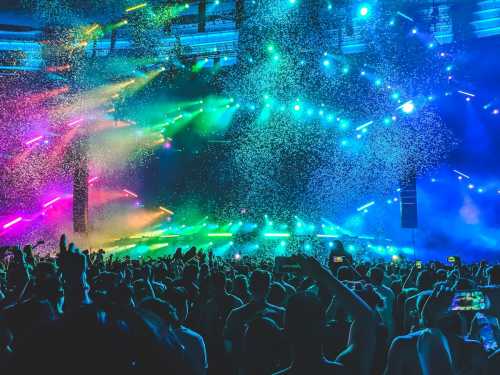
The immediate shockwave impacting [[Entertainment Capital Allocation & Labor Economics]] is the structural unbundling of the live event infrastructure stack following the Live Nation antitrust verdict. "On April 15, 2026, a federal jury found Live Nation and its subsidiary Ticketmaster liable on every antitrust count submitted," effectively shattering the exclusive venue contracting model that underpinned its monopoly www.crowell.com . The mainstream press views this as a victory for consumer ticket prices, ignoring the catastrophic margin compression it inflicts on the broader live event ecosystem. Live Nation’s monopoly subsidized the massive capital expenditures required to build and maintain global touring logistics. With the primary ticketing and venue promotion layers forcibly decoupled, mid-market regional promoters and independent venues will face a severe liquidity crisis as the backend cross-subsidies evaporate. The unseen reality is that the live music industry will rapidly fragment into localized, private-equity-backed venue oligopolies, while the secondary ticket market becomes heavily regulated, destroying the arbitrage margins that independent brokers rely on.
The second unseen implication is the terminal consolidation of the streaming wars and the resulting death of the mid-budget theatrical window. The capital markets have officially declared the standalone streaming model unviable, forcing a mega-merger to achieve absolute scale. "On January 13, 2026, Netflix amended its $82.7 billion offer for WBD's Streaming" assets, signaling the end of the fragmented platform era en.wikipedia.org . This acquisition is not about acquiring new content; it is about acquiring pricing power and eliminating redundant distribution costs. The unseen implication for the creative supply chain is the total monopolization of the global attention economy by a single, algorithmic gatekeeper. As the platform layer consolidates into a duopoly, the leverage shifts entirely away from the legacy studios and into the hands of the distribution algorithms, permanently depressing the licensing fees for independent producers and forcing a ruthless standardization of global content to maximize subscriber retention metrics.
The third implication involves the severe bifurcation of human capital, contrasting the protected unionization of Hollywood actors against the mass liquidation of the video game workforce. "SAG-AFTRA members have voted to ratify a four-year contract with the major studios that includes AI terms," effectively establishing a collective bargaining framework for digital replicas and algorithmic training data variety.com . Meanwhile, the un-unionized interactive entertainment sector is facing a catastrophic labor correction, as "Layoffs since 2022 have now surpassed 40,000" across the global video game industry virtualeconcast.com . The unseen reality is the creation of a two-tiered creative labor market. Unionized film and television labor has successfully established a legal moat around human performance and AI consent, forcing studios to pay premium licensing fees for digital likenesses. Conversely, the non-unionized game development and VFX sectors are being aggressively hollowed out by generative AI tools and offshore outsourcing, permanently destroying the middle-class technical artisan class that historically built the industry's underlying intellectual property.
The Historical Precedent
The closest historical analog is the 1948 U.S. Supreme Court decision in United States v. Paramount Pictures, Inc., known as the Paramount Decrees, which forced the major studios to divest their theater chains and end block-booking practices. The conventional narrative is that this antitrust action democratized the film industry and birthed the independent cinema movement of the 1970s. However, the actual economic outcome was the rapid financialization of talent and the rise of the mega-agency monopoly. When the studios lost their vertical integration and guaranteed exhibition outlets, they became highly risk-averse, relying entirely on independent packaging agents to bundle pre-sold IP and A-list talent to secure bank financing. The lesson for today’s entertainment economy is stark: when antitrust regulators or market forces break up the distribution monopolies (whether physical theaters in 1948 or streaming platforms and ticketing networks in 2026), the power does not flow to the independent creators; it flows to the intermediaries who control the scarce assets. Today, those scarce assets are unionized human likenesses and proprietary algorithmic training data.
Actionable Takeaways
For independent venue operators and regional promoters, the immediate mandate is to aggressively secure long-term, exclusive data-sharing partnerships with emerging primary ticketing platforms before the post-Live Nation venue roll-up wave prices them out of the physical real estate market. For mid-tier production companies and IP holders, the playbook requires pivoting away from traditional streaming licensing deals and instead building direct-to-fan, community-owned distribution models, as the impending streaming duopoly will possess absolute monopsony pricing power over content acquisition. For citizens and retail investors, the strategy demands a defensive rotation out of legacy theatrical exhibition chains and mid-cap game publishers, and into the digital infrastructure of the new entertainment cartel: specialized AI-compliance auditing firms, synthetic media licensing clearinghouses, and the private equity firms currently acquiring distressed live-event regional monopolies.
Future Forecast
Over the next six months, the landscape will be defined by a wave of "digital replica" litigation, where SAG-AFTRA initiates massive class-action lawsuits against studios and game developers for allegedly utilizing legacy, pre-2026 contractual loopholes to train proprietary AI models on union actors' voices and movements without explicit consent. We will see a pronounced bifurcation in the live event market, as the Department of Justice forces the divestiture of Live Nation's venue management arm, triggering a massive, debt-fueled acquisition spree by private equity syndicates eager to monopolize local municipal arenas. Concurrently, expect the major streaming platforms to quietly implement aggressive "engagement-gating" algorithms that automatically cancel mid-budget original series within 14 days of release if they fail to hit hyper-specific completion-rate metrics, effectively rendering the traditional multi-season television development model entirely obsolete.
Related Articles

The Entertainment Inflection Point: Navigating Streaming Monopolies, AI Disruption, and Geopolitical Fragmentation
Aug 22, 2026
The Macroeconomic Squeeze: How Geopolitics and Climate are Rewiring Global Health Architecture
Aug 22, 2026
Comments (0)
No comments yet. Be the first to share your thoughts!
Want to join the discussion?
Please log in to post a comment.
Login NoworCreate an Account