
The World's VIP Security Committee: UN General Assembly Elects Five New Members to the Security Council for 2027-2028


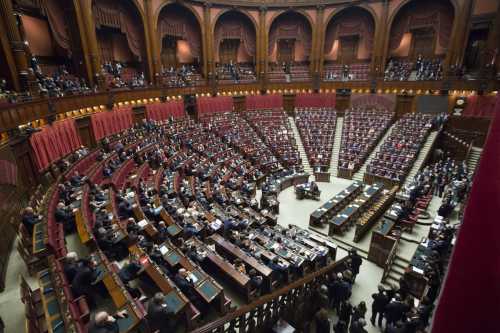
Imagine a gigantic school with students from every single country on Earth. This school has two main groups. The first group is the General Assembly, where every single student gets a seat and a vote. It is loud, it is democratic, and everyone gets to speak. But there is a second group, a tiny, exclusive VIP club called the Security Council. This club only has 15 seats. Ten of those seats are temporary, rotating every two years, but the five most powerful students—the permanent members—get to keep their seats forever and have a magical 'veto' stamp that can stop any rule they do not like. This VIP club is the only group in the school that has the power to send the security guards to stop a fight, punish bullies, and enforce the rules. On June 3, 2026, during the 80th session of the UN General Assembly, the entire school gathered to elect five new temporary members to this crucial VIP club for the 2027-2028 term.
To understand why this election is so incredibly important, we have to look at the job of the UN Security Council. The United Nations was created after the devastation of World War II with one main goal: to save succeeding generations from the scourge of war. The Security Council is the engine that makes this happen. When a country invades another country, when a civil war breaks out, or when a global pandemic threatens humanity, it is the Security Council that meets in a dark, wood-paneled room in New York to decide what to do. They can impose economic sanctions, freeze bank accounts, authorize peacekeeping forces, or demand an immediate ceasefire. Because their decisions are legally binding on all 193 UN member states, the composition of this 15-member club literally dictates the peace and security of the entire planet.
The election process on June 3, 2026, was a massive diplomatic battle. The 10 non-permanent seats are distributed by region to ensure that the club is not dominated by just one part of the world. There are seats for Africa, Asia-Pacific, Latin America and the Caribbean, and Eastern Europe. Countries spend years campaigning for these seats, promising to bring their unique perspectives, their regional expertise, and their commitment to international law to the table. The candidates had to convince the General Assembly that they would be independent thinkers, not just puppets of the larger powers. The five nations that emerged victorious in this intense democratic process will take up their seats on January 1, 2027, and will serve until December 31, 2028. Their arrival will shift the delicate balance of power within the room.
Why does it matter who gets these seats? Because the world in 2026 is a deeply fractured, multipolar place. The geopolitical tensions between the major powers mean that the permanent members often disagree and use their vetoes to block action. In this paralyzed environment, the 10 elected members become the crucial swing votes. They are the ones who draft the compromises, who build the coalitions, and who find the diplomatic loopholes to get things done. If the newly elected members come from regions that are currently suffering from climate disasters, terrorism, or economic inequality, they will force the Council to pay attention to those issues. They ensure that the security agenda is not just about tanks and borders, but about human security, food supplies, and global stability.
For the regular person living thousands of miles away from New York, these elections have a direct impact. When the Security Council functions effectively, it keeps shipping lanes open, which keeps the price of food and fuel stable. It deploys peacekeepers to stop genocides, saving countless innocent lives. It creates international tribunals to hold war criminals accountable. The five new members elected on June 3, 2026, will carry the weight of these responsibilities on their shoulders. They will sit at the table with the superpowers and demand that the rules of international law apply equally to the strong and the weak. It is a beautiful, imperfect, but essential system of global governance that relies on the cooperation of diverse nations.
The global diplomatic community watched the voting results closely, knowing that the new dynamics will shape the UN's response to the world's most pressing crises. Here is the official forecast and analysis from the UN Security Council Report:
The 2026 UN Security Council elections have concluded! ????????️ Five new non-permanent members have been elected by the General Assembly to serve for the 2027-2028 term. Their voices will be crucial in navigating complex geopolitical crises and advancing global peace. #UNSC#UNGA#Diplomacy
— Security Council Report (@UNSecCouncil) June 3, 2026
As the new members prepare to take their seats in January 2027, the world hopes that they will bring fresh ideas, courage, and a commitment to multilateralism. In a world where it is very easy to give up on diplomacy and resort to force, the UN Security Council remains our best hope for a peaceful resolution to our differences. The five new members are not just representing their own countries; they are representing the collective desire of humanity to live in a world where disputes are settled with words, not weapons. To follow the monthly forecasts and the detailed analysis of the Security Council's agenda, you can visit the official portal at securitycouncilreport.org.
Related Articles
The Multipolar Fracture: Navigating Defense Realignment, Institutional Arbitrage, and Tactical Instability
Aug 23, 2026
The Architecture of Fragmentation: Navigating the Multipolar Shift in Global Governance
Aug 22, 2026
Comments (0)
No comments yet. Be the first to share your thoughts!
Want to join the discussion?
Please log in to post a comment.
Login NoworCreate an Account