
Trump Holds Housing Bill Hostage in Shocking Demand for Voter ID Law

Imagine you and your friends spent months building the most amazing, giant Lego castle ever. You gathered all the blocks, followed the instructions perfectly, and everyone in the class—even the kids who usually argue with you—agreed that it was a masterpiece. You were just about to take a big, celebratory group photo when the teacher suddenly walked in, took the camera away, and said, “No picture until you all finish your math homework first!”
The Big Surprise at the Capitol
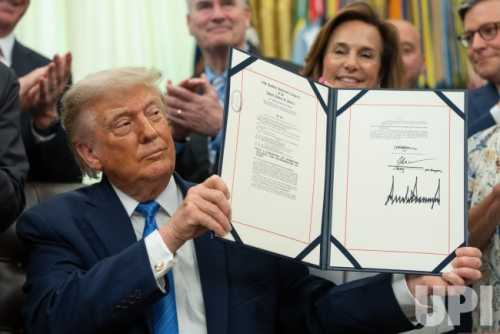
On Wednesday, June 24, 2026, a massive political earthquake shook the halls of the United States Capitol in Washington, D.C. President Donald Trump abruptly canceled a highly anticipated signing ceremony for a major bipartisan housing deregulation bill. Just hours before he was supposed to sign the legislation into law, the President announced that he would not sign it—or any other major legislation—until Congress passes the "SAVE America Act," a sweeping and controversial voting restriction bill that he has officially labeled a "National Emergency." Democracy Docket reported extensively on this sudden pivot.
This sudden move blindsided lawmakers from both sides of the aisle, halting a rare moment of political unity and throwing the final weeks of the congressional session into absolute chaos. To understand why this is such a massive deal, we have to look at the two very different "toys" the President is currently playing with: the housing bill that everyone agreed on, and the voting bill that has everyone fighting.
What Exactly is the "Lego Castle"? (The Housing Bill)
Let us start with the thing that was supposed to be celebrated: the housing bill. Officially known as the ROAD to Housing Act, this legislation was designed to tackle one of the biggest problems facing everyday American families today: the skyrocketing cost of buying or renting a home.
Imagine a neighborhood where only very wealthy people can afford to live because the rules say you can only build giant, expensive mansions. This new bill was like a magic eraser for those old, strict rules. It aimed to cut through miles of local red tape, deregulate restrictive zoning laws, and provide financial incentives for builders to construct more affordable homes, apartments, and starter houses.
The most amazing part about this bill was that it was truly "bipartisan." In American politics, the two main teams—the Republicans and the Democrats—usually disagree on almost everything. But this housing bill was so popular and so necessary that it passed through the House of Representatives with a staggering, almost unanimous vote of 358 to 32. Lawmakers from both parties were eager to show the voters that they were working together to fix the "cost of living" crisis before the crucial 2026 midterm elections in November. They had their pens ready, the cameras were set up, and the "Lego castle" was complete.
What is the "Math Homework"? (The SAVE America Act)
Now, let us talk about the "math homework" that President Trump is demanding must be finished first. The SAVE America Act is a completely different type of legislation. While the housing bill is about building homes, the SAVE Act is about the rules for voting in federal elections.
According to the official text of the bill, the SAVE America Act would require every single American citizen to provide documentary proof of their U.S. citizenship—like a passport or a birth certificate—when they register to vote. It would also impose incredibly strict new voter identification requirements at the polling places.
President Trump and his allies argue that these new rules are absolutely necessary to protect the integrity of American elections and to prevent non-citizens from voting, even though multiple independent studies and government audits have shown that non-citizen voting is exceedingly rare and practically non-existent. The President has made this bill his "No. 1 priority," going so far as to declare it a "National Emergency" to justify holding all other government business hostage until it passes. He firmly believes that securing the borders of the ballot box is more urgent than lowering the cost of a family's mortgage.
The Panic in the Republican Ranks
When President Trump suddenly pulled the plug on the housing bill signing, his own political team was caught completely off guard. You might think that since the President is the leader of the Republican party, everyone in his party would happily follow his orders. But in reality, this caused a massive headache for Republican leaders in Congress.
House Speaker Mike Johnson, who is the top Republican in the House of Representatives, had to quickly go to the press and explain that he "understands" the President's decision to prioritize the SAVE America Act. However, behind closed doors, many Republicans were panicked. They know that everyday voters are very angry about high prices, inflation, and the lack of affordable housing. By canceling the housing bill, Republicans are losing their biggest, most tangible achievement to show voters right before the midterm elections.
Furthermore, the Senate Majority Leader, John Thune, is now under immense pressure. The House of Representatives already passed the SAVE America Act, but it is stuck in the Senate. Trump has been publicly pressuring Senator Thune to change the Senate's ancient rules just to force the voting bill through, creating a deep and uncomfortable divide within the GOP ranks.
The Democratic Firestorm and Voting Rights
On the other side of the political playground, Democrats and civil rights organizations are absolutely furious. Senators like Elizabeth Warren and Amy Klobuchar immediately took to social media to condemn the President's move. Senator Warren pointed out the sheer absurdity of the situation, noting that huge bipartisan majorities passed a bill to lower housing costs, only for the President to refuse to sign it at the 11th hour over a controversial voting demand.
But the anger is not just about the delayed housing bill; it is deeply rooted in what the SAVE America Act actually does. Voting rights advocates, including the Brennan Center for Justice and the NAACP Legal Defense Fund, have fiercely opposed the SAVE Act. They argue that millions of American citizens—especially elderly people, low-income workers, and minorities—do not have easy access to a passport or a physical birth certificate.
These organizations warn that the SAVE Act is essentially an "election power grab" that would act as a modern-day poll tax, effectively stopping millions of legal citizens from exercising their constitutional right to vote. Some critics in the Congressional Record have even gone as far as to call the legislation "Jim Crow 2.0," referencing the historical laws that were designed to suppress minority votes in the past. By holding the housing bill hostage, Democrats argue that the President is willing to hurt American families' wallets just to secure a political advantage for his party in the upcoming elections.
The Filibuster Hurdle (Explained Simply)
To truly understand why this is such a dramatic standoff, you have to understand a very special, very frustrating rule in the U.S. Senate called the "filibuster."
Imagine you are in a classroom with 100 students. To pass a normal rule, you only need 51 students to raise their hands and say "yes." That is a simple majority. But the filibuster is a special rule that says, "If even one student really hates the new rule, they can talk forever and never let you vote on it, unless 60 students agree to force them to sit down and be quiet."
Right now, the Republicans only have a slim majority in the Senate. They do not have the 60 votes needed to break a Democratic filibuster on the SAVE America Act. This is why the bill is stuck. President Trump wants Senator Thune to invoke the "nuclear option," which means permanently destroying the filibuster rule so that bills can pass with just 51 votes. But many traditional Senators hate the idea of the nuclear option because it changes the fundamental nature of the Senate, which was designed to force compromise. This procedural gridlock is exactly why the President felt he had to take the drastic step of canceling the housing bill to force their hand.
The Economic Domino Effect
Let us zoom out and look at the money side of this story, because when Washington stops working, everyday wallets feel the pain. The United States is currently facing a severe shortage of available homes. Economists estimate that the country is millions of houses short of what is needed to keep prices stable. When there are more buyers than houses, the price of every single house goes up, pushing middle-class families out of the market and forcing young adults to rent expensive apartments forever.
The bipartisan housing bill was specifically engineered to act as a release valve for this immense economic pressure. By deregulating local zoning laws and providing federal grants to cities that streamline their building permits, the government hoped to trigger a massive construction boom. This boom would not only build houses but also create hundreds of thousands of high-paying jobs for carpenters, electricians, plumbers, and architects.
By abruptly halting this legislation, President Trump is effectively freezing billions of dollars in potential economic stimulus. Financial markets, which usually cheer for any sign of deregulation and economic growth, reacted with confusion. Wall Street analysts are now forced to recalculate their inflation forecasts for the remainder of 2026. If the housing bill remains stalled until after the November midterm elections, the cost of living will likely remain the number one complaint among voters, severely damaging the political party that currently controls the White House and Congress. The economic domino effect means that a fight over voting rules is directly translating into higher rent and mortgage payments for millions of innocent bystanders.
The International and Pakistani Perspective
While this political theater is playing out in Washington, the rest of the world is watching closely, and the implications stretch far beyond American borders. From an international scope, including analysis from major global outlets like the UK's The Independent and observers reading Dawn in Pakistan, this event highlights the deep, structural fragility of the current American democratic process.
For international investors and global markets, the cancellation of a major deregulation bill introduces a new layer of economic uncertainty. The housing bill was expected to stimulate the construction sector, create millions of jobs, and lower inflation. By holding it hostage, the U.S. government is signaling that domestic political warfare over election rules is currently taking precedence over economic stabilization. For developing economies and international partners, including those in South Asia, watching the world's largest economy paralyze its own legislative agenda over voting mechanics raises questions about U.S. political stability ahead of the 2026 midterms.
For Pakistani policymakers and regional economic analysts, the U.S. legislative gridlock is particularly noteworthy. Pakistan's own economy is deeply intertwined with global inflation trends and U.S. interest rates, which are heavily influenced by domestic American economic policies like the housing bill. If the U.S. fails to lower its domestic inflation through housing deregulation, the U.S. Federal Reserve may be forced to keep interest rates high for a longer period. High American interest rates typically draw investment capital away from emerging markets like Pakistan, making it more expensive for developing nations to service their own foreign debts. Therefore, a political stunt in Washington regarding voter ID cards has a direct, tangible ripple effect on the financial stability of markets in Islamabad, Karachi, and Lahore.
What Happens Next? (The Waiting Game)
So, what is the next step in this massive political chess match? Right now, the housing bill is sitting in a state of limbo. The White House has refused to say whether President Trump will officially veto the bill or just let it sit on his desk indefinitely.
Meanwhile, the pressure cooker in the Senate is reaching its boiling point. Republican leaders must now decide whether to cave to the President's demands and destroy the filibuster to pass the SAVE America Act, or stand their ground and risk the wrath of the President and his most loyal voters. If they do change the rules and pass the SAVE Act, it will immediately trigger massive legal battles in the Supreme Court, which is already gearing up for an explosive end-of-term in June 2026 regarding voting rights and executive power.
For the everyday American, the result is a frustrating waiting game. Families looking to buy their first home will have to wait longer for relief, while the political machinery in Washington continues to grind its gears over the rules of the next election. The Lego castle is built, the math homework is sitting on the desk, and the teacher is refusing to hand back the camera until the rules of the classroom are rewritten entirely.
Official Social Media Reaction
Senator Amy Klobuchar took to Facebook to express her frustration over the President holding the bipartisan housing bill hostage:
Source: Official Facebook Page of U.S. Senator Amy Klobuchar
Related Articles
The Institutional Fault Line: How Judicial Overreach and Trade Wars Are Reshaping U.S. Markets
Aug 23, 2026
The Fractured Consensus: How Trade Volatility and Institutional Strain Are Rewiring U.S. Macroeconomics
Aug 22, 2026
Comments (0)
No comments yet. Be the first to share your thoughts!
Want to join the discussion?
Please log in to post a comment.
Login NoworCreate an Account