
United Nations Ratifies 'Global AI Accords', Establishing Mandatory Compute Tracking for Frontier Models


GENEVA, Switzerland — In a landmark decision that fundamentally alters the governance of the digital age, the United Nations General Assembly officially ratified the "Global AI Accords" on June 18, 2026. The sweeping international treaty establishes the first-ever global regulatory framework for frontier artificial intelligence, mandating strict transparency, safety testing, and compute-tracking requirements for any entity developing AI models that exceed a defined threshold of computational power. The accord, signed by 142 member states, creates a new international body—the International Agency for Artificial Intelligence (IAAI)—tasked with monitoring the global distribution of advanced semiconductors and ensuring that the most powerful AI systems are developed safely and ethically.
The Core Mechanism: Tracking the Compute
The genius of the Global AI Accords lies in its enforcement mechanism. Unlike previous international agreements that relied on voluntary self-reporting by tech companies, the IAAI will utilize a mandatory "Compute Registry." Any organization that purchases or operates a cluster of GPUs exceeding 50,000 high-end accelerators (the estimated threshold required to train a frontier model) must register the cluster with the UN. Furthermore, the treaty mandates that all frontier models must undergo rigorous, standardized "red-teaming" safety evaluations by independent, UN-certified auditors before they can be deployed to the public. These evaluations test the models for catastrophic risks, including the potential to engineer bioweapons, orchestrate massive cyberattacks, or exhibit deceptive, self-preserving behaviors.
ELI5 Explanation: Think of training a massive AI like building a nuclear reactor. In the past, anyone could just buy a bunch of parts and build one in their backyard, which is dangerous. The new treaty is like an international nuclear watchdog. It says, "If you are buying enough uranium (computing power) to build a reactor, you must register with us, let us inspect your blueprints (safety tests), and prove it won't melt down before you turn it on."
Geopolitical Friction: The US-China Dynamic
The road to ratification was fraught with intense geopolitical maneuvering, primarily between the United States and China. Washington initially resisted the treaty, arguing that international oversight would stifle American innovation and hand a strategic advantage to adversaries. However, as the capabilities of open-source models began to approach frontier levels, the U.S. realized that a global framework was the only way to maintain control over the most dangerous capabilities. China, conversely, agreed to the treaty only after securing provisions that prevent the IAAI from using safety audits as a pretext for industrial espionage. The resulting compromise is a delicate balance: it allows for open innovation in lower-tier AI, but places a heavily guarded, internationally monitored fence around the most powerful systems on Earth.
"We have spent the last decade building engines of immense power without installing brakes. The Global AI Accords are the brakes. They do not stop the car; they ensure that we can drive at these unprecedented speeds without crashing into the future." — António Guterres, Secretary-General of the United Nations
The Open-Source Rebellion
Not everyone is celebrating in Geneva. The open-source AI community, led by organizations like Hugging Face and the Electronic Frontier Foundation, has fiercely condemned the Accords. They argue that by defining "frontier AI" based on compute thresholds, the treaty effectively creates a global oligopoly, legally cementing the dominance of the three or four mega-corporations that can afford the billions of dollars required to comply with UN regulations. "This is not safety; this is cartelization," wrote a prominent open-source researcher in a viral manifesto. "By making it illegal to train powerful models without UN permission, they are ensuring that only the biggest tech monopolies are allowed to innovate."
History made today in Geneva. The UN General Assembly has ratified the Global AI Accords. For the first time, humanity has a unified, international framework to govern the development of frontier artificial intelligence. ????⚖️???? #AIAccords #UN #AISafety
— United Nations (@UN) June 18, 2026
As the IAAI begins the monumental task of registering the world's compute clusters, the Global AI Accords stand as a testament to a rare moment of global unity. The nations of the world have recognized that artificial intelligence is not merely a commercial product, but a foundational technology that will shape the destiny of the species. The fence has been built around the most powerful fire humanity has ever discovered; the coming years will reveal whether the world can tend the flame without getting burned.
Related Articles

The Macro Fracture in AI: Navigating Compute Chokeholds, Open-Source Backlash, and the Productivity Mirage
Aug 23, 2026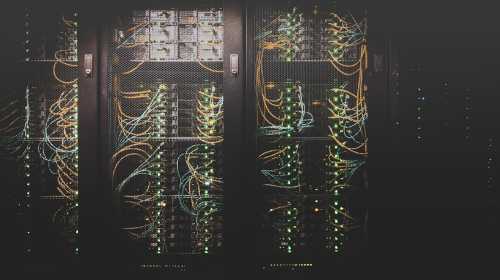
The Silicon Ceiling: How Power Grids and Geopolitics Are Choking the AI Revolution
Aug 22, 2026
Comments (0)
No comments yet. Be the first to share your thoughts!
Want to join the discussion?
Please log in to post a comment.
Login NoworCreate an Account