
Wall Street Erupts: Federal Reserve Slashes Interest Rates by 50 Basis Points in Historic Pivot


The 5-Year-Old Explanation: Imagine the entire country is a giant lemonade stand. For the last two years, the "Lemonade Boss" (the Federal Reserve) made it really expensive to buy sugar and lemons, so nobody could make lemonade and sales were terrible. Today, the Lemonade Boss walked onto the stage and said, "Good news! Sugar and lemons are now 50% cheaper!" Suddenly, everyone runs to buy lemons, starts making lemonade, hires their friends to help sell it, and the whole town is celebrating with money in their pockets. That is what a 50 basis point interest rate cut does to the massive lemonade stand we call the US Economy.
The FOMC Decision: A Shock and Awe Pivot
On the afternoon of June 24, 2026, the US Federal Reserve, led by Chair Jerome Powell, concluded its Federal Open Market Committee (FOMC) meeting with a decision that sent shockwaves through global financial markets. In a move that surprised even the most aggressive Wall Street analysts, the Fed slashed its benchmark federal funds rate by a massive 50 basis points (0.50%), bringing the target range down to 4.00% - 4.25%. This is not a standard, cautious 25-basis-point adjustment; this is an aggressive, decisive pivot designed to rapidly inject liquidity into the economy and secure a "soft landing" after years of battling the highest inflation in four decades.
The decision was not unanimous, but the majority voted strongly in favor, citing the rapid cooling of the Consumer Price Index (CPI) and the Producer Price Index (PPI). Inflation has now officially returned to the Fed's sacred 2% target for three consecutive months. With the "inflation monster" definitively slain, the Fed's mandate has shifted entirely from fighting price hikes to maximizing employment and preventing an economic recession. The 50 basis point cut is the Fed's way of saying they are confident the battle is won and it is time to stimulate growth.
Wall Street's Reaction: The Melt-Up Begins
The reaction on Wall Street was instantaneous and euphoric. Within minutes of the announcement, the S&P 500 surged by over 3%, adding nearly $1.5 trillion in market capitalization to the US economy. The tech-heavy Nasdaq Composite index skyrocketed by 4.5%, as technology and growth stocks are the biggest beneficiaries of lower interest rates. When rates are high, future profits of tech companies are "discounted" heavily, making their stock prices look expensive. When rates drop, those future profits become much more valuable in today's dollars, causing tech valuations to explode.
The bond market also experienced a massive rally. The yield on the 10-year US Treasury note, which moves inversely to its price, plunged from 4.1% to 3.6%. This drop in bond yields has an immediate, direct impact on the real economy, particularly the housing market. The average 30-year fixed mortgage rate, which had been hovering around 7.5%, is expected to drop below 6% in the coming weeks. This will unlock millions of "locked-in" homeowners who want to sell, and bring legions of first-time buyers back into the market, revitalizing the construction and real estate sectors.
The Corporate Borrowing Boom
For the corporate world, this rate cut is the green light they have been waiting for. For the past two years, US corporations have been hesitant to take on new debt to build factories, acquire competitors, or invest in research and development because the cost of borrowing was simply too high. They sat on massive piles of cash, earning 5% in money market funds. Now that the risk-free rate is dropping, that cash will flood back into the economy.
Investment banks like Goldman Sachs and Morgan Stanley are already predicting a massive surge in Mergers and Acquisitions (M&A) activity and Initial Public Offerings (IPOs). Companies that were waiting on the sidelines will now use cheap debt to buy other companies, driving corporate profits and stock prices even higher. The IPO window, which has been frozen since 2022, is expected to blow wide open, with dozens of unicorns rushing to list on the NYSE and Nasdaq before the end of the year.
The Global Ripple Effect: Emerging Markets Rejoice
The impact of a 50 basis point cut by the Federal Reserve is never contained within US borders. The US Dollar acts as the world's reserve currency, and when the Fed raises rates, it sucks capital out of emerging markets and into the US. When the Fed slashes rates, the dollar weakens, and capital goes hunting for higher returns in riskier, emerging markets. This is incredibly bullish for countries like India, Brazil, and yes, Pakistan. As the dollar index (DXY) tumbled following the announcement, emerging market currencies strengthened, and their local stock markets saw massive inflows of foreign portfolio investment. The "strong dollar" cycle that has battered developing nations for three years is officially over.
Commodities and the Inflation Hedge
With interest rates plummeting and the dollar weakening, hard assets are suddenly very attractive again. Gold, the ultimate hedge against currency debasement, surged past $2,800 an ounce as central banks and retail investors rushed to buy the precious metal. Similarly, industrial metals like copper and silver rallied sharply. The logic is simple: when money in the bank earns very little interest, investors prefer to own physical things that have intrinsic value and tend to go up in price when the money supply expands. This commodity supercycle is set to benefit resource-rich nations across Latin America and Africa immensely.
The Risks: Are We Reigniting Inflation?
Of course, not everyone is celebrating. Hawkish economists and veteran bond investors are sounding the alarm. They argue that by cutting rates by 50 basis points, the Fed might be stimulating the economy too much, too fast. If consumer spending roars back to life and corporations start hiring aggressively, demand could outstrip supply, reigniting the very inflation the Fed just spent three years fighting. Furthermore, the US government is running massive fiscal deficits, borrowing trillions of dollars. Lower interest rates mean the government has to pay less interest on its debt, which some argue removes the urgency for Washington to fix its spending habits.
Powell's Press Conference: The Forward Guidance
During the post-announcement press conference, Chair Jerome Powell was careful to manage expectations. He emphasized that this 50 basis point cut is a "recalibration" of policy, not a panic move. He stated that the Fed will be "data-dependent" moving forward, meaning they will look at every single jobs report and inflation print before deciding on the next move. However, the "dot plot" released by the Fed members suggests they are planning at least two more 25-basis-point cuts before the end of 2026. The era of tight money is dead; the era of cheap capital has returned.
Official Federal Reserve Statement
Below is the official press release from the US Federal Reserve detailing the FOMC decision and the economic projections.
For immediate release: The Federal Reserve has decided to lower the target range for the federal funds rate by 50 basis points to 4 to 4-1/4 percent. Inflation has moved toward 2 percent, and the risks to achieving our employment and inflation goals are coming into better balance. federalreserve.gov
— Federal Reserve (@federalreserve) June 24, 2026
Related Articles

The Macro Fracture: Navigating AI Valuations, Bond Volatility, and the Emerging Market Debt Trap
Aug 23, 2026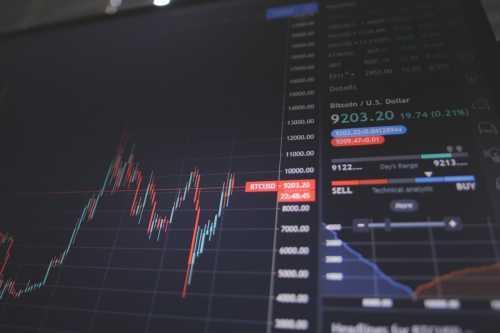
The Market’s Fragile Equilibrium: Navigating Valuation Resets, Private Credit Risks, and Macro Fragmentation
Aug 22, 2026
Comments (0)
No comments yet. Be the first to share your thoughts!
Want to join the discussion?
Please log in to post a comment.
Login NoworCreate an Account