
WHO Launches 'Global Protein Transition' Initiative to Shift Diets from Red Meat to Sustainable Alternatives

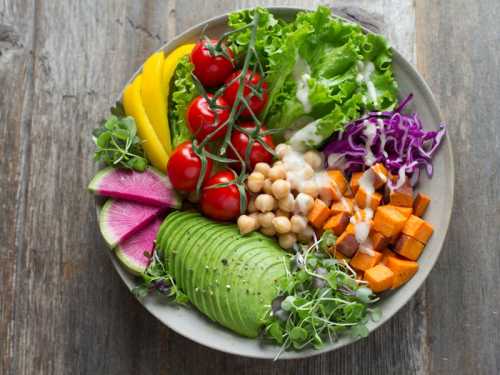
Imagine the entire world is one giant, bustling dining room. For the last hundred years, everyone in this dining room has been eating the exact same giant, heavy, greasy, delicious burger for every single meal. At first, it was great. It made people feel full and strong. But after a while, people started to feel really sick. Their stomachs ached, their hearts started beating too fast, and they got too heavy to run around and play. On top of that, the kitchen where all these burgers were being cooked was getting completely trashed—smoke everywhere, water running out, and the floor collapsing. The head chefs of the world, the World Health Organization (WHO) and the UN Food and Agriculture Organization (FAO), just looked at this mess and said, 'We need to change the menu immediately.' They just launched a massive global plan to help everyone switch from the heavy, messy burgers to a new, cleaner, healthier kind of food that tastes just as good but doesn't make us or the kitchen sick.
The Double-Edged Sword of the Modern Diet
To understand the sheer magnitude of the 'Global Protein Transition' initiative launched on June 22, 2026, we have to look at the two massive crises caused by our global obsession with conventional red meat. The first crisis is happening inside our bodies. According to a comprehensive meta-analysis published in The Lancet and synthesized by the WHO in early 2026, the overconsumption of processed and red meats is directly responsible for over 3.5 million premature deaths annually. These deaths are driven by a skyrocketing incidence of colorectal cancer, cardiovascular disease, and type 2 diabetes. The human body, evolved to process a diverse, plant-heavy diet with occasional lean game, is simply breaking down under the constant influx of saturated fats and heme iron found in modern industrial meat production. The second crisis is happening outside our bodies, in the kitchen we call Earth. Conventional livestock agriculture is an incredibly inefficient and destructive way to produce calories. It takes roughly 15,000 liters of water to produce a single kilogram of beef, compared to just 1,200 liters for a kilogram of maize or wheat. Furthermore, animal agriculture is responsible for nearly 14.5% of all global greenhouse gas emissions, more than the entire global transportation sector combined. It is the primary driver of deforestation in the Amazon and the Cerrado, as vast swaths of vital carbon-absorbing forests are burned to the ground to create pastureland or to grow soy to feed the cattle. The WHO and FAO have concluded that it is physically impossible for the planet to sustainably support a global middle class of 5 billion people consuming Western levels of conventional meat. The menu had to change.
The Global Protein Transition: What Exactly is It?
The 'Global Protein Transition' is not a ban on meat. It is not a forced, authoritarian mandate telling people they can never eat a steak again. Instead, it is a brilliantly structured, globally coordinated economic and cultural shift designed to make alternative proteins the default, cheapest, and most accessible option for the average consumer. The initiative is built on a three-pronged strategy: 'Subsidize the Future, Tax the Past, and Innovate the Taste.' First, the 'Subsidize the Future' pillar involves a massive reallocation of agricultural subsidies. Currently, governments worldwide spend over $500 billion annually subsidizing the conventional meat and dairy industries, artificially lowering their price at the grocery store. Under the new WHO/FAO framework, signatory nations commit to redirecting 30% of these subsidies toward the production of alternative proteins. This includes precision fermentation (using microbes to brew exact dairy and egg proteins), cellular agriculture (growing real meat directly from animal cells in bioreactors without slaughtering an animal), and advanced plant-based formulations. By subsidizing these new industries, the retail price of a lab-grown chicken breast or a precision-fermented block of cheddar cheese will drop below the price of its conventional counterpart by 2028. Second, the 'Tax the Past' pillar introduces a tiered 'Ecological Health Tariff' on conventional red meat. This is not a punitive tax designed to hurt farmers; it is a pricing mechanism that forces the cost of the meat to reflect its true environmental and public health externalities—the cost of the water used, the carbon emitted, and the future healthcare burden of diet-related diseases. The revenue generated from this tariff is placed into a 'Just Transition Fund,' which is used exclusively to retrain and financially support conventional livestock farmers as they pivot to new agricultural models. Third, the 'Innovate the Taste' pillar establishes a $5 billion global research consortium, headquartered in Singapore with regional hubs in Brazil, India, and the United States. This consortium is tasked with solving the final frontier of alternative proteins: texture and complex flavor. The goal is to create a plant-based or cultivated steak that not only matches the nutritional profile of beef but perfectly replicates the Maillard reaction (the browning and flavor creation when meat hits a hot pan) and the complex, fibrous mouthfeel of whole-cut muscle tissue.
The Science: Building Meat Without the Animal
For the average consumer, the science behind this transition sounds like pure science fiction, but it is rapidly becoming everyday reality. Let us break down the two most promising technologies driving this revolution. The first is precision fermentation. Imagine you have a tiny, microscopic factory inside a giant steel vat. Instead of the factory making cars or toys, it is programmed to make the exact same whey protein that a cow makes in its milk. Scientists take the DNA sequence from a cow that codes for whey protein, insert it into a harmless, fast-reproducing microbe (like yeast or fungi), and feed the microbe simple plant sugars. The microbe reads the DNA and starts brewing perfect, identical cow whey protein. This protein is then harvested, purified, and used to make ice cream, cheese, and yogurt that is molecularly identical to the dairy version, but contains zero cholesterol, zero lactose, and zero animal suffering. It uses 99% less land and 80% less water than conventional dairy. The second technology is cellular agriculture, or cultivated meat. Instead of growing a whole cow, feeding it for two years, and then slaughtering it just to get a single steak, scientists take a tiny, painless biopsy of cells from a living animal. These cells are placed in a nutrient-rich bioreactor—similar to the vats used to brew beer—where they are given the exact amino acids, sugars, and growth factors they need to multiply. The cells grow and fuse together to form actual, biological animal muscle tissue. The end product is real meat. It has the exact same DNA, the same iron, the same B12, and the same taste as conventional meat, because it is biologically the exact same thing. The only difference is that no central nervous system was ever involved, meaning no animal was ever born into a feedlot or sent to a slaughterhouse.
The Health Revolution: Healing Hearts and Waists
The public health implications of the Global Protein Transition are staggering. By shifting the global baseline of protein consumption away from conventional red meat and toward these optimized alternative proteins, we can literally engineer a healthier population. The alternative proteins developed under the new WHO guidelines are not just mimicking meat; they are improving upon it. Because these proteins are created in a controlled, sterile environment, they can be nutritionally optimized at the molecular level. A cultivated beef patty can be engineered to have the exact same rich, umami flavor and iron content as conventional beef, but with the saturated fat completely replaced by heart-healthy omega-3 fatty acids derived from microalgae. A precision-fermented cheese can melt and stretch perfectly on a pizza, but contain zero cholesterol and be packed with added fiber and probiotics for gut health. The NIH projects that if the Global North and the rapidly urbanizing Global South adopt these optimized proteins at the rates projected by the WHO, we will see a 25% reduction in global cardiovascular disease mortality and a 15% reduction in diet-related cancers by the year 2040. This is not just a dietary shift; it is the largest preventative medicine intervention in human history.
The Farmer's Pivot: A New Kind of Agriculture
The most critical, and often most emotional, part of this transition is what happens to the millions of farmers around the world whose families have raised livestock for generations. The WHO and FAO have been acutely aware that this transition cannot happen at the expense of rural communities. This is where the 'Just Transition Fund' comes into play. As the demand for conventional feed (like soy and corn grown specifically for cattle) drops, vast tracts of agricultural land will be freed up. The initiative provides massive grants to livestock farmers to transition their land and skills. A cattle rancher in Texas or a dairy farmer in New Zealand can use the fund to transition their land to regenerative agriculture, growing the high-protein crops (like peas, fava beans, and lentils) required for the plant-based protein industry. Alternatively, they can repurpose their existing barns and infrastructure into local bioreactor facilities for cellular agriculture or precision fermentation hubs. The goal is to keep the farmers as the central producers of the world's food, just shifting the crop they produce from the animal itself to the raw materials or the localized infrastructure needed for the new proteins. The WHO emphasizes that the farmer is not the enemy; the outdated, inefficient system is the enemy, and the farmer deserves to be the beneficiary of the new, sustainable system.
The Road Ahead: Changing the Global Palate
Changing what the world eats is arguably the hardest challenge humanity has ever faced. Food is not just fuel; it is culture, it is tradition, it is love, and it is identity. A barbecue in the American South, a family biryani in Hyderabad, an asado in Argentina—these are deeply ingrained cultural touchstones. The Global Protein Transition recognizes that you cannot shame people out of their cultural foods. The only way to win is to make the alternative so delicious, so affordable, and so culturally integrated that the transition happens naturally. This is why the initiative is heavily funding culinary innovation in the Global South. In India, researchers are perfecting cultivated mutton that perfectly replicates the complex fat structure required for a rich, slow-cooked korma. In Latin America, food scientists are developing plant-based chorizo and cultivated beef cuts that perfectly mimic the texture needed for a traditional Argentine asado. By respecting the culinary traditions and simply swapping out the underlying protein source with a cleaner, healthier, and more sustainable version, the world can keep its favorite dishes without destroying its health or its planet. The Global Protein Transition is a monumental undertaking. It requires the coordination of governments, the pivot of massive agricultural conglomerates, the innovation of brilliant scientists, and the willingness of billions of consumers to try something new. But as the WHO Director-General stated at the launch in Geneva, 'We have spent the last century mastering the art of producing more food. The next century must be about mastering the art of producing better food.' The giant dining room is finally getting a new menu, and for the first time in a long time, the food is good for us, and the kitchen is safe.
Related Articles

The Fractured Atlas: Navigating the Convergence of Geopolitical, Financial, and Environmental Faultlines
Aug 22, 2026
The Metabolic Economy: How Nutrition Policy is Reshaping Global Capital Flows and Workforce Productivity
Aug 22, 2026
Comments (0)
No comments yet. Be the first to share your thoughts!
Want to join the discussion?
Please log in to post a comment.
Login NoworCreate an Account