
World Health Assembly Finalizes Historic Global Pandemic Accord in 2026 to Guarantee Equitable Vaccine Access and Pathogen Sharing

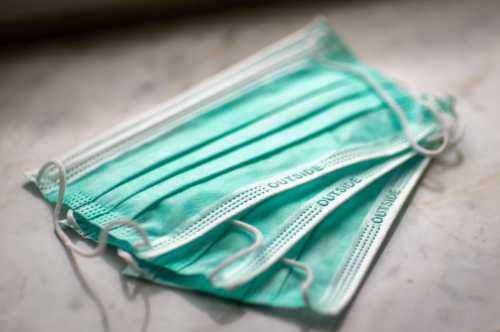
The Giant School and the Invisible Germ
Imagine that the entire planet Earth is a giant, bustling school with billions of students. In this school, there is a tiny, invisible germ that loves to make the students sick. A few years ago, this germ caused a massive global timeout, shutting down schools, closing playgrounds, and keeping everyone locked inside their houses. The students and the teachers (the governments) promised each other that once the timeout was over, they would write a brand-new, super-strong rulebook to make sure the invisible germ could never shut down the school again. After years of intense arguing, negotiating, and late-night meetings, the teachers finally gathered in Geneva in May and June 2026 for the World Health Assembly (WHA) and officially signed the historic Global Pandemic Accord. This is not just a simple list of suggestions; it is a legally binding international healthcare policy that fundamentally changes how the world detects, shares, and fights deadly diseases. It is the most important public health agreement since the creation of the World Health Organization itself.
The Problem with the Old Rulebook
To understand why this 2026 Accord is such a massive deal, we have to look at the terrible mistakes made during the last global pandemic. When the new germ first appeared, the country where it started was sometimes hesitant to share the germ's genetic code with the rest of the world because they were afraid of being punished or travel-banned. This delay cost the entire planet precious months. Furthermore, when the rich countries finally figured out how to make a vaccine, they bought up almost all the supply, leaving the poorer countries with absolutely nothing. This was deeply unfair and allowed the germ to keep mutating in the unprotected populations, eventually spreading right back into the rich countries. The old rulebook, the International Health Regulations of 2005, was too weak to stop this selfish behavior. The 2026 Global Pandemic Accord was written specifically to close these loopholes and force the entire world to work together as a single, unified team.
Rule One: The Pathogen Access and Benefit-Sharing (PABS) System
The absolute crown jewel of the 2026 Accord is a revolutionary policy called the Pathogen Access and Benefit-Sharing system, or PABS for short. Imagine that a student in one classroom finds a rare, beautiful butterfly (this represents a new, dangerous virus). Under the old rules, that student could hide the butterfly, or demand a million dollars to let the science teacher look at it. Under the new PABS policy, the student is legally required to immediately hand over physical samples of the butterfly to the WHO's global laboratory network. In return, the rest of the school promises that if they use the butterfly to create a medicine or a vaccine, they must share the benefits fairly. This means that the country that originally found the virus is guaranteed to get a fair share of the vaccines, treatments, and scientific knowledge developed from it. This brilliant policy removes the fear of punishment and replaces it with the promise of reward, ensuring that countries will report new outbreaks instantly without hiding anything.
Rule Two: The 20% Equity Mandate for Vaccines
Sharing the germ is only half the battle; you also have to share the cure. The 2026 Accord introduces a strict, legally binding equity mandate for medical countermeasures. It states that any pharmaceutical company or country that develops a pandemic vaccine, diagnostic test, or therapeutic treatment must immediately reserve at least 20 percent of the total supply for distribution by the WHO to the most vulnerable, low-income countries. Furthermore, companies are required to participate in a global technology transfer network, meaning they must teach scientists in developing nations how to manufacture the vaccines locally. This completely destroys the old model where rich countries hoarded all the supplies. It ensures that a nurse in a remote village in Africa or Asia has the exact same access to life-saving pandemic vaccines as a citizen in a wealthy European capital. The policy recognizes that a pandemic is not truly over anywhere until it is over everywhere.
The "One Health" Approach: Protecting Animals and the Environment
Most of the dangerous germs that cause pandemics do not start in humans; they start in animals. They jump from bats to pigs, or from birds to cows, and finally into humans. The 2026 Accord officially adopts the "One Health" policy approach into international law. This means that countries are no longer just supposed to monitor human hospitals; they are legally required to monitor the health of wildlife, livestock, and even the environment. The policy mandates the creation of integrated surveillance systems that track diseases in animal populations before they ever have the chance to jump to humans. It also focuses on reducing deforestation and climate change, which are the primary drivers that force wild animals into contact with human cities. By treating human health, animal health, and environmental health as one single, interconnected system, the Accord attacks the root cause of pandemics rather than just reacting to the symptoms.
Official Statement from the World Health Organization
History made at the World Health Assembly! Member States have officially adopted the WHO Pandemic Accord, establishing a binding global framework for pathogen sharing, equitable vaccine access, and the One Health approach. Together, we have built a stronger shield to protect every person, everywhere from future health emergencies. #PandemicAccord #HealthForAll
- World Health Organization (WHO) Official X (Twitter)
Read the full official post here: View Official WHO Post
The Financial Engine: Funding the Global Shield
A rulebook is useless if you do not have the money to enforce it. The 2026 Accord is backed by a massive, reformed financial engine. The WHO has successfully restructured its funding model to reduce its reliance on voluntary, unpredictable donations from a few rich countries. Instead, the Accord mandates assessed contributions, meaning every member state is legally required to pay a fixed, sustainable percentage of their national budget into the WHO's core emergency fund. Additionally, a new Global Health Emergency Fund was launched, capitalized by a micro-tax on international airline tickets and cross-border financial transactions. This ensures that when a new germ is detected in a remote jungle, the WHO has the immediate cash on hand to deploy scientists, testing kits, and medical teams within 48 hours, without having to beg for donations from wealthy nations.
The Debate: Sovereignty vs. Global Security
Getting 194 countries to agree on this policy was incredibly difficult. The most intense arguments centered around national sovereignty. Some powerful nations were initially very reluctant to sign the Accord, arguing that it forced them to give away their medical secrets or hand over their own citizens' virus samples to an international body. They argued that a country's first duty is to its own people. However, the scientific reality of how viruses spread eventually won the debate. The developing nations, led by countries in Africa and Asia, argued passionately that in the world of microscopic germs, there are no isolated islands. If a virus is allowed to run rampant in a poor country, it will mutate and eventually infect the rich countries anyway. The final text of the Accord beautifully balances these concerns: it respects national sovereignty but legally obligates countries to act in the interest of global health security when a pandemic threat is declared.
How This Protects the Common Citizen in 2026
You might be sitting at home wondering how a treaty signed in Geneva affects your daily life. The impact is profound and deeply personal. Because of the 2026 Pandemic Accord, the early warning systems in your country are now connected to a global network of supercomputers and AI-driven disease trackers. If a strange new flu appears in a market thousands of miles away, your local health department is alerted instantly. Furthermore, if a global pandemic ever threatens again, you can rest easy knowing that your government has a legally guaranteed right to receive millions of doses of vaccines from the global stockpile, regardless of how wealthy your nation is. The Accord has transformed global health policy from a chaotic, selfish scramble into a coordinated, equitable defense system. It is the ultimate expression of human solidarity, proving that when we face the invisible threats of nature, we are all students in the same school, and we must protect each other to survive.
A New Era of Global Health Security
The finalization of the Global Pandemic Accord in 2026 marks the end of an era of reactive panic and the beginning of an era of proactive preparedness. The world has finally learned the hardest lesson of the 21st century: health is not a local issue; it is a global commons. The policies enshrined in this Accord—the PABS system, the equity mandates, the One Health approach, and the sustainable funding—form an impenetrable shield around the planet. It will take years to fully implement every single clause, and there will be political challenges along the way, but the foundation is now solid. The teachers have written the rulebook, the safety nets are in place, and the giant school of Earth is finally ready to face whatever invisible germs the future may bring, together, as one united global family.
Related Articles

The Structural Recalibration of US Healthcare: Navigating Policy, Market, and Access Faultlines
Aug 22, 2026
The Geopolitics of Global Streaming: AI, IP Fragmentation, and the End of the Hollywood Monopoly
Aug 22, 2026
Comments (0)
No comments yet. Be the first to share your thoughts!
Want to join the discussion?
Please log in to post a comment.
Login NoworCreate an Account